Question 17
Why are lines and parallel to each other?
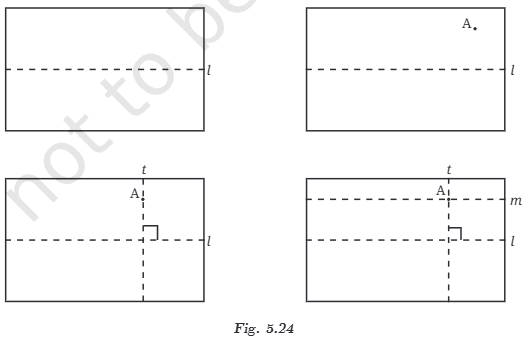
- If two lines in a plane are both perpendicular to the same line (transversal), they are parallel to each other.
- Given that line is perpendicular to line () and line is also perpendicular to line (), we can conclude that line is parallel to line ().
Step 1 · Relationship Between Line and Line
From the figure, the vertical line intersects the horizontal line at a right angle ().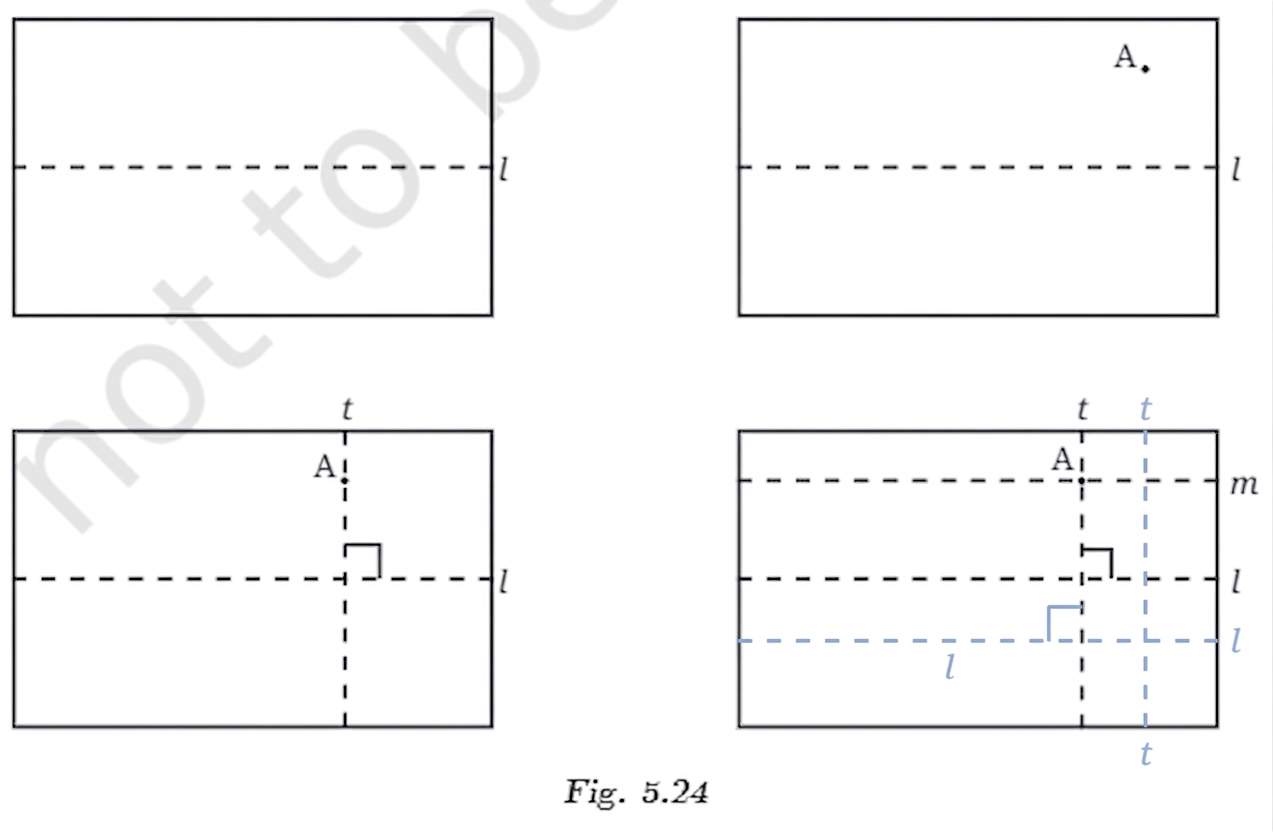
Therefore
Step 2 · Relationship Between Line and Line
From the figure, the vertical line also intersects the horizontal line at a right angle ().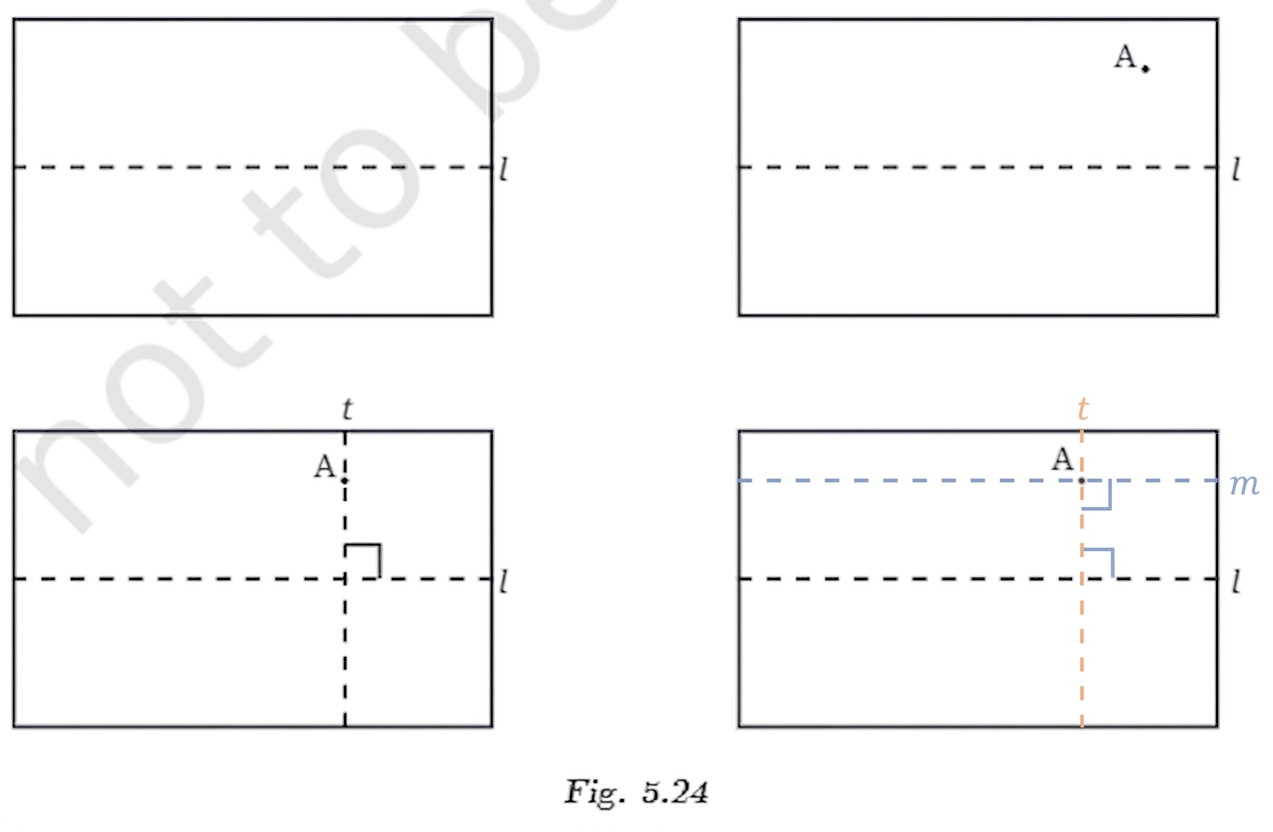
Therefore
Step 3 · Determine the Relationship Between Lines and
Since both lines and are perpendicular to the same line :
Two lines that are perpendicular to the same line are parallel to each other.
Therefore
Lines and are parallel to each other () because both lines are perpendicular to the same line .
- Symbol Confusion: Confusing the perpendicular symbol () with the parallel symbol ().
- Angle Verification: Overlooking that corresponding angles formed with transversal line are both , which confirms that the lines must be parallel.
More questions in IT
Context: Let us observe what happens when two lines intersect.
Q. How many angles do they form?
Can two straight lines intersect at more than one point?
In Fig. 5.2, if is , can you figure out the measurements of , and , without drawing and measuring them?
Context: When two lines intersect each other and form four angles, labelled , , and , then and are equal, and and are equal.
Q. Is this always true for any pair of intersecting lines?
Can you draw a pair of intersecting lines such that all four angles are equal? Can you figure out what will be the measure of each angle?
Observe Fig. 5.5 and describe the way the line segments meet or cross each other in each case, with appropriate mathematical words (a point, an endpoint, the midpoint, meet, intersect) and the degree measure of each angle.
Are line segments and likely to meet if they are extended?
Are line segments and likely to meet if they are extended?
Name some parallel lines you can spot in your classroom.
Which pairs of lines appear to be parallel in Fig. 5.6 below?
Is it possible for all the eight angles to have different measurements? Why, why not?
What about five different angles — 6, 5, 4, 3 and 2?
Suppose, we have a transversal intersecting two parallel lines. What can be said about the corresponding angles?
Context: Activity 5 In Fig. 5.20, draw a transversal to the lines and such that one pair of corresponding angles is equal. You can measure the angles with a protractor.
Q. Are you finding it hard to draw a transversal such that the corresponding angles are equal?
Draw two more parallel lines using the long side of the set square as shown in Fig. 5.22. How do you know these two lines are parallel? Can you check if the corresponding angles are equal?
Why are lines and parallel to each other?
Is there a relation between and ? You could try to find the relationship by taking different values for and see what is. Once you find a relation, try to justify it or prove that this relation holds always.
There do not seem to be any parallel lines here. Or, are there?
What causes these illusions?