Question 1
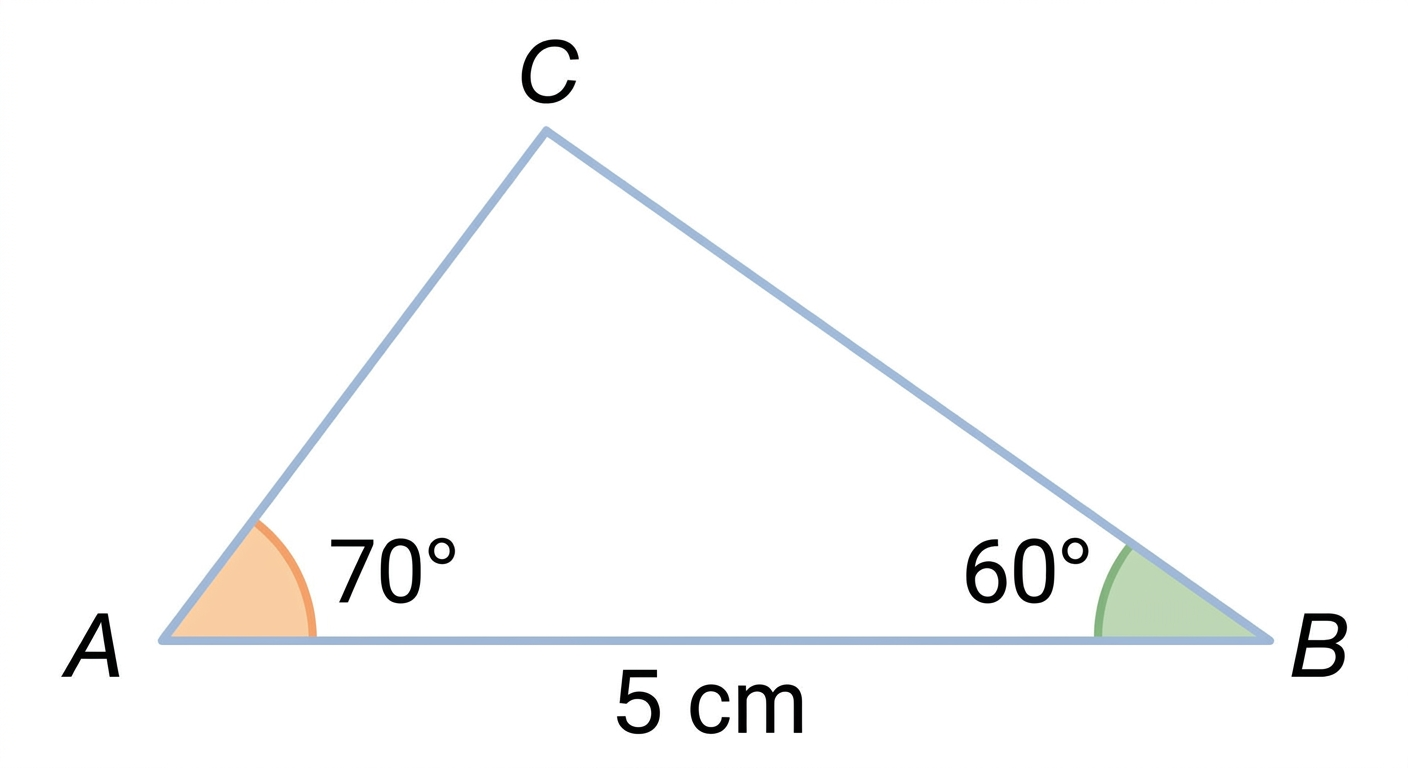
Draw with , and . Draw the circumcircle of . Is the centre inside or outside the triangle?
- To construct the triangle, draw base and construct angles and to locate vertex .
- The circumcentre of a triangle is the point of intersection of the perpendicular bisectors of its sides.
- The circumcircle is drawn with the circumcentre as the centre and the distance to any vertex as the radius.
- The position of the circumcentre depends on the angles of the triangle:
- Acute triangle: Circumcentre lies inside.
- Right triangle: Circumcentre lies on the hypotenuse (midpoint).
- Obtuse triangle: Circumcentre lies outside.
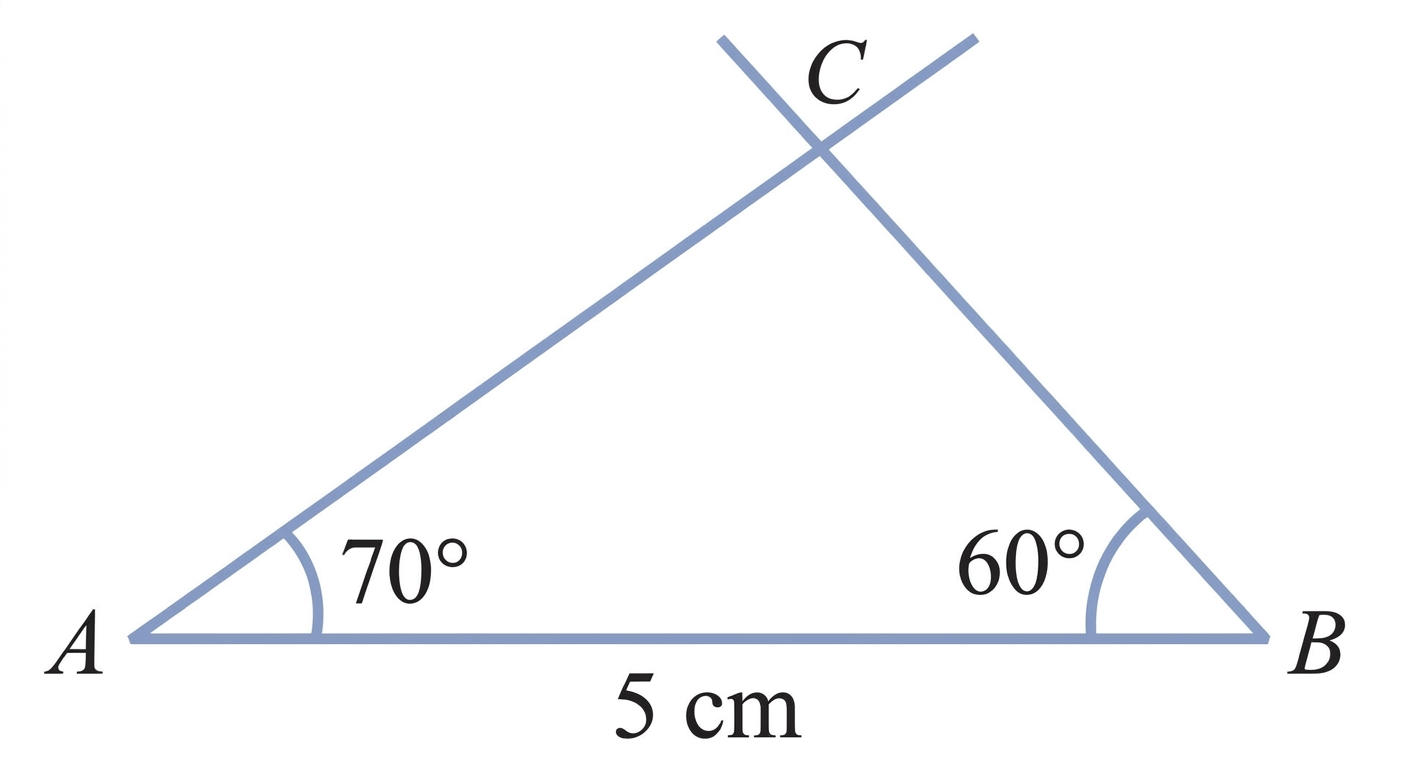
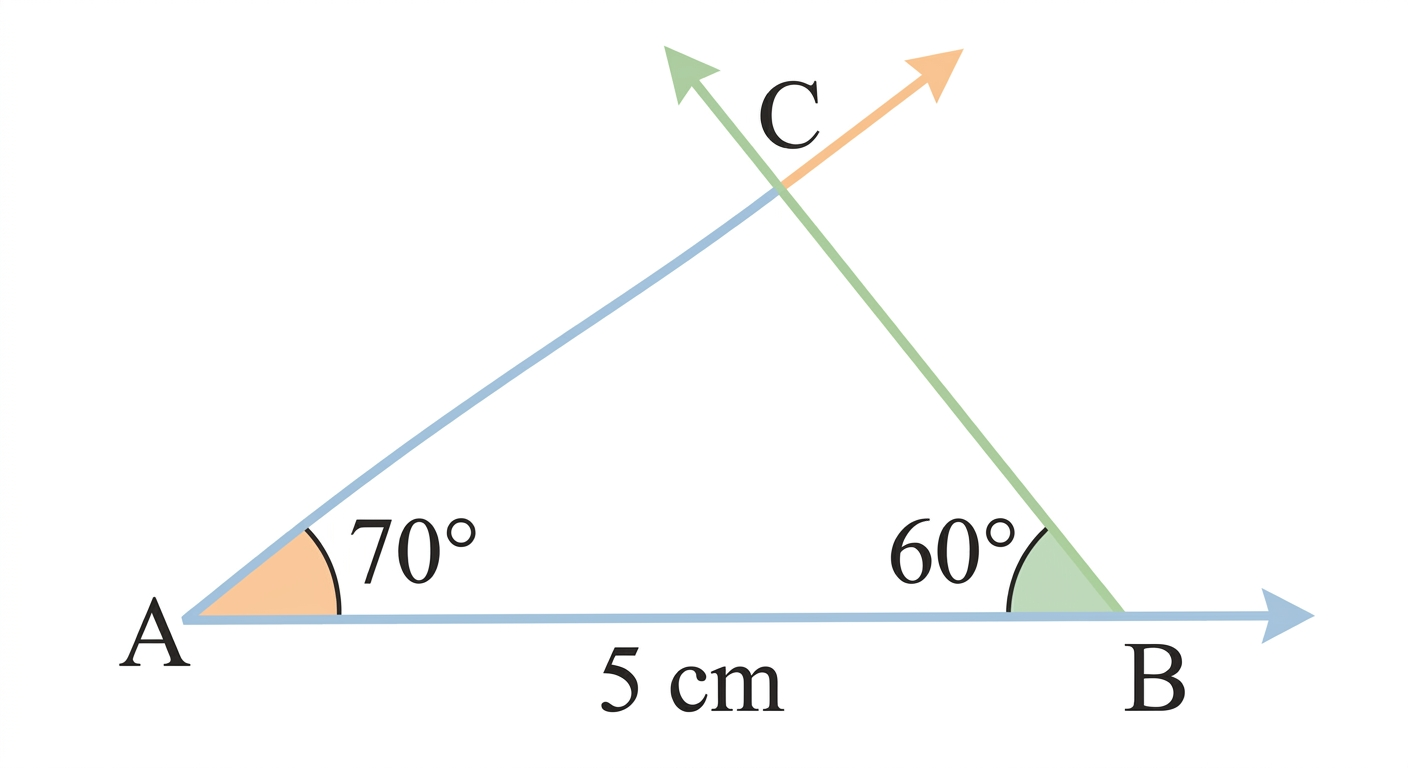
Step 1 · Construct Triangle ABC
- Draw a line segment .
- At point , construct .
- At point , construct .
- Let the two rays intersect at point to form .
Step 2 · Find Circumcentre O
- Draw the perpendicular bisectors of sides , , and .
- Mark their point of intersection as . Point is the circumcentre of .
Step 3 · Draw Circumcircle
- With as centre and radius equal to (or , ), draw a circle.
- The circle passes through all three vertices , , and , forming the circumcircle.
Step 4 · Determine Circumcentre Position
Using the angle sum property of a triangle:
Since all three angles (, , and ) are acute (), is an acute-angled triangle.
Therefore, the circumcentre lies inside the triangle.
The centre is inside the triangle.
- Circumcentre vs Incentre: Using angle bisectors instead of perpendicular bisectors of sides. Perpendicular bisectors give the circumcentre; angle bisectors give the incentre.
- Position Misconception: Assuming circumcentres always lie inside the triangle. For obtuse-angled triangles, the circumcentre lies outside, and for right-angled triangles, it lies at the midpoint of the hypotenuse.
More questions in Exercise 5.1
Draw with , and . Draw the circumcircle of . Is the centre inside or outside the triangle?
Draw with , , . Draw the circumcircle of . Is the centre inside or outside the triangle?
Draw , with , and . Draw the circumcircle of . Let the circumcentre be . Measure , , .
What is the least possible radius of a circle through two points and ?