Circles and Geometric Shapes | Exercise 5.1
Question 3
Draw , with , and . Draw the circumcircle of . Let the circumcentre be . Measure , , .
Solution
Understand the Question
- The circumcentre () of a triangle is the point of intersection of the perpendicular bisectors of its sides.
- The circumcentre is equidistant from all three vertices of the triangle, meaning (the circumradius).
- The circle drawn with centre and radius passes through all three vertices , , and , forming the circumcircle.
Step 1 · Construct the Triangle
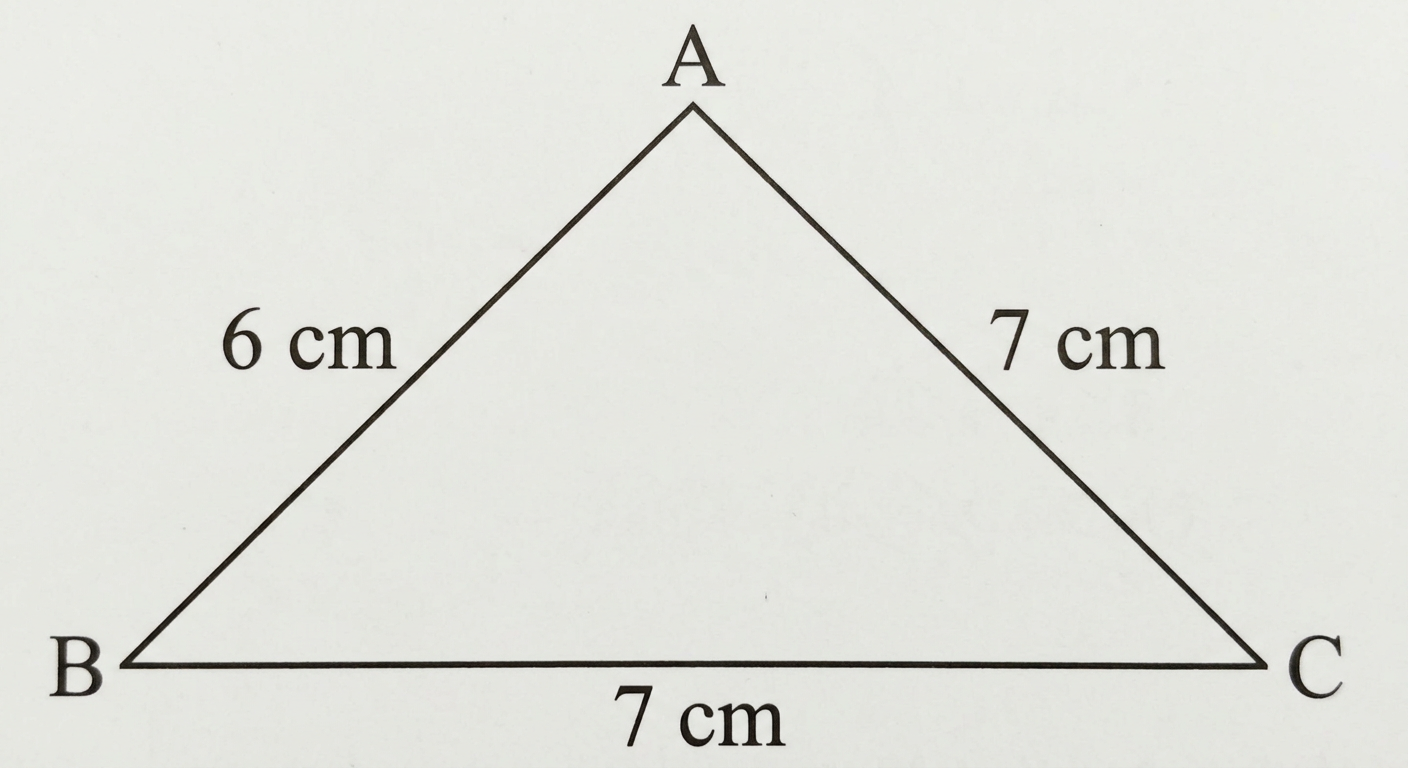
- Draw a line segment .
- With as centre and radius , draw an arc.
- With as centre and radius , draw another arc intersecting the first arc at point .
- Join and to complete .
Step 2 · Locate the Circumcentre
- Draw the perpendicular bisectors of sides , , and .
- Mark the point where these perpendicular bisectors intersect as .
Point is the circumcentre of .
Step 3 · Draw the Circumcircle
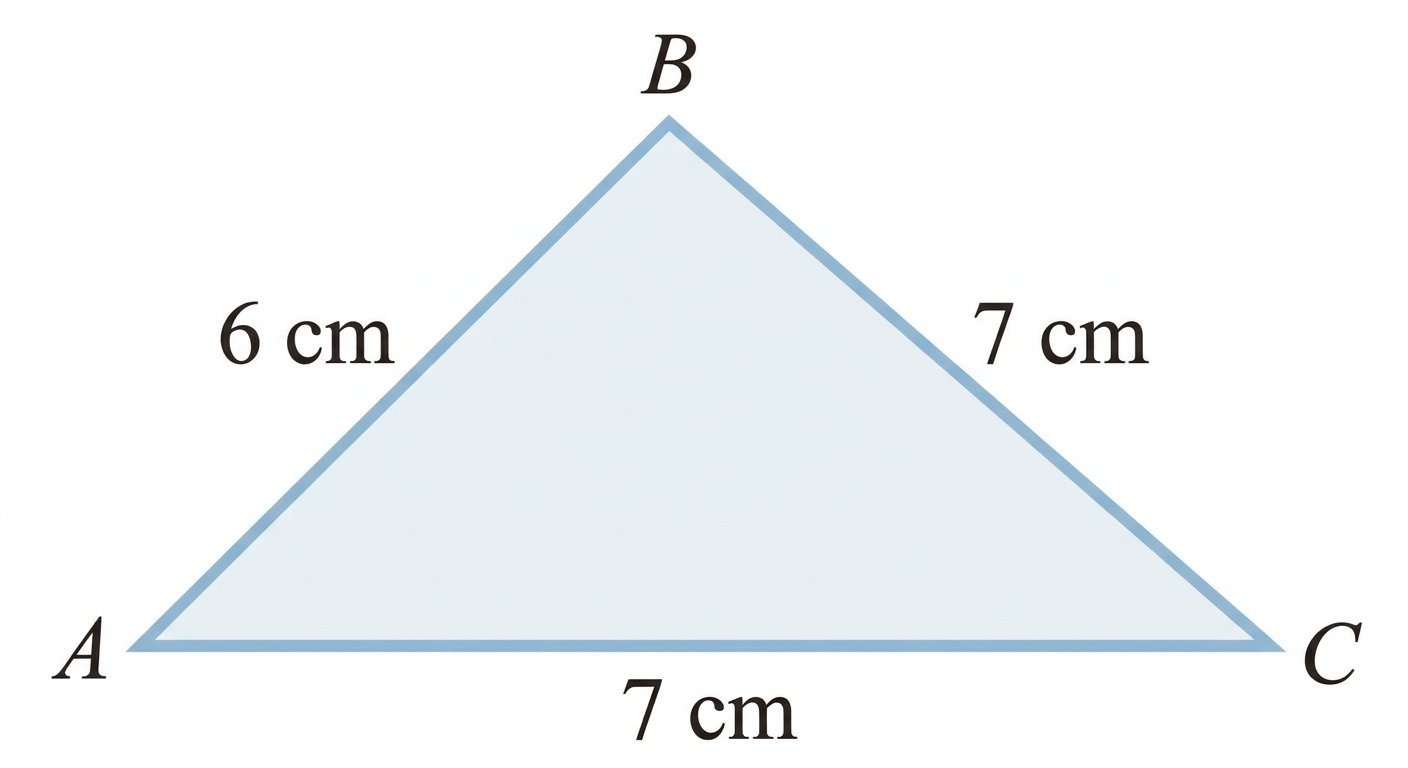
- With as centre and radius equal to , draw a circle.
- The circle passes through all three vertices , , and .
Step 4 · Measure the Radii
Measuring the distances from the circumcentre to each vertex:
All three lengths are equal: .
Answer
Common Mistakes
- Incentre vs. Circumcentre: Using angle bisectors instead of perpendicular bisectors. Angle bisectors give the incentre (for an incircle), while perpendicular bisectors give the circumcentre (for a circumcircle).
- Compass Radius Shift: Letting the compass width slip while drawing arcs for the perpendicular bisectors or sides, which shifts the circumcentre away from being equidistant to all vertices.
- Inaccurate Arc Intersections: Not opening the compass to more than half the length of a side when constructing perpendicular bisectors, resulting in arcs that do not intersect.
More questions in Exercise 5.1
Q1Q2Q3Q4
Draw with , and . Draw the circumcircle of . Is the centre inside or outside the triangle?
Draw with , , . Draw the circumcircle of . Is the centre inside or outside the triangle?
Draw , with , and . Draw the circumcircle of . Let the circumcentre be . Measure , , .
What is the least possible radius of a circle through two points and ?