Circles and Geometric Shapes | Exercise 5.4
Question 3
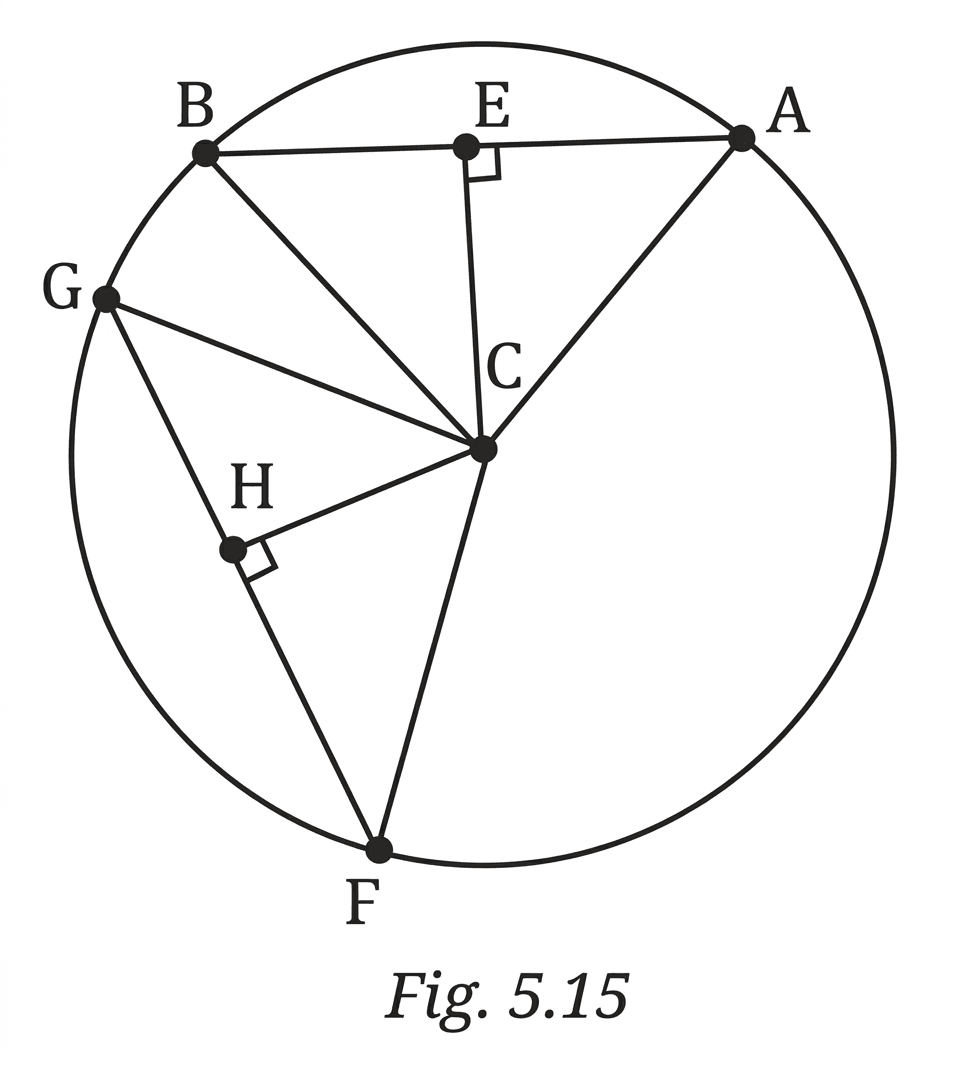
Solve the previous question using the Baudhāyana–Pythagoras theorem.
Solution
Understand the Question
- The perpendicular from the center of a circle to a chord bisects the chord, so and .
- The distances of the chords from the center are given to be equal: .
- Since and are radii of the same circle, .
- We apply the Baudhāyana–Pythagoras theorem in the two right-angled triangles and to prove that chord .
Step 1 · Chord Bisection by Perpendicular from Center
Perpendicular from center to chord bisects the chord:
Similarly, perpendicular to chord bisects the chord:
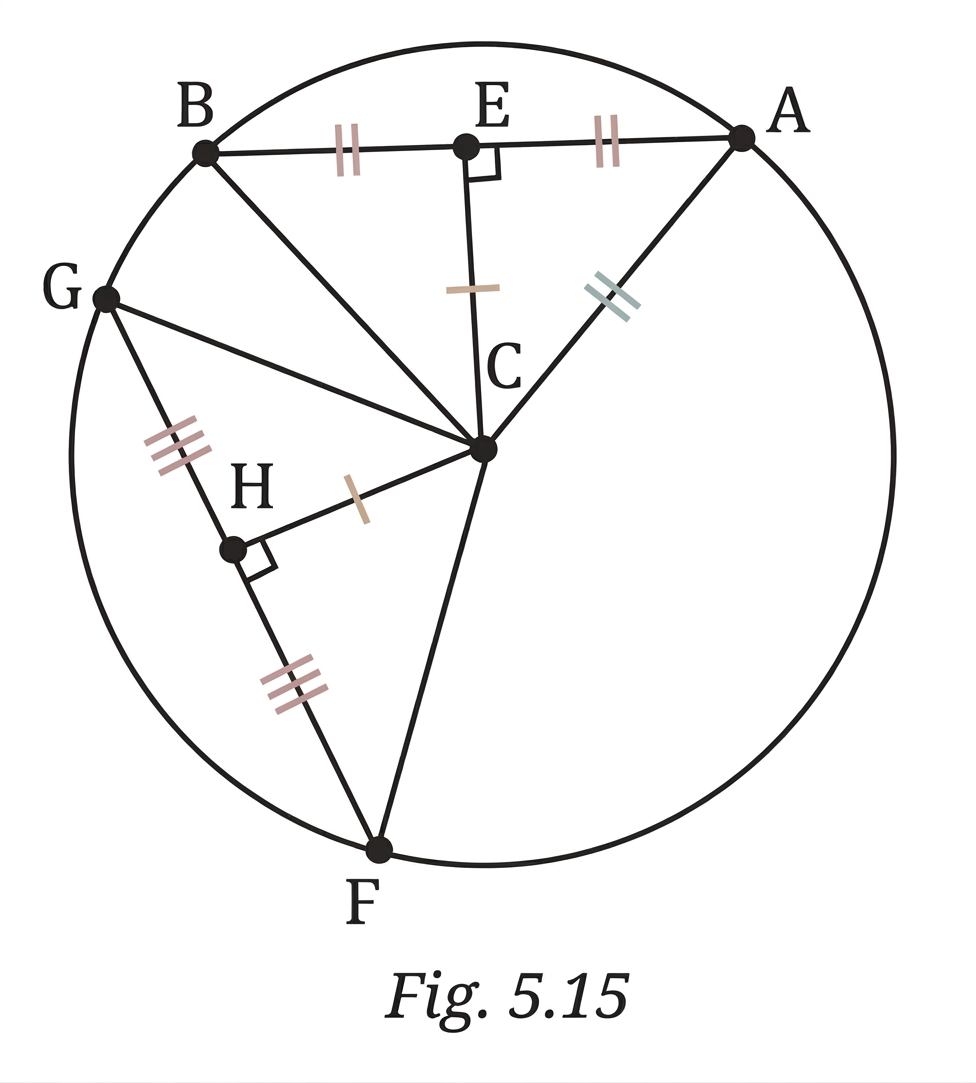
Step 2 · Apply Baudhāyana–Pythagoras Theorem
In right-angled triangle (right-angled at ):
In right-angled triangle (right-angled at ):
Step 3 · Compare Triangles and Equate Segments
Since and are radii of the same circle:
Substituting from Step 2:
Given that , so . Subtracting from both sides:
Taking square root on both sides:
Step 4 · Conclude Chord Equality
Substitute and into :
Multiplying both sides by :
Answer
Hence proved, .
Common Mistakes
- Forgetting Chord Bisection: Overlooking the property that a perpendicular from the center to a chord bisects it ( and ).
- Overlooking Radii Equality: Missing the fact that as both are radii of the same circle, which is crucial for equating the two Pythagoras expressions.