Question 8
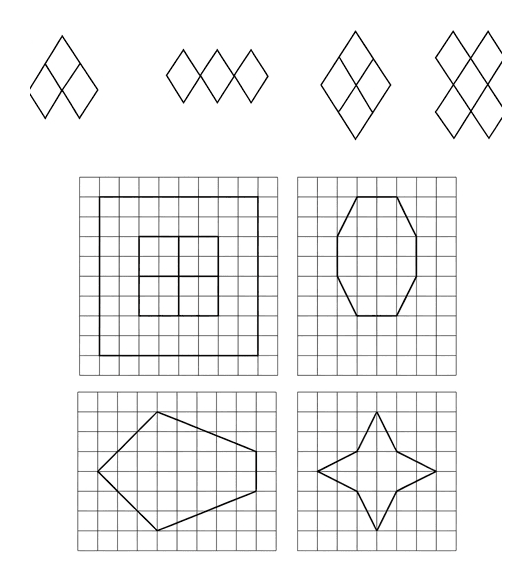
Trace each figure and draw the lines of symmetry, if any:
- A line of symmetry (or axis of symmetry) is a line that divides a figure into two identical halves that are mirror images of each other.
- If a figure is folded along its line of symmetry, both halves overlap and match completely.
- A figure can have no lines of symmetry, one line of symmetry, or multiple lines of symmetry (vertical, horizontal, or diagonal).
(i) First figure (two diamonds stacked vertically)
Step 1 · Find Lines of Symmetry
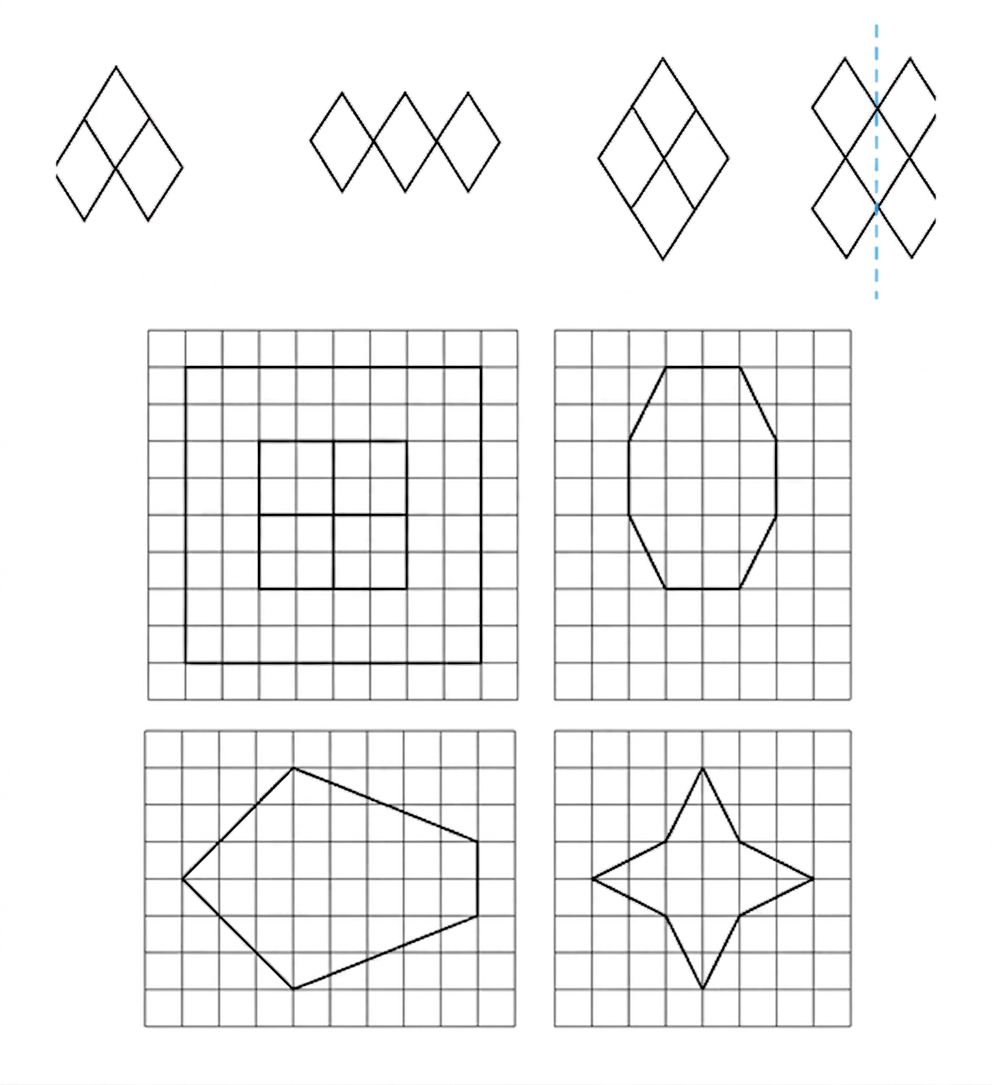
Folding the figure vertically down the middle divides it into two matching halves.
(i) 1 vertical line of symmetry
(ii) Second figure (three diamonds in a horizontal row)
Step 1 · Find Lines of Symmetry
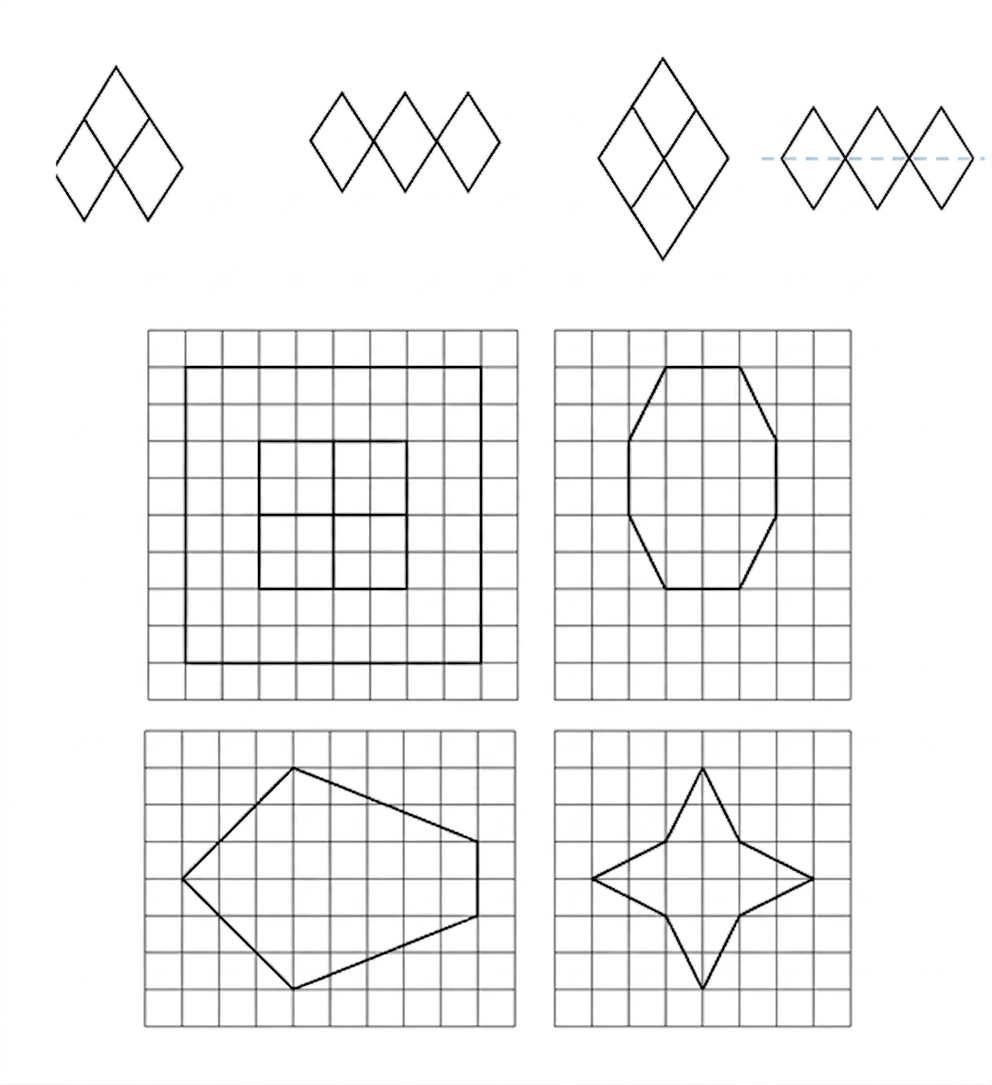
Folding the figure horizontally across the middle divides the top and bottom into two matching halves.
(ii) 1 horizontal line of symmetry
(iii) Third figure (four diamonds forming a larger diamond)
Step 1 · Find Lines of Symmetry
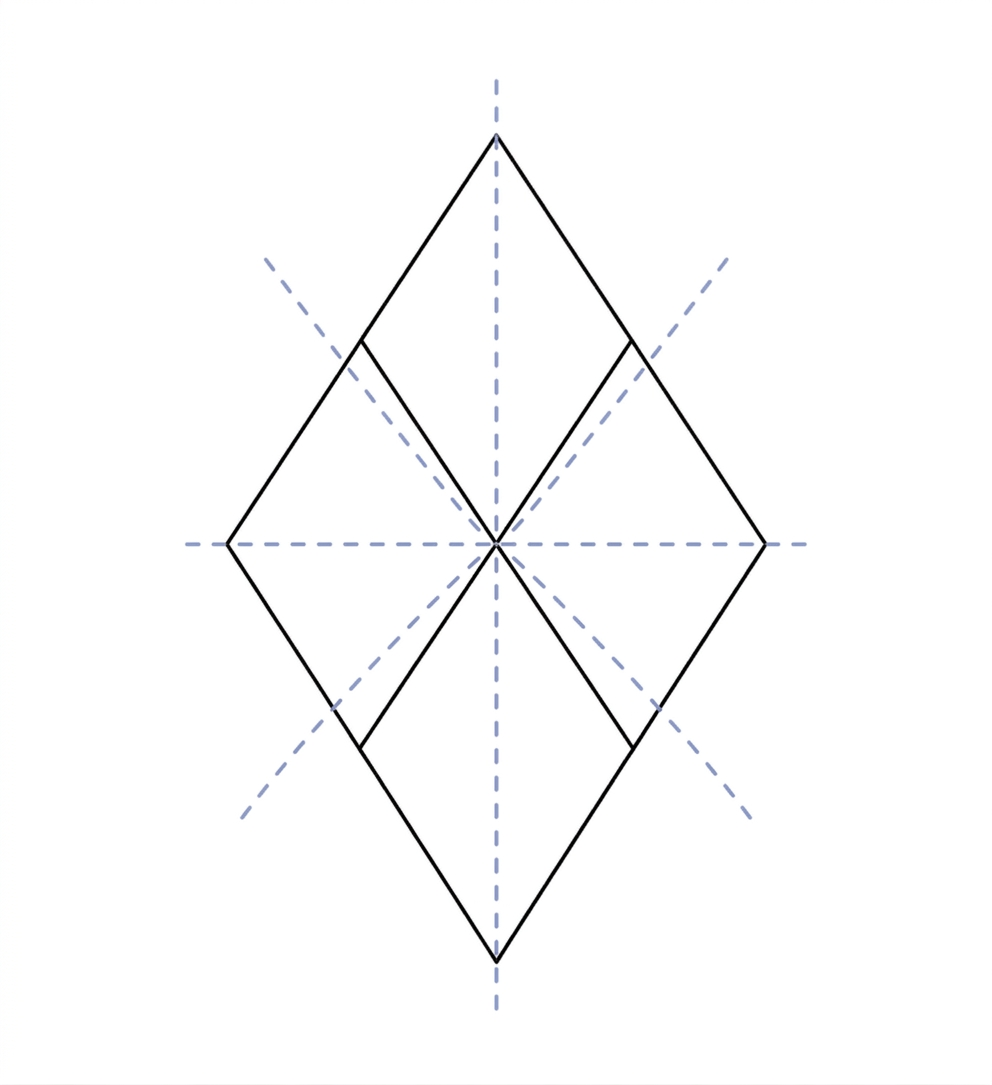
This shape can be folded in 4 distinct ways such that both halves match perfectly: along the vertical axis, the horizontal axis, and both diagonal axes.
(iii) 4 lines of symmetry (1 vertical, 1 horizontal, 2 diagonal)
(iv) Fourth figure (cross-shaped arrangement of diamonds)
Step 1 · Find Lines of Symmetry
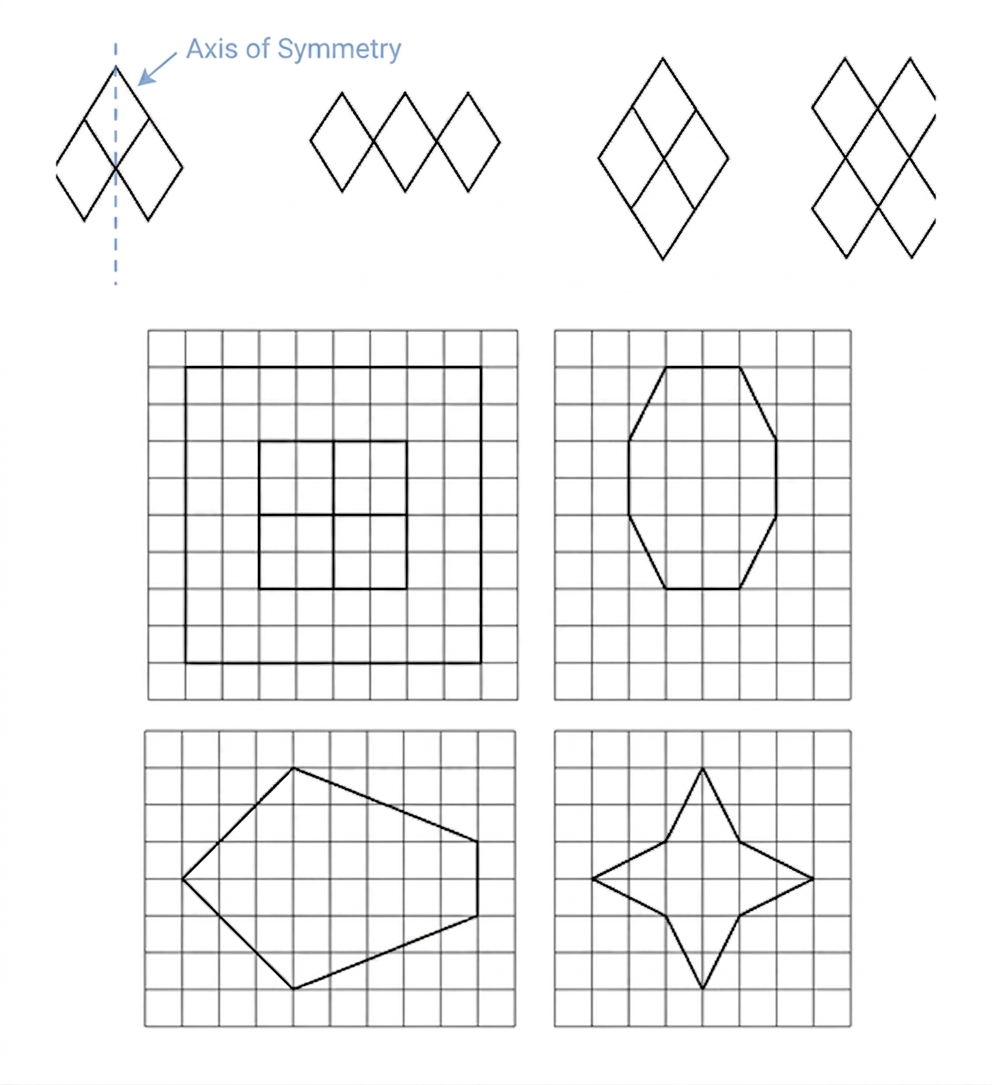
Folding along the vertical line or the horizontal line gives matching mirror halves.
(iv) 2 lines of symmetry (1 vertical, 1 horizontal)
(v) Fifth figure (square with an inner square)
Step 1 · Find Lines of Symmetry
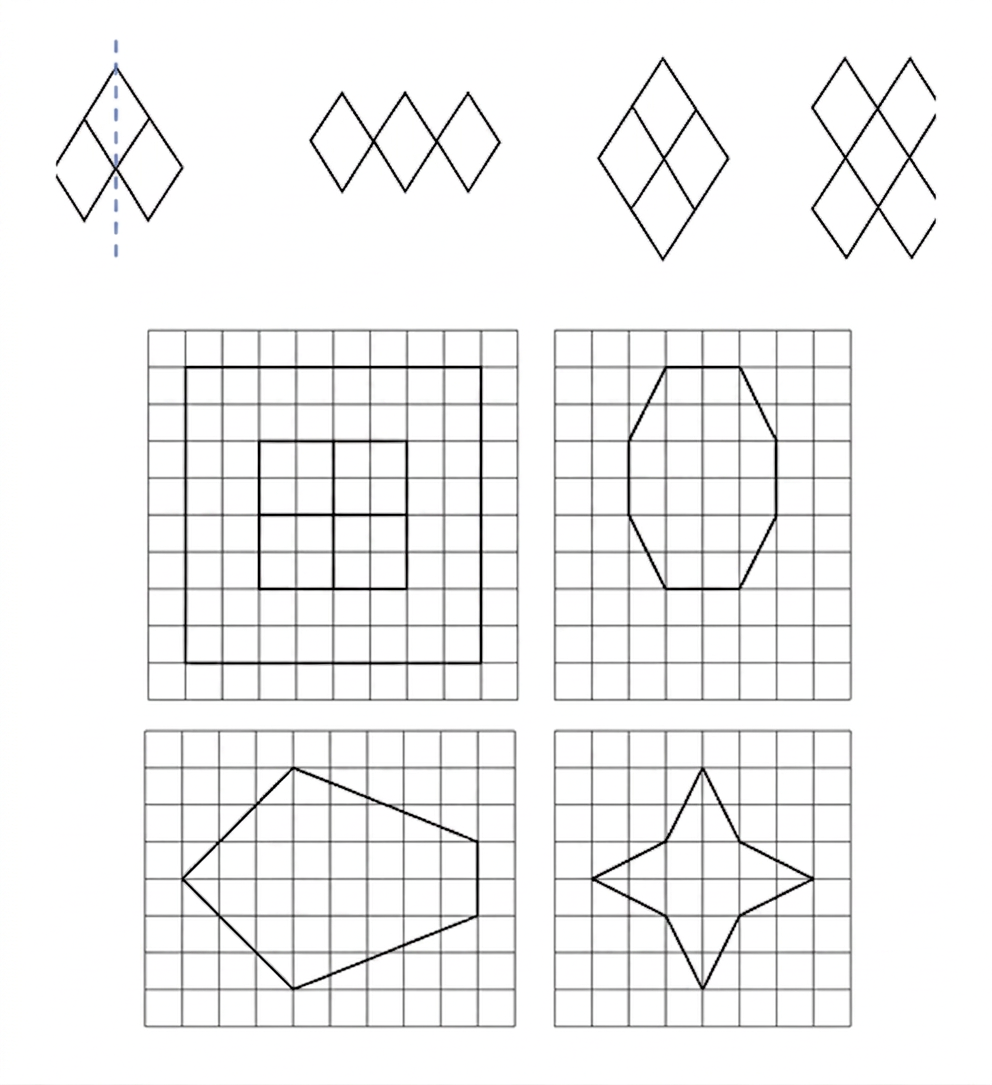
Like any regular square, this shape has 4 lines of symmetry: vertical, horizontal, and two diagonals.
(v) 4 lines of symmetry (1 vertical, 1 horizontal, 2 diagonal)
(vi) Sixth figure (octagon-like shape on a grid)
Step 1 · Find Lines of Symmetry
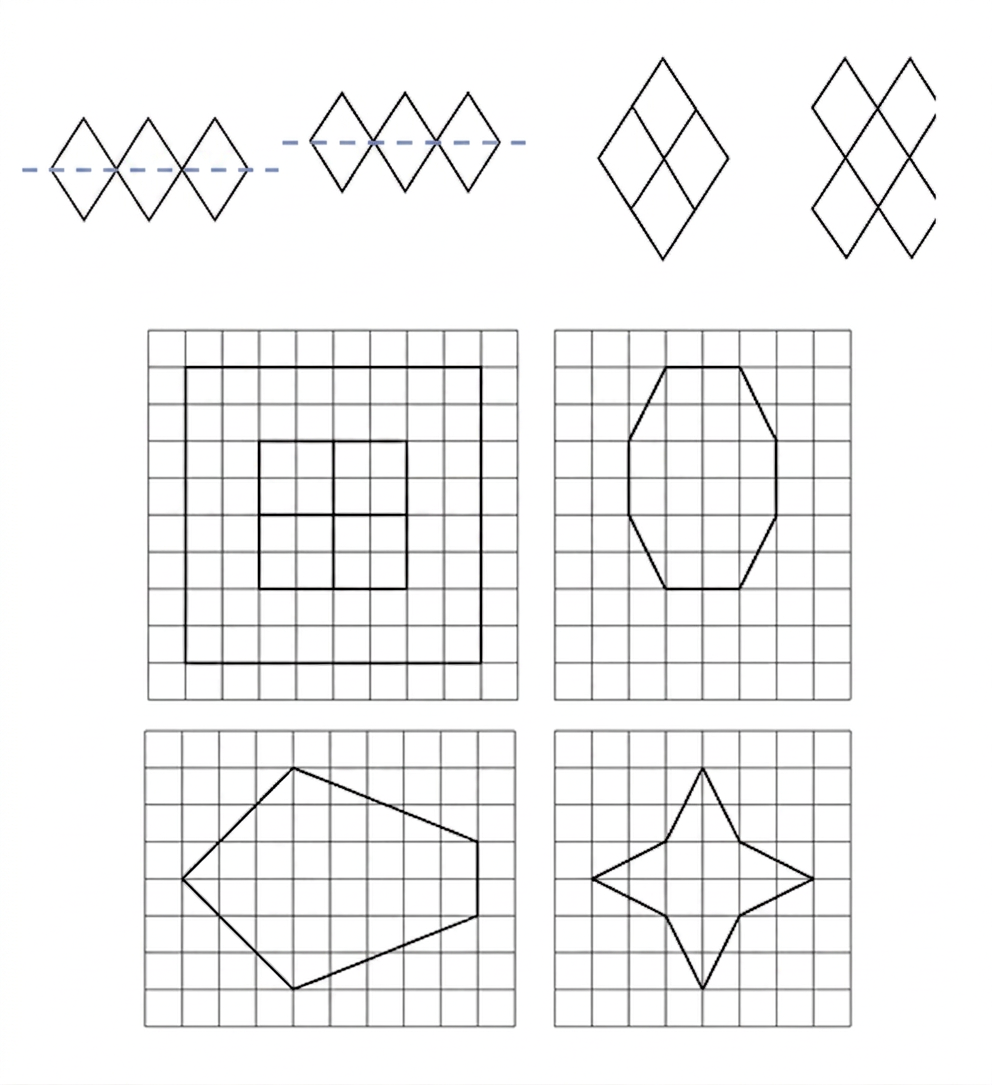
The shape is symmetric across the middle vertical and horizontal axes.
(vi) 2 lines of symmetry (1 vertical, 1 horizontal)
(vii) Seventh figure (irregular five-sided shape)
Step 1 · Find Lines of Symmetry
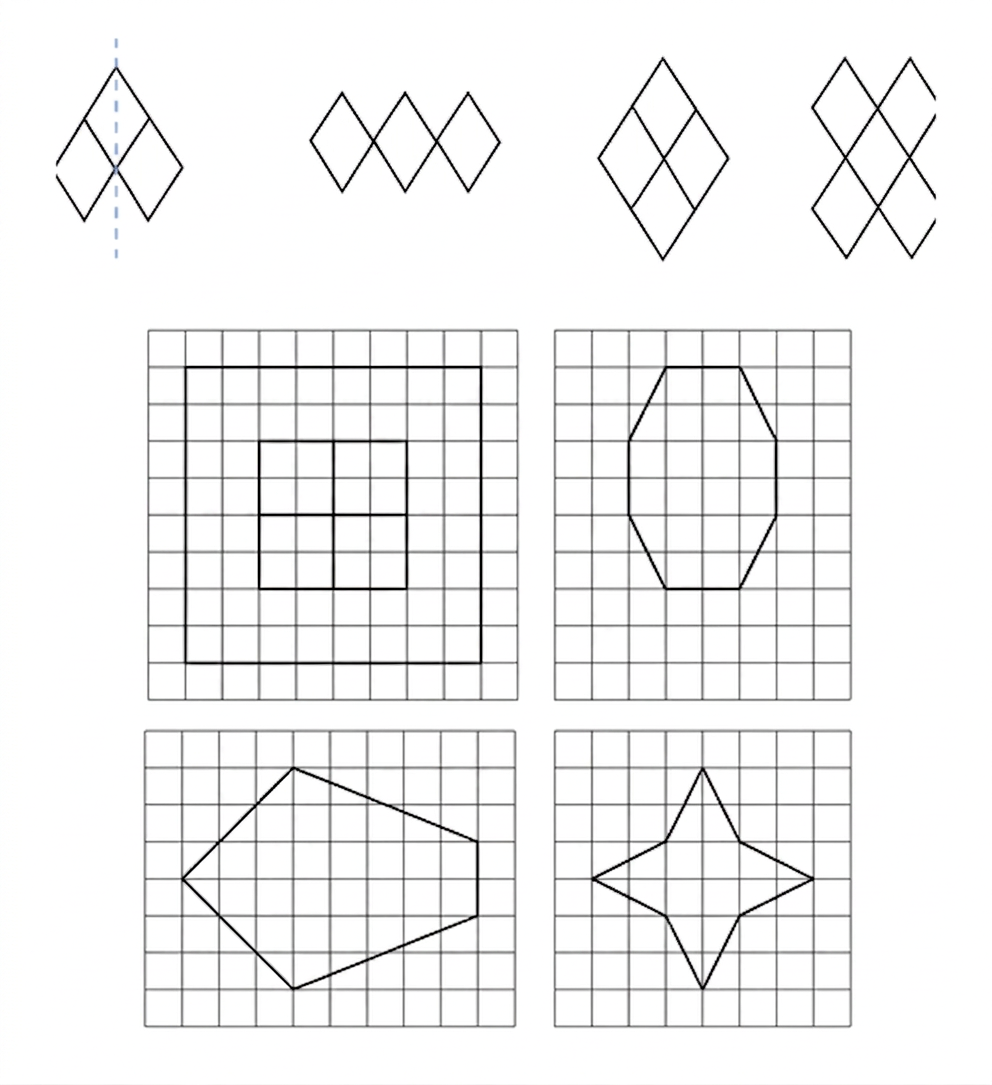
No line can divide this irregular shape into two mirror-image halves that coincide upon folding.
(vii) 0 (No line of symmetry)
(viii) Eighth figure (four-pointed star)
Step 1 · Find Lines of Symmetry
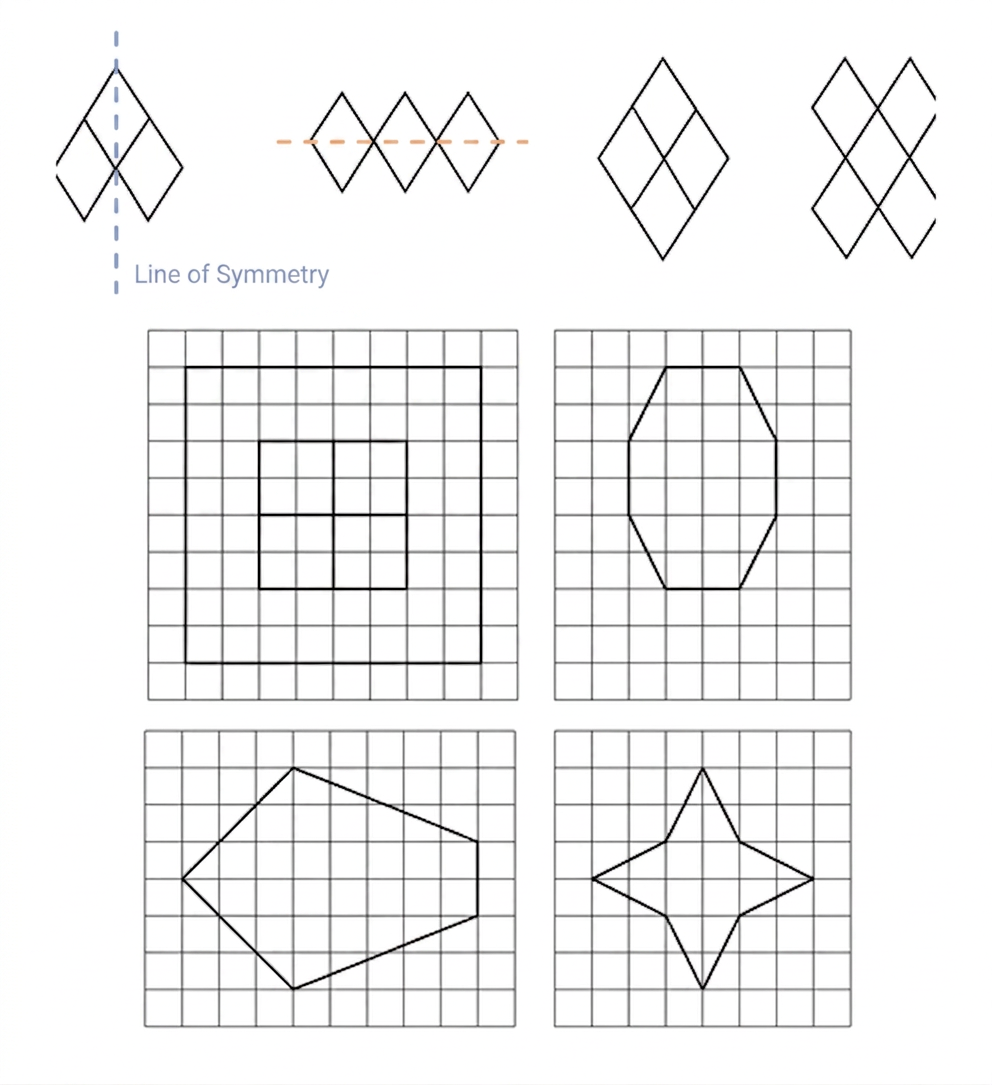
A symmetric four-pointed star has 4 lines of symmetry: along the vertical and horizontal axes through the points, and along the two diagonals between the points.
(viii) 4 lines of symmetry (1 vertical, 1 horizontal, 2 diagonal)
- Assuming diagonal symmetry for non-square shapes: Figures like cross shapes or non-regular octagons often have vertical and horizontal symmetry but lack diagonal symmetry.
- Missing diagonal lines in squares and stars: For regular squares and four-pointed stars, remember that the diagonal lines connecting opposite corners/vertices are also valid lines of symmetry.
More questions in FIO
Do you see any line of symmetry in the figures at the start of the chapter? What about in the picture of the cloud?
For each of the following figures, identify the line(s) of symmetry if it exists.
Punching Game
The fold is a line of symmetry. Punch holes at different locations of a folded square sheet of paper using a punching machine and create different symmetric patterns.
In each of the following figures, a hole was punched in a folded square sheet of paper and then the paper was unfolded. Identify the line along which the paper was folded. Figure (d) was created by punching a single hole. How was the paper folded?
Given the line(s) of symmetry, find the other hole(s):
Here are some questions on paper cutting. Consider a vertical fold. We represent it this way:
Vertical Fold
Similarly, a horizontal fold is represented as follows:
Horizontal Fold
After each of the following cuts, predict the shape of the hole when the paper is opened. After you have made your prediction, make the cutouts and verify your answer.
Trace each figure and draw the lines of symmetry, if any:
Copy the following on a dot grid. For each figure draw two more lines to make a shape that has a line of symmetry.
Find the angles of symmetry for the given figures about the point marked •.
(a) (b) (c)
Which of the following figures have more than one angle of symmetry?
Give the order of rotational symmetry for each figure:
Colour the sectors of the circle below so that the figure has:
(i) 3 angles of symmetry
(ii) 4 angles of symmetry
(iii) What are the possible numbers of angles of symmetry you can obtain by colouring the sectors in different ways?
Draw two figures other than a circle and a square that have both reflection symmetry and rotational symmetry.
Draw, wherever possible, a rough sketch of:
a. A triangle with at least two lines of symmetry and at least two angles of symmetry.
b. A triangle with only one line of symmetry but not having rotational symmetry.
c. A quadrilateral with rotational symmetry but no reflection symmetry.
d. A quadrilateral with reflection symmetry but not having rotational symmetry.
In a figure, is the smallest angle of symmetry. What are the other angles of symmetry of this figure?
In a figure, is an angle of symmetry. The figure has two angles of symmetry less than . What is its smallest angle of symmetry?
Can we have a figure with rotational symmetry whose smallest angle of symmetry is:
a. ?
b. ?