Question 2
How can we partition the dots in a square grid into odd numbers of dots: ?
- A square grid of dots (such as , , , etc.) can be built or partitioned in concentric L-shaped layers (also called gnomons).
- Starting from a single dot in one corner (), each successive outer layer forms an "L" shape that contains the next odd number of dots ().
- Thus, the total dots in an square equal the sum of the first odd numbers: .
Step 1 · Remove the Outermost Layer of a 3 × 3 Grid
Consider a square grid consisting of dots in total.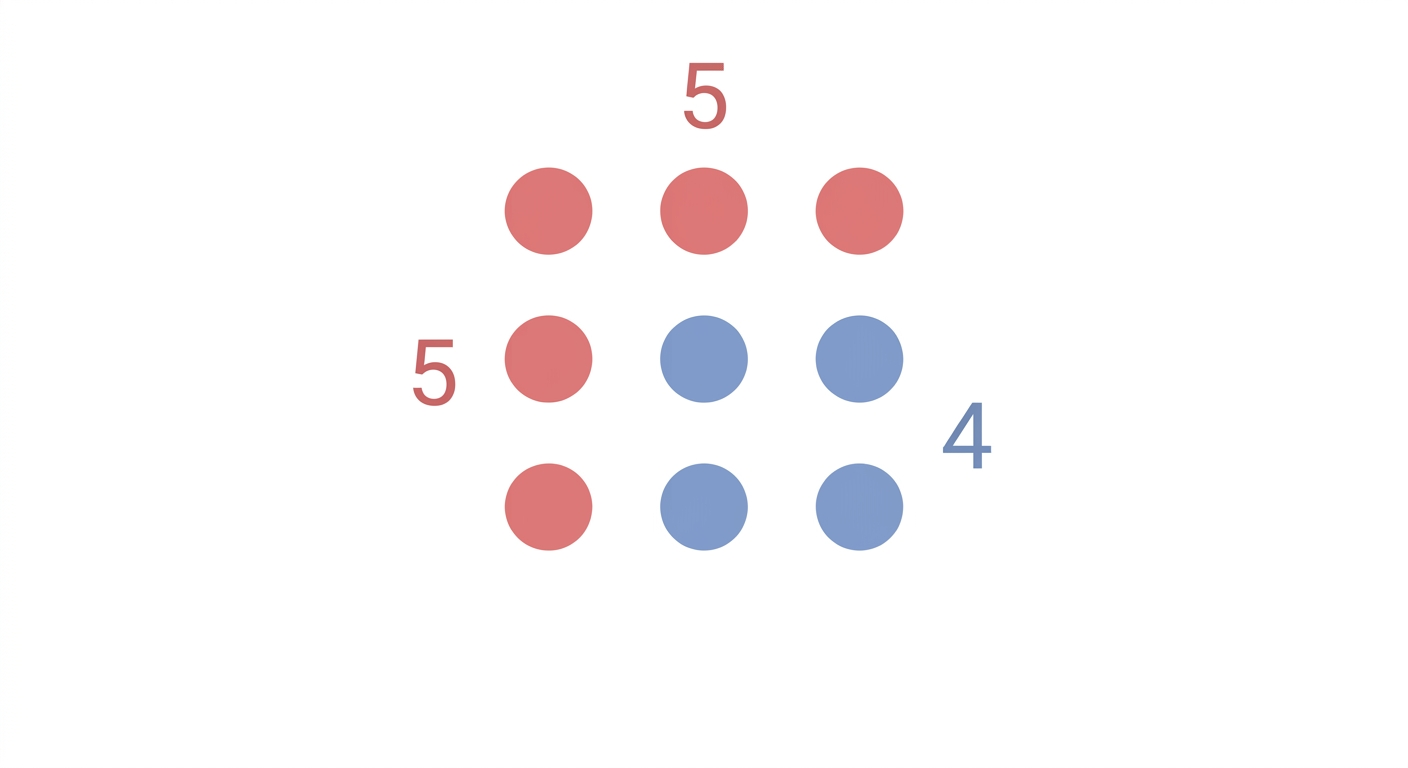
Removing the outermost L-shaped layer of dots leaves a square:
Step 2 · Remove the Next Layer
From the remaining square containing dots, remove its outer L-shaped layer of dots.
Step 3 · Identify the Final Corner Dot
The remaining square consists of just dot at the corner.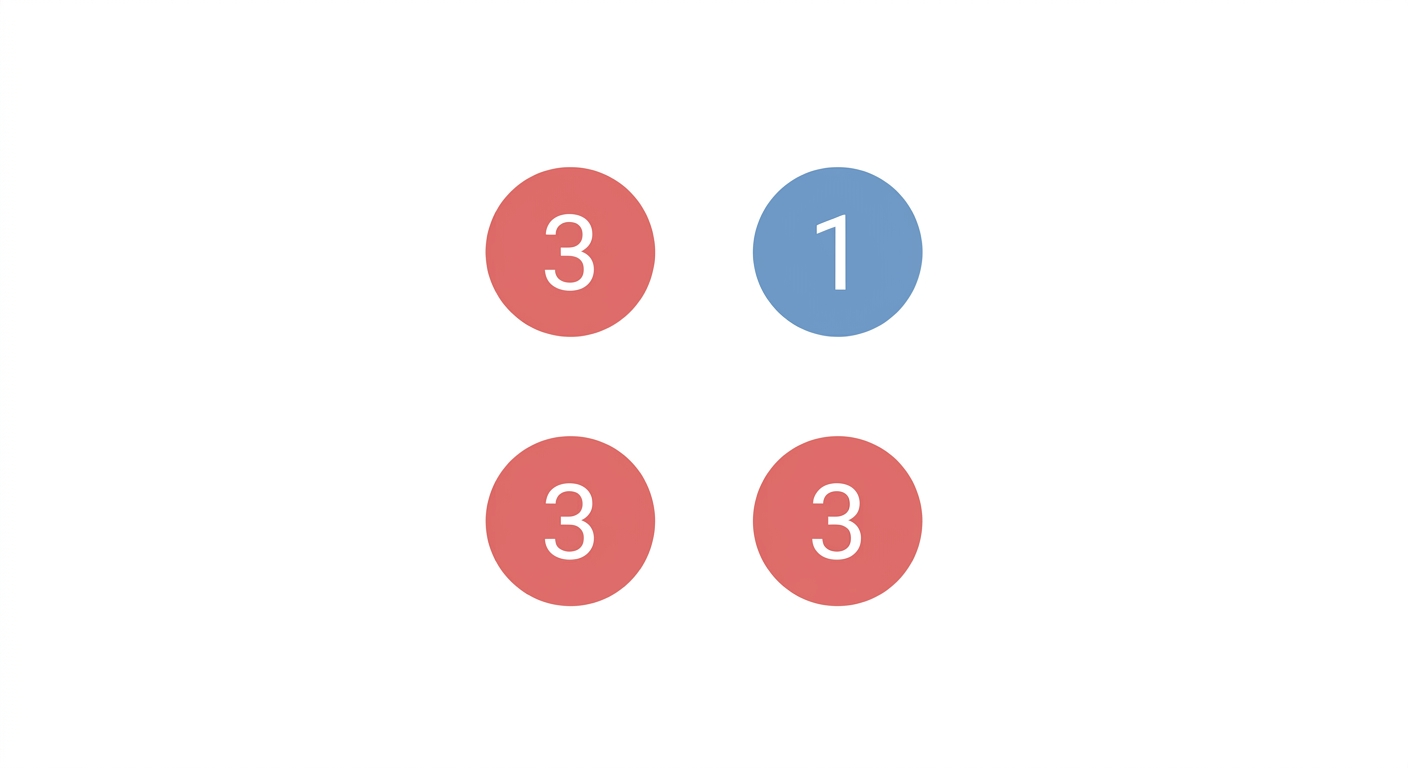
Thus, the square grid is partitioned into consecutive odd numbers:
Step 4 · Generalize to Any Square Grid
This method applies to any square grid of size by peeling off successive L-shaped borders.
For example, a grid ( dots) is partitioned by removing layers of , , , and dots:
A square grid can be partitioned into odd numbers of dots () by dividing it into successive nested L-shaped layers starting from the single corner dot.
- Splitting by rows or columns: Partitioning horizontally or vertically gives equal groups of dots instead of consecutive odd numbers ().
- Miscounting the corner dot in an L-shape: When counting an L-shaped layer of side length , ensure the corner dot is only counted once: each layer has dots.
More questions in IT
Why does this happen? Do you think it will happen forever?
How can we partition the dots in a square grid into odd numbers of dots: ?
By drawing a similar picture, can you say what is the sum of the first 10 odd numbers?
Now by imagining a similar picture, or by drawing it partially, as needed, can you say what is the sum of the first 100 odd numbers?
Can you find a similar pictorial explanation?