Question 2
How can we partition the dots in a square grid into odd numbers of dots: 1, 3, 5, 7,... ?
We can break down a square grid into layers of odd numbers of dots.
Step 1 — The largest layer
Let us take a square grid. It has 9 dots in total. We can remove the outermost 'L' shape. This 'L' shape has 5 dots. We are left with a square.
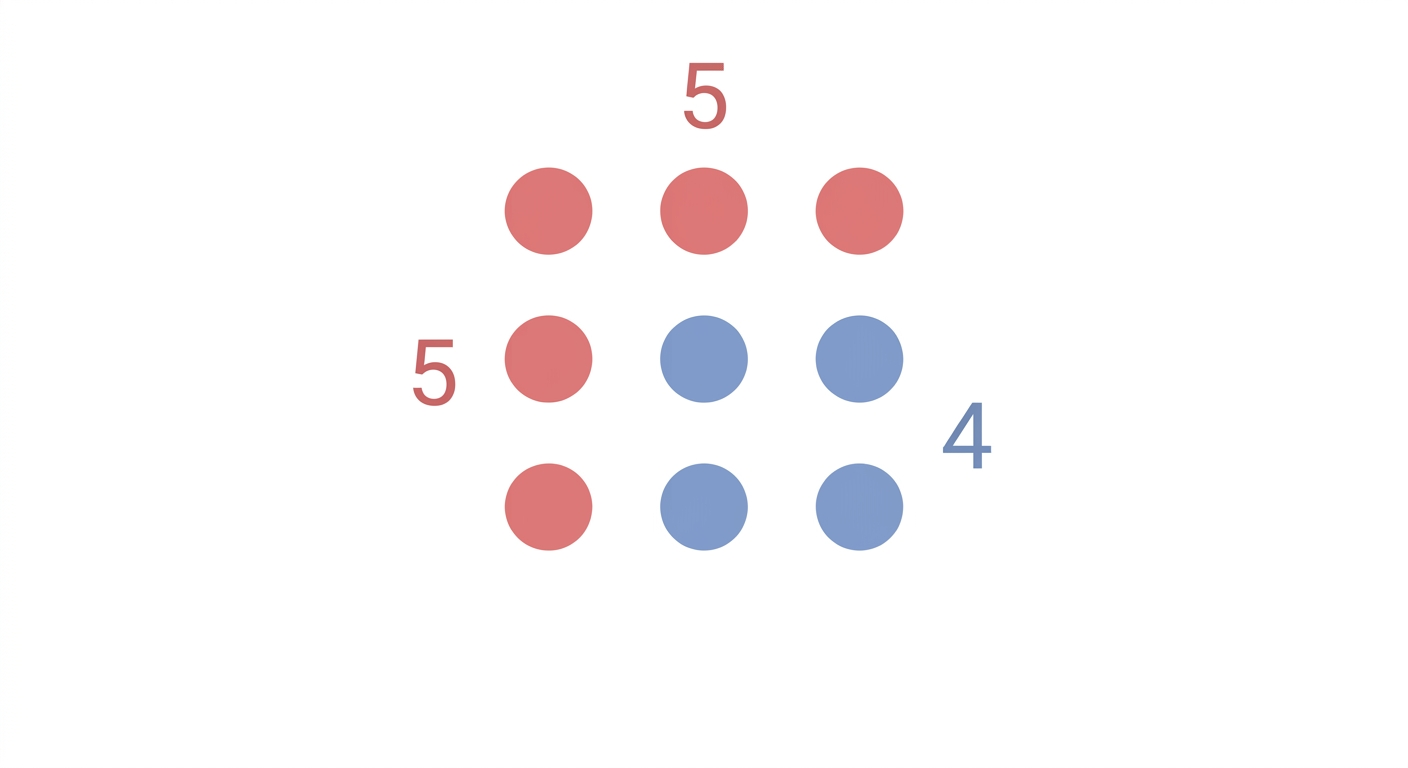
Step 2 — The next layer
Now we have a square. It has 4 dots. We can remove its outermost 'L' shape. This 'L' shape has 3 dots. We are left with a square.

Step 3 — The final layer
Now we have a square. It has 1 dot. This is the last odd number. We have successfully partitioned the grid. The parts are 5, 3, and 1 dots.
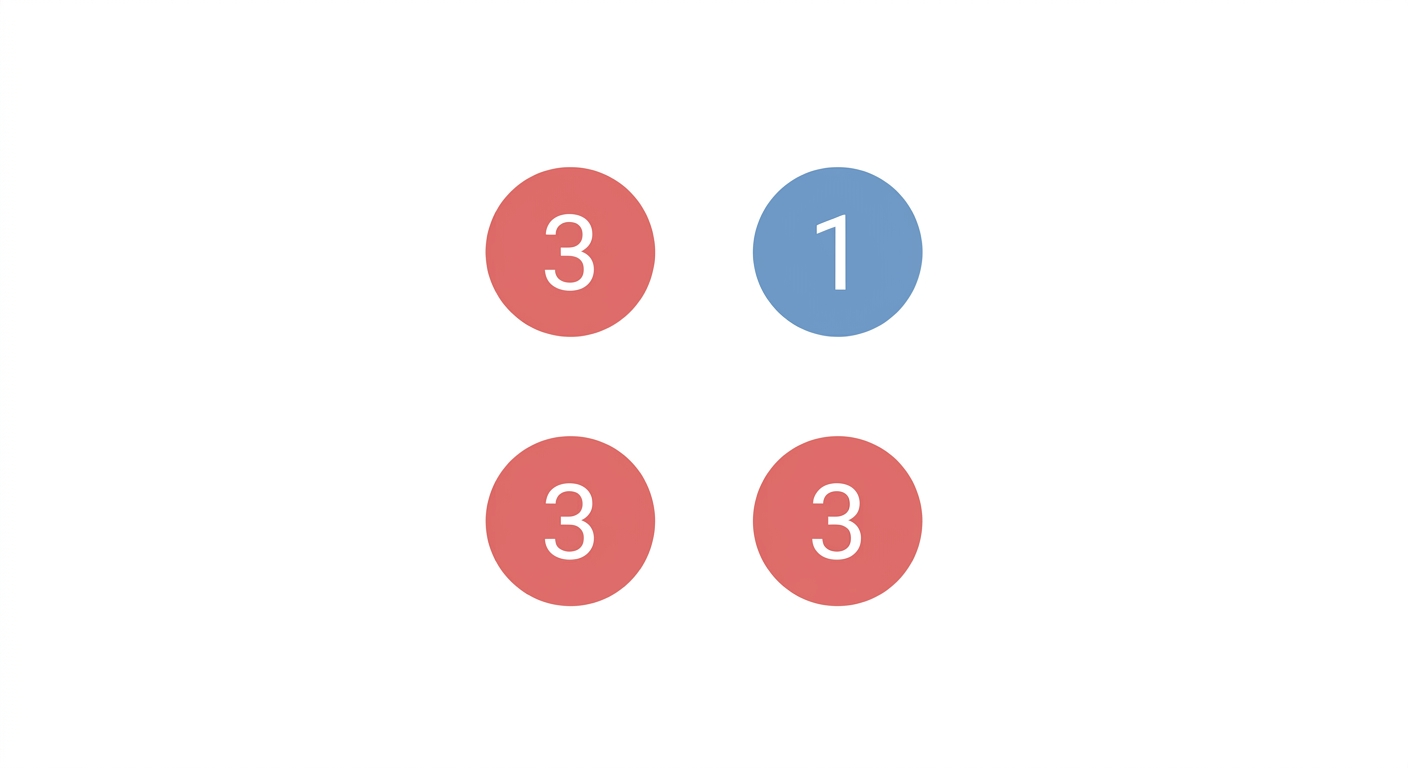
Step 4 — Generalizing the pattern
This method works for any square grid. For a grid, we would first remove 7 dots. Then we remove 5 dots. Then we remove 3 dots. Finally, we are left with 1 dot. The parts are 7, 5, 3, and 1. This partitions the grid into odd numbers.
More questions in IT
Why does this happen? Do you think it will happen forever?
How can we partition the dots in a square grid into odd numbers of dots: 1, 3, 5, 7,... ?
By drawing a similar picture, can you say what is the sum of the first 10 odd numbers?
Now by imagining a similar picture, or by drawing it partially, as needed, can you say what is the sum of the first 100 odd numbers?
Can you find a similar pictorial explanation?