Question 3
Try to recreate the figure where the waves are smaller than a half circle (as appearing in the neck of the figure, 'A Person'). The challenge here is to get both the waves to be identical. This may be tricky!
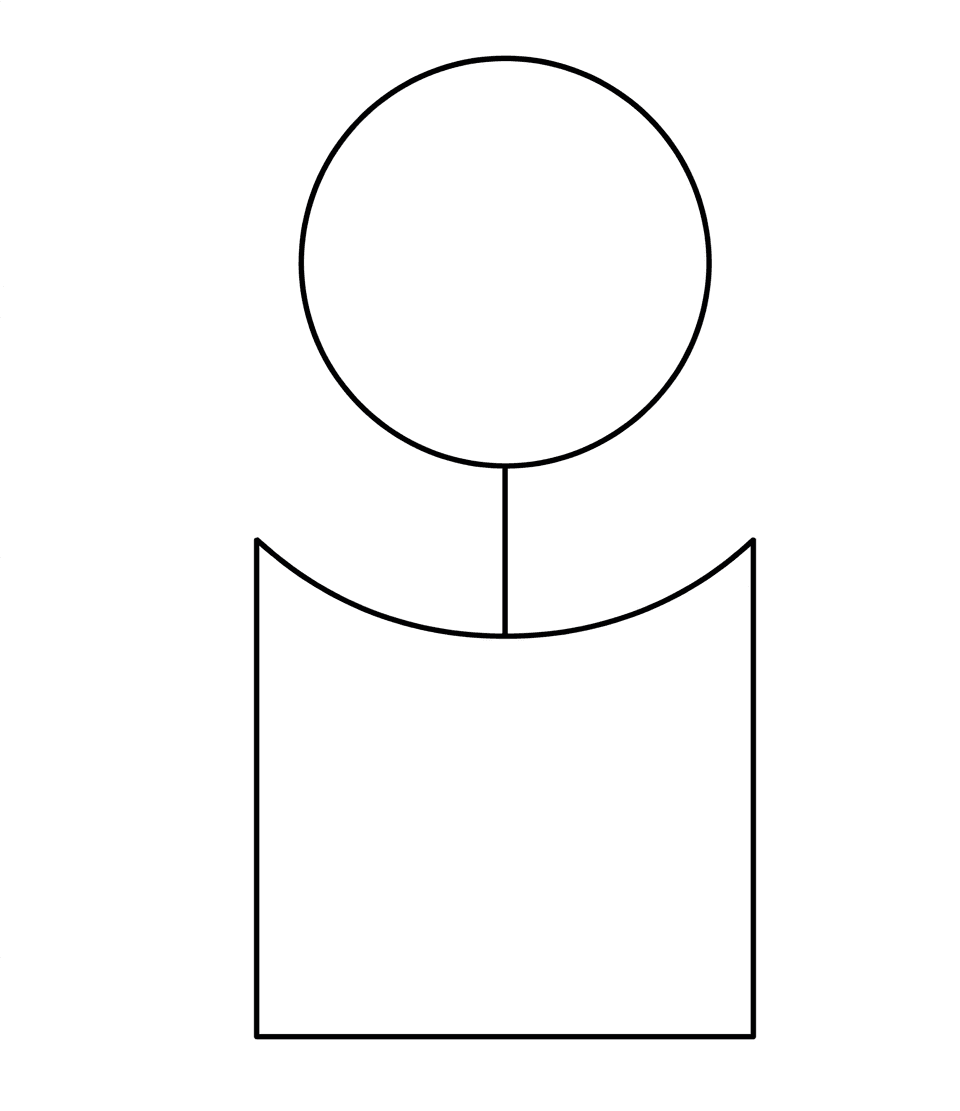
- To recreate the figure 'A Person', we construct a geometric drawing consisting of:
- A rectangular body of dimensions .
- A circular head of radius centered above the midpoint of the body's top edge.
- Two identical circular arcs (waves) of radius connecting the shoulders to the neck midpoint.
- Because the radius () is greater than half the span of each wave (), the resulting arcs are strictly smaller than a semicircle.
Step 1 · Draw the Body
Draw a rectangle where:
- Width
- Height
- and are the top-left and top-right vertices, while and are the bottom-left and bottom-right vertices.
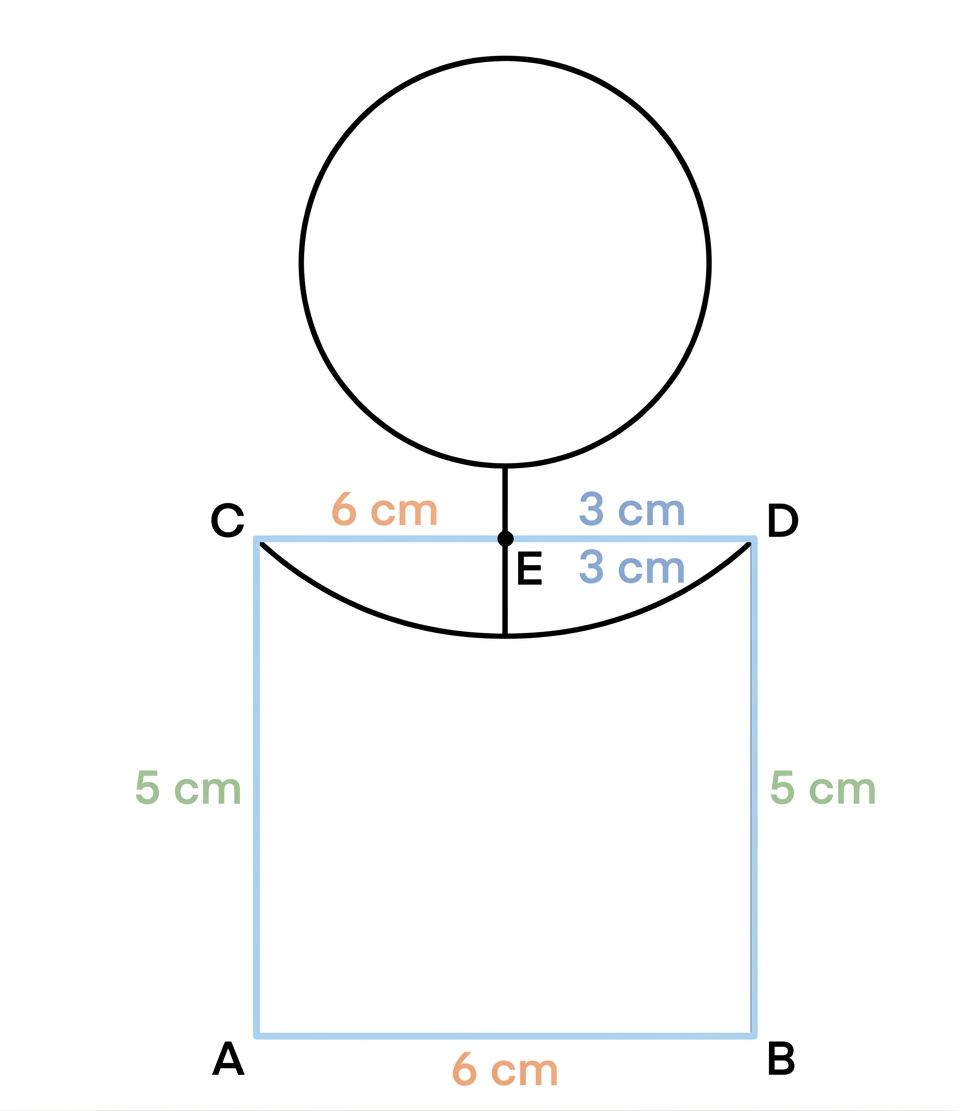
Step 2 · Mark the Neck Midpoint
Find and mark the midpoint of the top side :
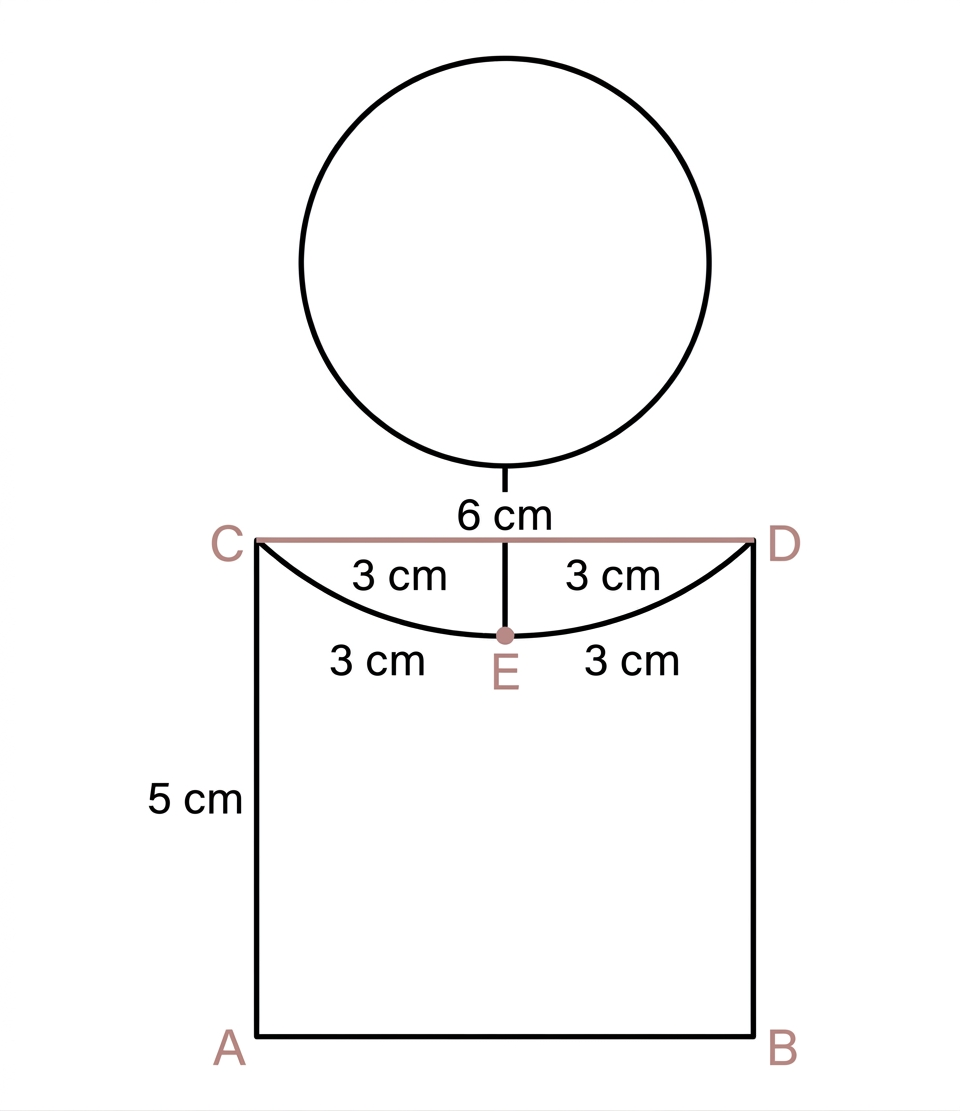
Step 3 · Draw the Neck and Head
- From point , draw a vertical line segment upwards of length and mark the endpoint as .
- With as the center, draw a circle of radius to form the head.
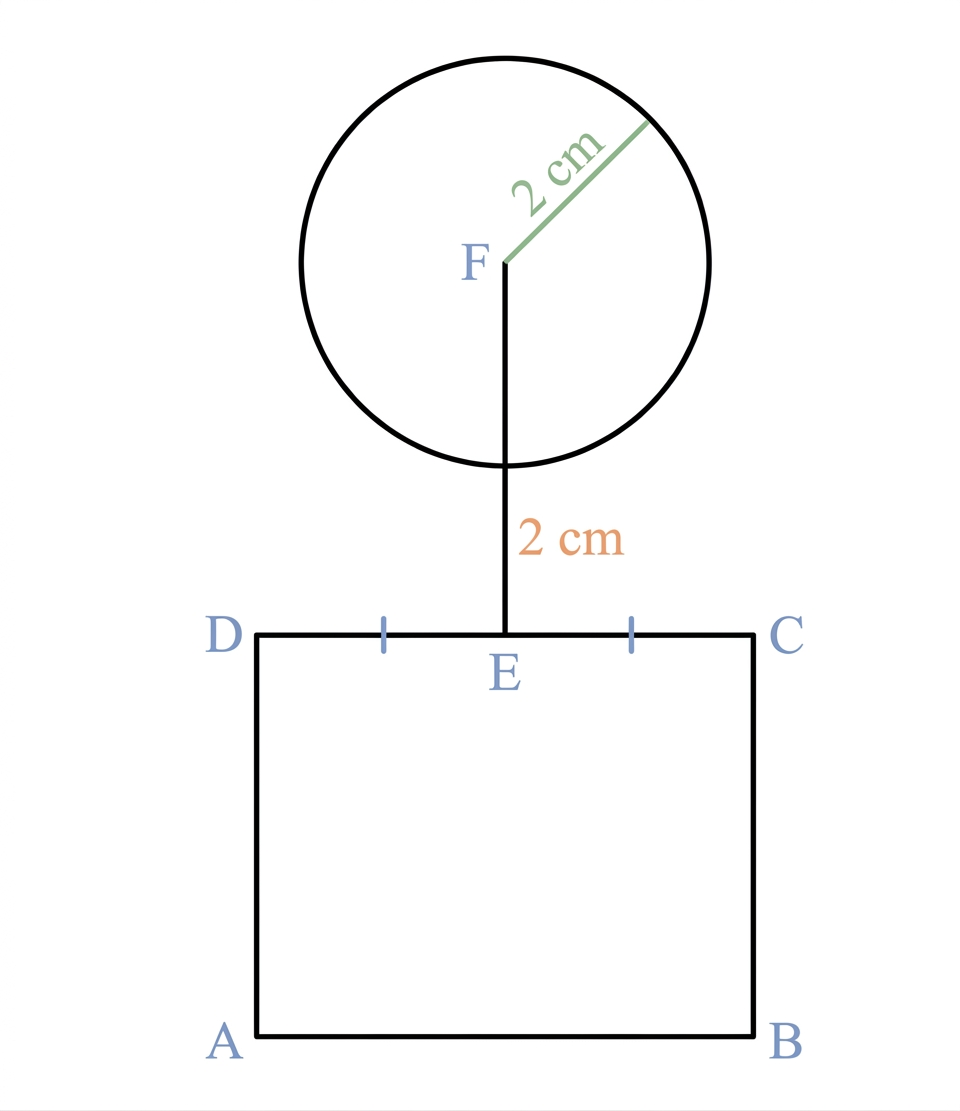
Step 4 · Construct the Identical Neck Waves
To construct two identical arcs on segments and :
- Set compass radius to (which is greater than ).
- First arc ( to ):
- With compass at , draw an arc above line .
- With compass at , draw another arc intersecting the first at point .
- With center and radius , draw arc .
- Second arc ( to ):
- With compass at , draw an arc above line .
- With compass at , draw another arc intersecting the first at point .
- With center and radius , draw arc .
Since the radius , both arcs are identical and smaller than a semicircle.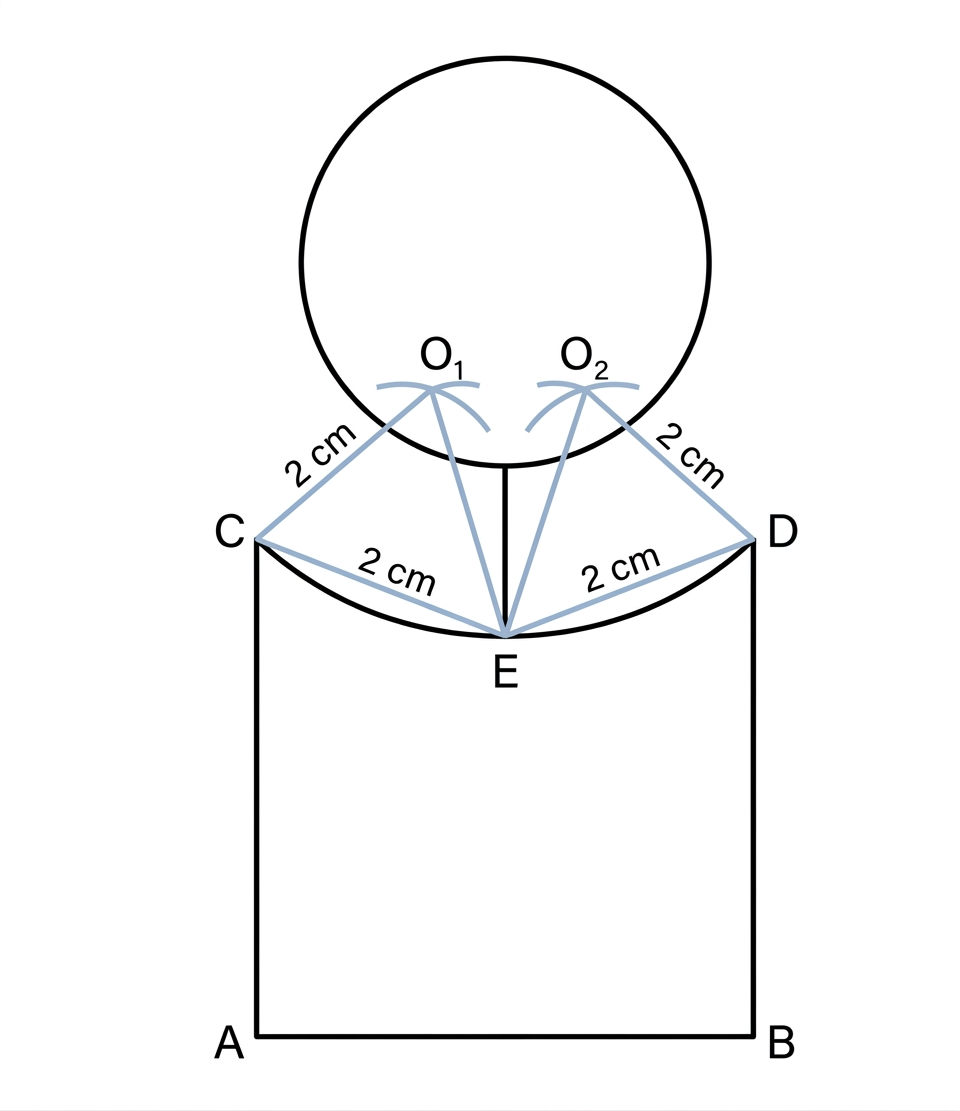
The figure is constructed with a rectangular body (), a circular head of radius , and two identical neck arcs of radius .
- Radius Too Small: Setting the compass width to less than (half of ), which prevents the intersecting arcs from meeting to find centers and .
- Non-Identical Waves: Changing the compass radius between constructing the first arc and the second arc .
- Drawing Semicircles: Using a radius of with centers directly on line , which produces exact semicircles instead of arcs smaller than a half circle.
More questions in FIO
What radius should be taken in the compass to get this half circle? What should be the length of ?
Take a central line of a different length and try to draw the wave on it.
Try to recreate the figure where the waves are smaller than a half circle (as appearing in the neck of the figure, 'A Person'). The challenge here is to get both the waves to be identical. This may be tricky!
Draw the rectangle and four squares configuration (shown in Fig. 8.3) on a dot paper.
What did you do to recreate this figure so that the four squares are placed symmetrically around the rectangle? Discuss with your classmates.
Identify if there are any squares in this collection. Use measurements if needed.
Think: Is it possible to reason out if the sides are equal or not, and if the angles are right or not without using any measuring instruments in the above figure? Can we do this by only looking at the position of corners in the dot grid?
Draw at least 3 rotated squares and rectangles on a dot grid. Draw them such that their corners are on the dots. Verify if the squares and rectangles that you have drawn satisfy their respective properties.