Question 2
Give two different examples of pair of
(i) similar figures. (ii) non-similar figures.
- Similar figures have the same shape, equal corresponding angles, and proportional corresponding sides, though their sizes may differ.
- Non-similar figures do not share the same shape (for example, having a different number of sides, unequal angles, or non-proportional sides).
(i) similar figures.
Step 1 · Examples of Similar Figures
Example 1: Two equilateral triangles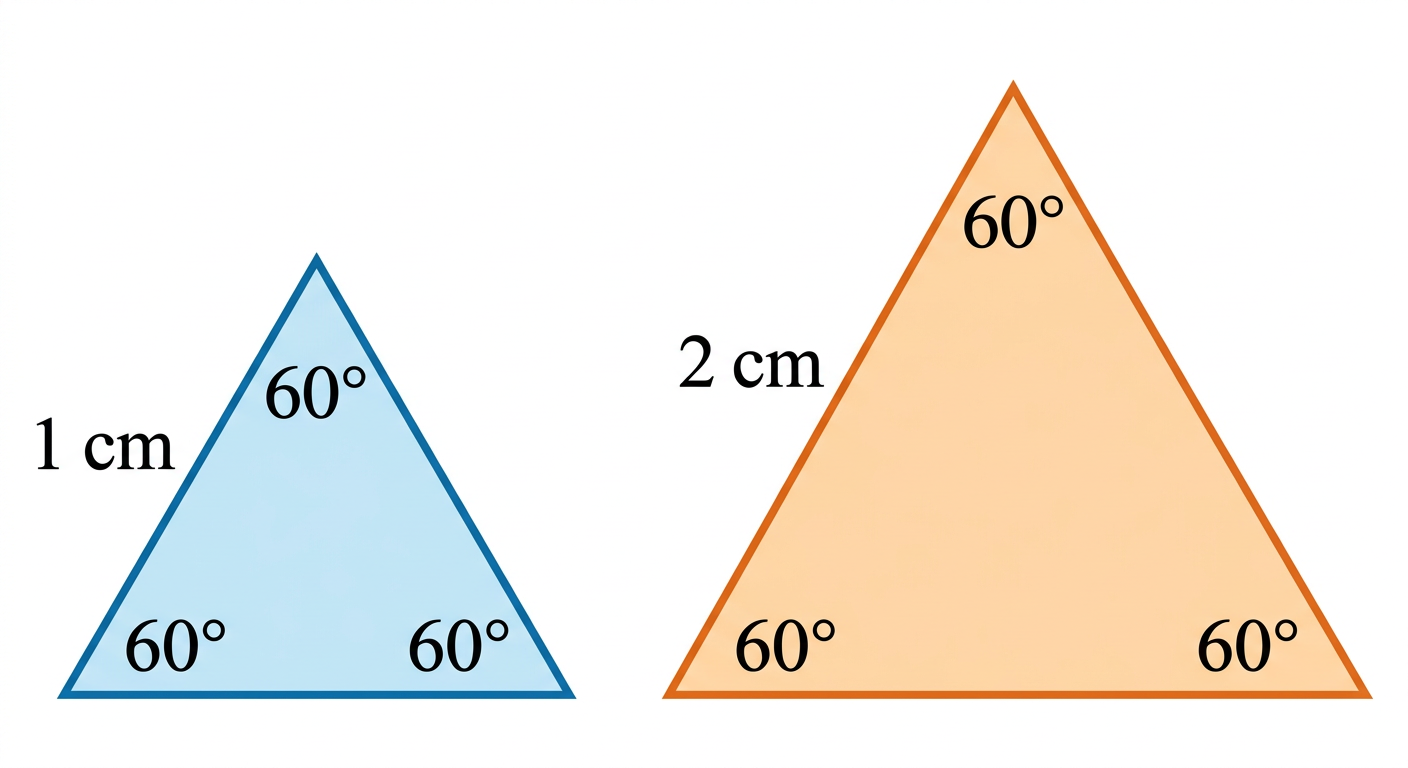
- Triangle 1 with side length and Triangle 2 with side length .
- All interior angles are , and the ratio of corresponding sides is .
Example 2: Two squares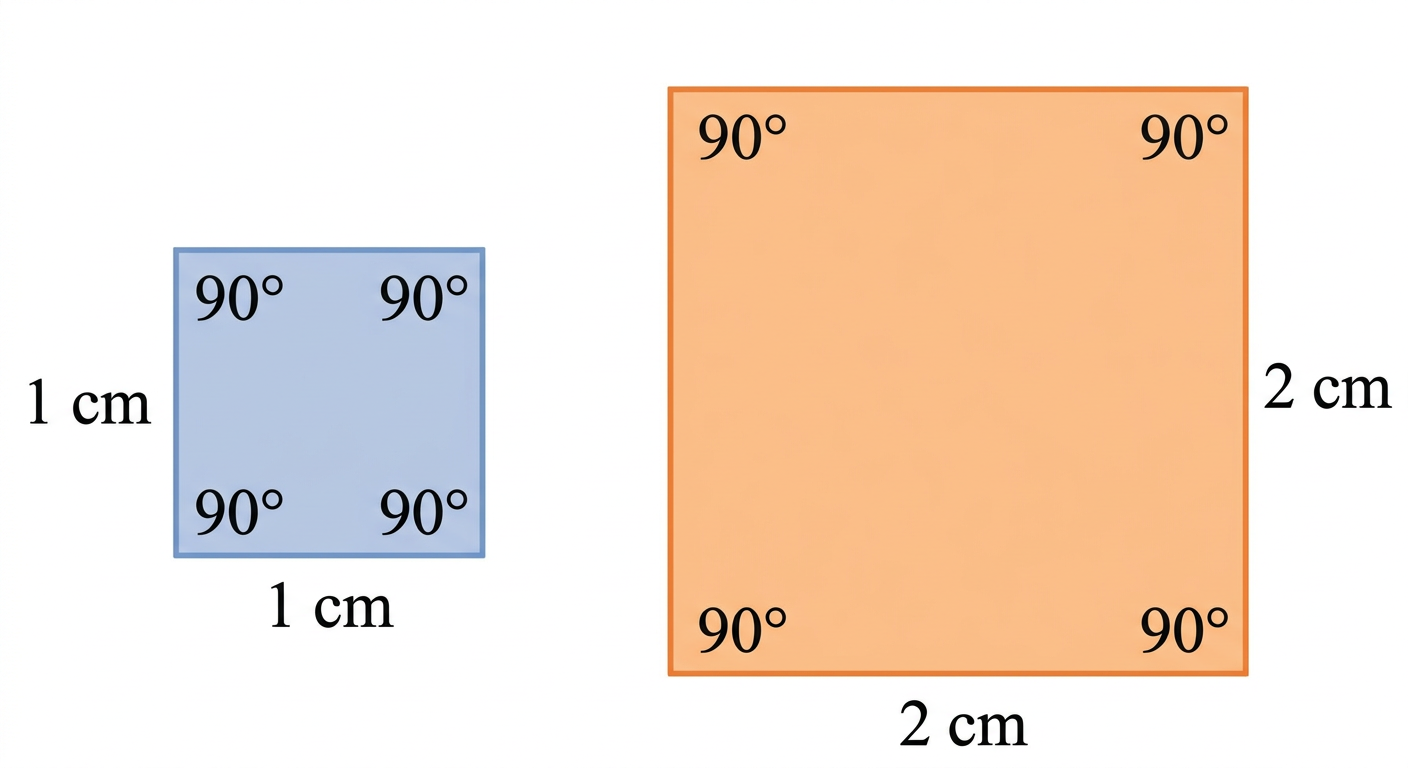
- Square 1 with side length and Square 2 with side length .
- All angles are , and the ratio of corresponding sides is .
(i) 1. Two equilateral triangles with sides and
- Two squares with sides and
(ii) non-similar figures.
Step 1 · Examples of Non-Similar Figures
Example 1: A trapezium and a square* A trapezium has only one pair of parallel sides, whereas a square has four equal sides and all right angles. Their shapes are different.
Example 2: A triangle and a parallelogram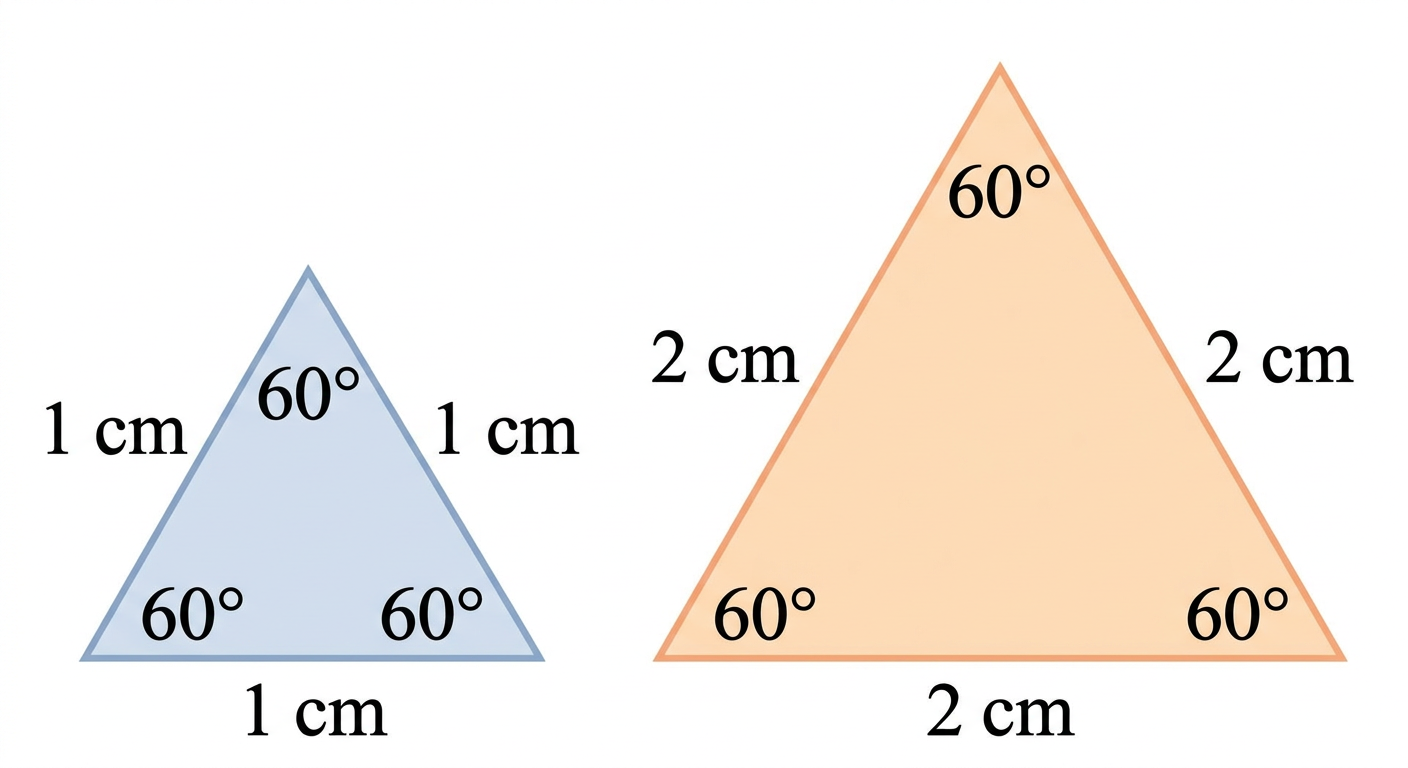
- A triangle has sides while a parallelogram has sides. Since they have a different number of sides, they cannot have the same shape.
(ii) 1. A trapezium and a square
- A triangle and a parallelogram
- Assuming All Rectangles are Similar: While all angles in any rectangle are , the ratio of adjacent sides (length to breadth) may not be equal, so two arbitrary rectangles are not necessarily similar.
- Confusing Congruence with Similarity: Congruent figures have both the same shape and size. Similar figures only need the same shape (sizes can differ).
More questions in Exercise 6.1
Fill in the blanks using the correct word given in brackets :
(i) All circles are __________ . (congruent, similar)
(ii) All squares are __________ . (similar, congruent)
(iii) All __________ triangles are similar. (isosceles, equilateral)
(iv) Two polygons of the same number of sides are similar, if (a) their corresponding angles are __________ and (b) their corresponding sides are __________ . (equal, proportional)
Give two different examples of pair of
(i) similar figures. (ii) non-similar figures.
State whether the following quadrilaterals are similar or not: