Question 2
Think about how many combinations are possible in different contexts. Some examples are—
(i) Pincodes of places in India—The Pincode of Vidisha in Madhya Pradesh is 464001. The Pincode of Zemabawk in Mizoram is 796017.
(ii) Mobile numbers.
(iii) Vehicle registration numbers.
Try to find out how these numbers or codes are allotted/generated.
- The total number of possible combinations in structured numbering systems is determined by the Fundamental Counting Principle (Multiplication Rule): multiply the number of available possibilities for each position.
- For numerical digits ( to ), there are possible choices per position.
- For English alphabets ( to ), there are possible choices per position.
- Any specific restrictions (such as allowed starting digits) modify the number of choices for those specific positions.
(i) Pincodes of places in India—The Pincode of Vidisha in Madhya Pradesh is 464001. The Pincode of Zemabawk in Mizoram is 796017.
Step 1 · Calculate Theoretical PIN Code Combinations
A Postal Index Number (PIN) code consists of digits:
- 1st digit: Postal region
- 2nd digit: Sub-region
- 3rd digit: Sorting district
- Last 3 digits: Specific post office
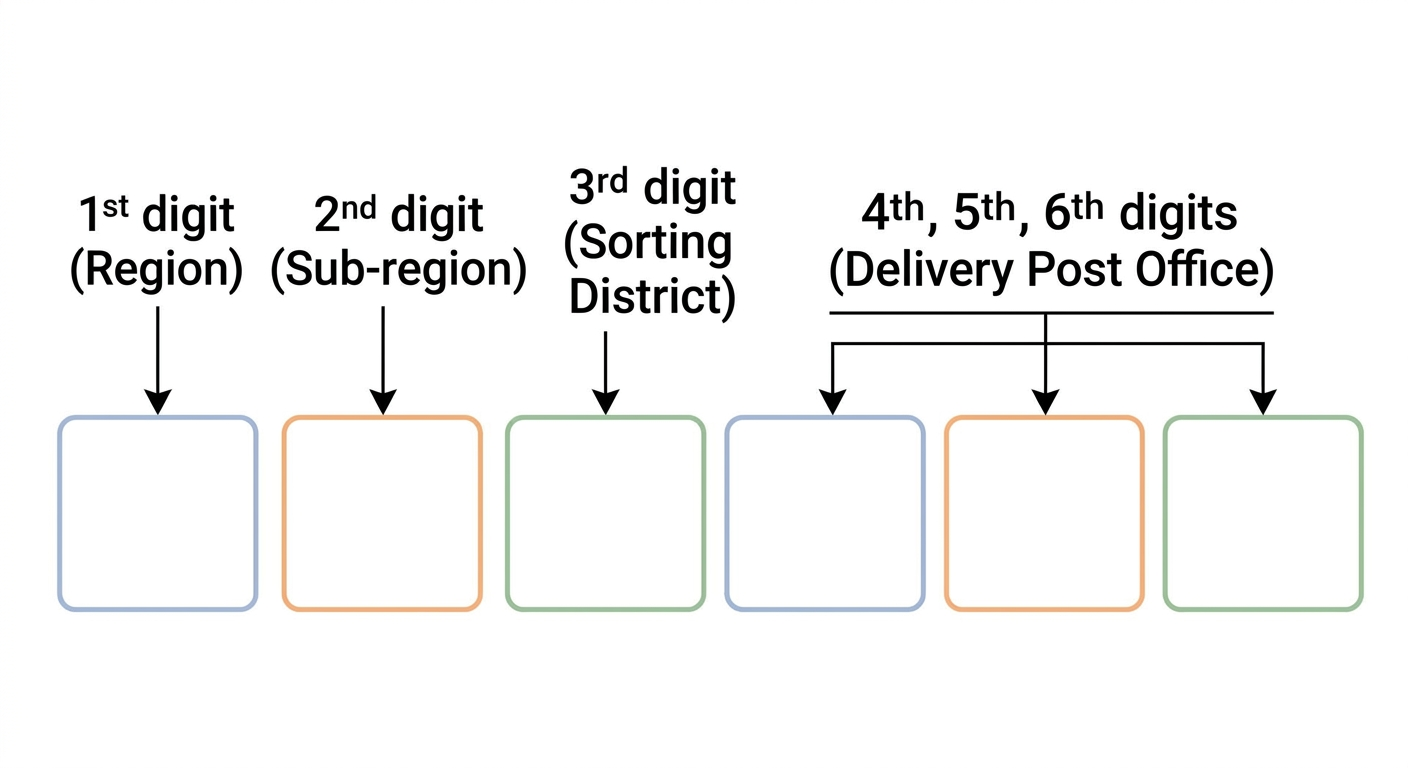
Each of the positions can be any digit from to ( choices each):
- Number of choices for the 1st digit
- Number of choices for the 2nd digit
- Number of choices for the 3rd digit
- Number of choices for the 4th digit
- Number of choices for the 5th digit
- Number of choices for the 6th digit
(i)
(ii) Mobile numbers.
Step 1 · Calculate Mobile Number Combinations
Indian mobile numbers contain digits and start with or .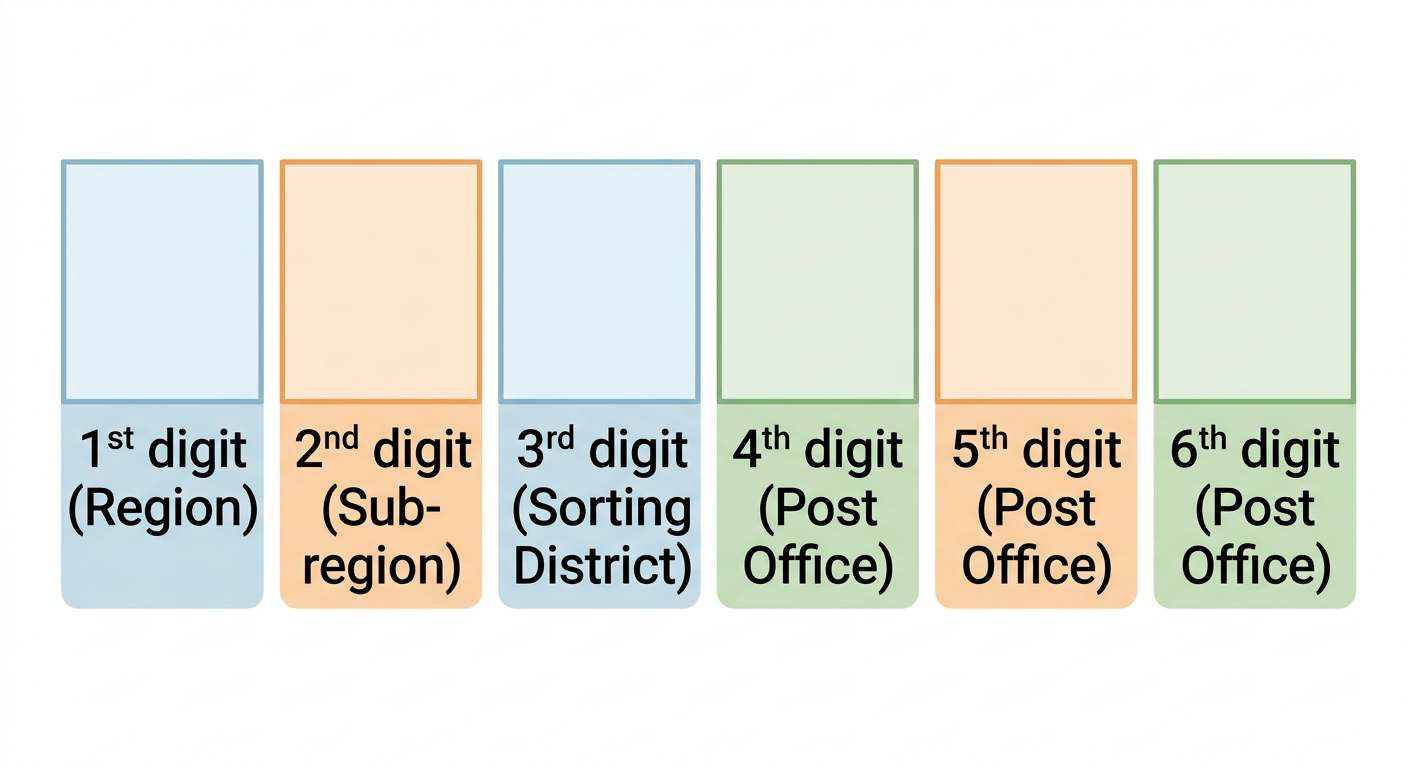
- Number of choices for the 1st digit
- Number of choices for the 2nd digit
- Number of choices for the 3rd digit
- Number of choices for the 4th digit
- Number of choices for the 5th digit
- Number of choices for the 6th digit
- Number of choices for the 7th digit
- Number of choices for the 8th digit
- Number of choices for the 9th digit
- Number of choices for the 10th digit
(ii)
(iii) Vehicle registration numbers.
Step 1 · Calculate Vehicle Registration Combinations per RTO
A standard vehicle registration format (e.g., DL 01 AB 1234) has:
- State/UT code ( letters)
- RTO code ( digits)
- Series ( letters)
- Unique vehicle number ( digits)
For a specific RTO (fixed State and RTO code):
-
Number of choices for the 1st letter of the series
-
Number of choices for the 2nd letter of the series
-
Number of choices for each of the digits
(iii) per RTO
- Addition vs. Multiplication: Adding the possibilities () instead of multiplying them () across independent positions.
- Ignoring Position Constraints: Assuming choices for all digits in mobile numbers instead of accounting for the allowed starting digits ().
- Confusing Letters and Digits: Using base- for alphabetical series positions instead of letters (A–Z).
More questions in A
How many times can you fold it over and over?
Estu says “I heard that a sheet of paper can’t be folded more than 7 times”.
Roxie replies “What if we use a thinner paper, like a newspaper or a tissue paper?”
Try it with different types of paper and see what happens.
Think about how many combinations are possible in different contexts. Some examples are—
(i) Pincodes of places in India—The Pincode of Vidisha in Madhya Pradesh is 464001. The Pincode of Zemabawk in Mizoram is 796017.
(ii) Mobile numbers.
(iii) Vehicle registration numbers.
Try to find out how these numbers or codes are allotted/generated.
Tremendous in Ten!
Find a partner to play this game with. In 10 seconds, the person who writes a number or an expression, using only the digits 0-9 and arithmetic operations, that gives a number that is the larger between the two wins the round.
Below are some conditions that you may consider for different rounds.
(i) Exponents are not allowed. Only addition is allowed.
(ii) Exponents are not allowed. Only addition and multiplication are allowed.
(iii) Exponents are allowed. Only addition is allowed.
(iv) Exponents are allowed. Any arithmetic operation is allowed.
You can create your own conditions and/or involve more people to play together.