Question 2
Try again, and choose different numbers this time. What product did you get? Was it different from the first time? Try a few more times with different numbers!
Play the same game with the grid below. What answer do you get?
What is so special about these grids? Is the magic in the numbers or the way they are arranged or both? Can you make more such grids?
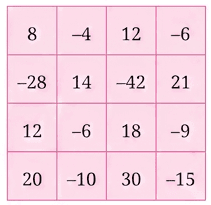
- In this grid game, we select four numbers such that no two numbers belong to the same row or column (exactly one number is picked from each row and each column).
- Multiplying the chosen numbers always results in the same constant product: .
- This happens because each cell in the grid is generated by multiplying a row factor and a column factor (). Selecting one entry from each row and column multiplies all row factors and column factors together: , which is constant regardless of the selection.
(i) Play the game with different selections of numbers from the grid. What product do you get? Is it different from the first time?
Step 1 · Calculate Product for First Selection (Main Diagonal)
Select one number from each row and column along the main diagonal: , , , and .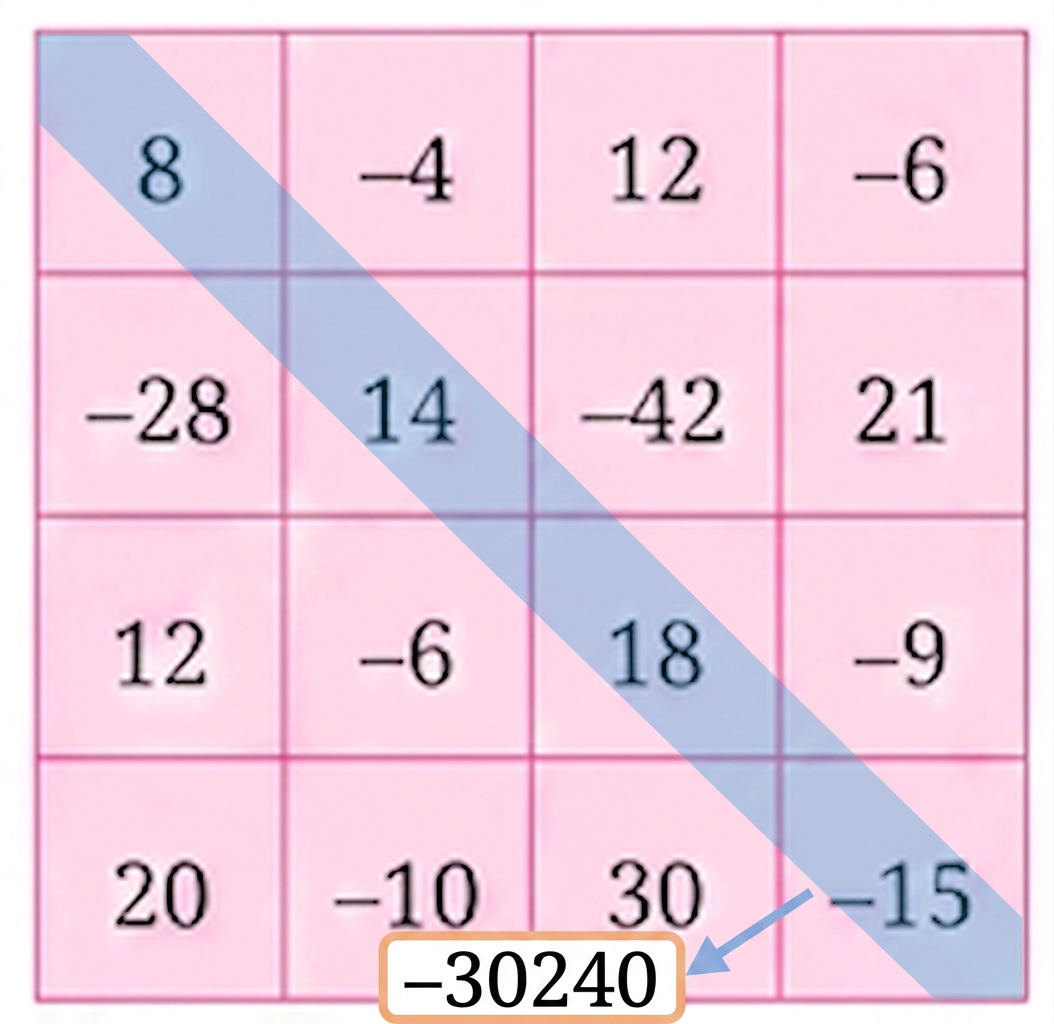
Step 2 · Calculate Product for Second Selection (Anti-Diagonal)
Select another set of numbers along the anti-diagonal: , , , and .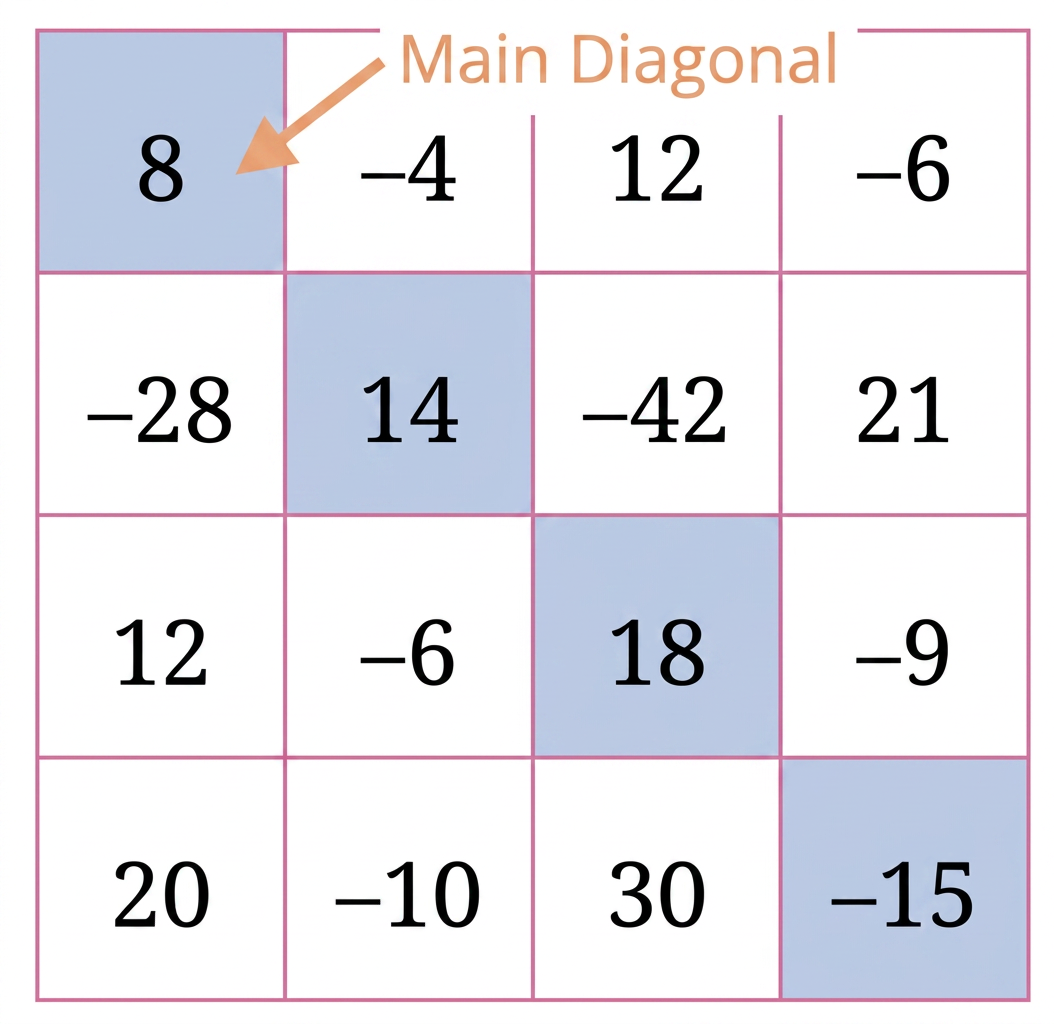
(i)
(ii) What is so special about these grids? Is the magic in the numbers or the way they are arranged or both?
Step 1 · Find Row and Column Factors
Let each cell , where is the row factor and is the column factor. Setting , we find the column factors from the first row:
Using , we find the remaining row factors from the first column:
Verifying for :
For any selection picking one number from each row and column:
Calculating the constant value:
(ii) Each grid cell is the product of a row factor and a column factor (). Choosing one number from each row and column always yields the product of all row and column factors, . The magic is in both the numbers and their arrangement.
(iii) Can you make more such grids?
(iii) Yes, we can create more grids by choosing any set of row factors and column factors and multiplying them to fill each cell of the grid.
- Picking Duplicate Rows/Columns: Selecting two numbers from the same row or column breaks the rule and leads to an incorrect product.
- Sign Errors: Mishandling the negative signs during sequential multiplication; an odd number of negative factors always results in a negative final product.
More questions in A
A Magic Grid of Integers
A grid containing some numbers is given below. Follow the steps as shown until no number is left.
When there are no more unstruck numbers, stop. Multiply the circled numbers. An example is shown below.
Try again, and choose different numbers this time. What product did you get? Was it different from the first time? Try a few more times with different numbers!
Play the same game with the grid below. What answer do you get?
What is so special about these grids? Is the magic in the numbers or the way they are arranged or both? Can you make more such grids?