Question 27
Find the prime factorisations of the following numbers: 64, 104, 105, 243, 320, 141, 1728, 729, 1024, 1331, 1000.
- Prime factorisation means expressing a number as a product of only prime numbers ().
- To find the prime factorisation of a number, divide it successively by the smallest possible prime numbers until the quotient becomes .
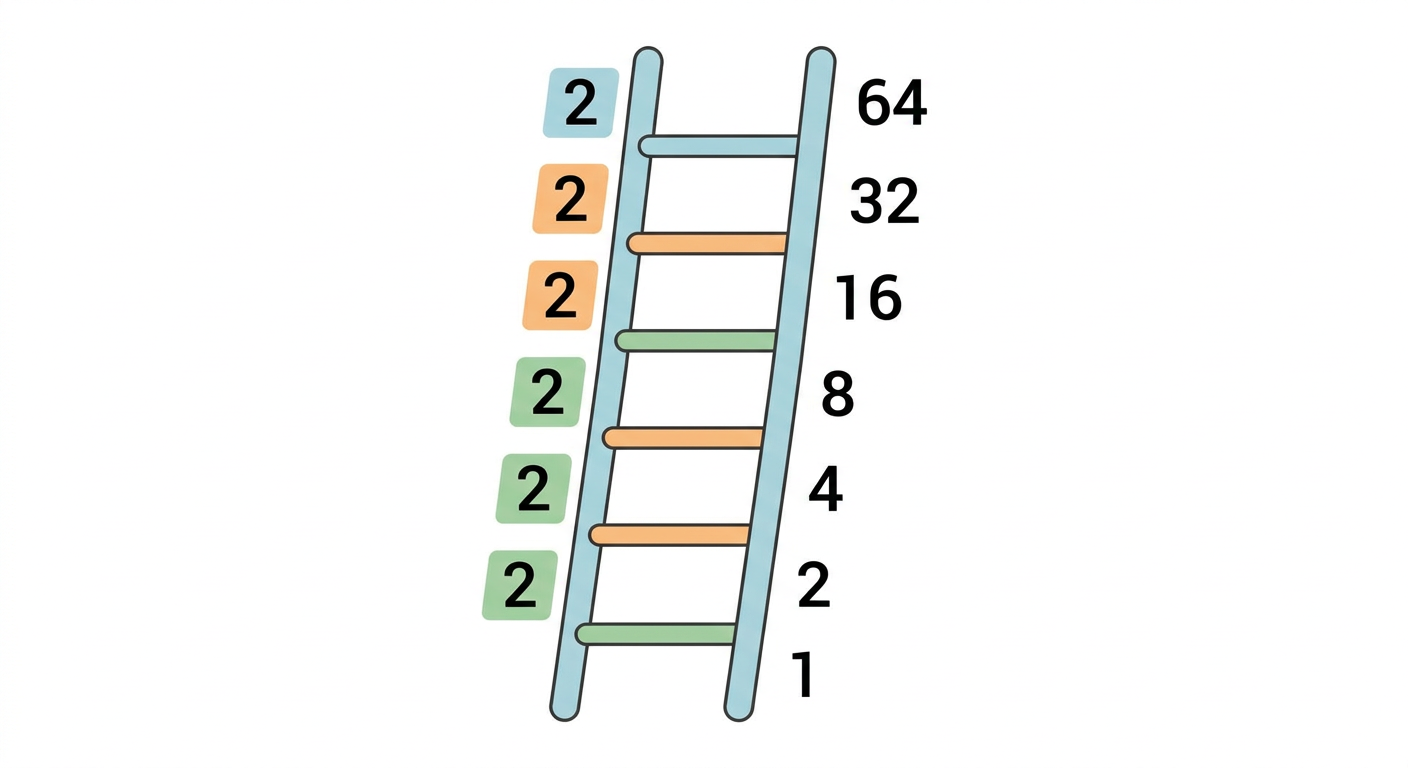
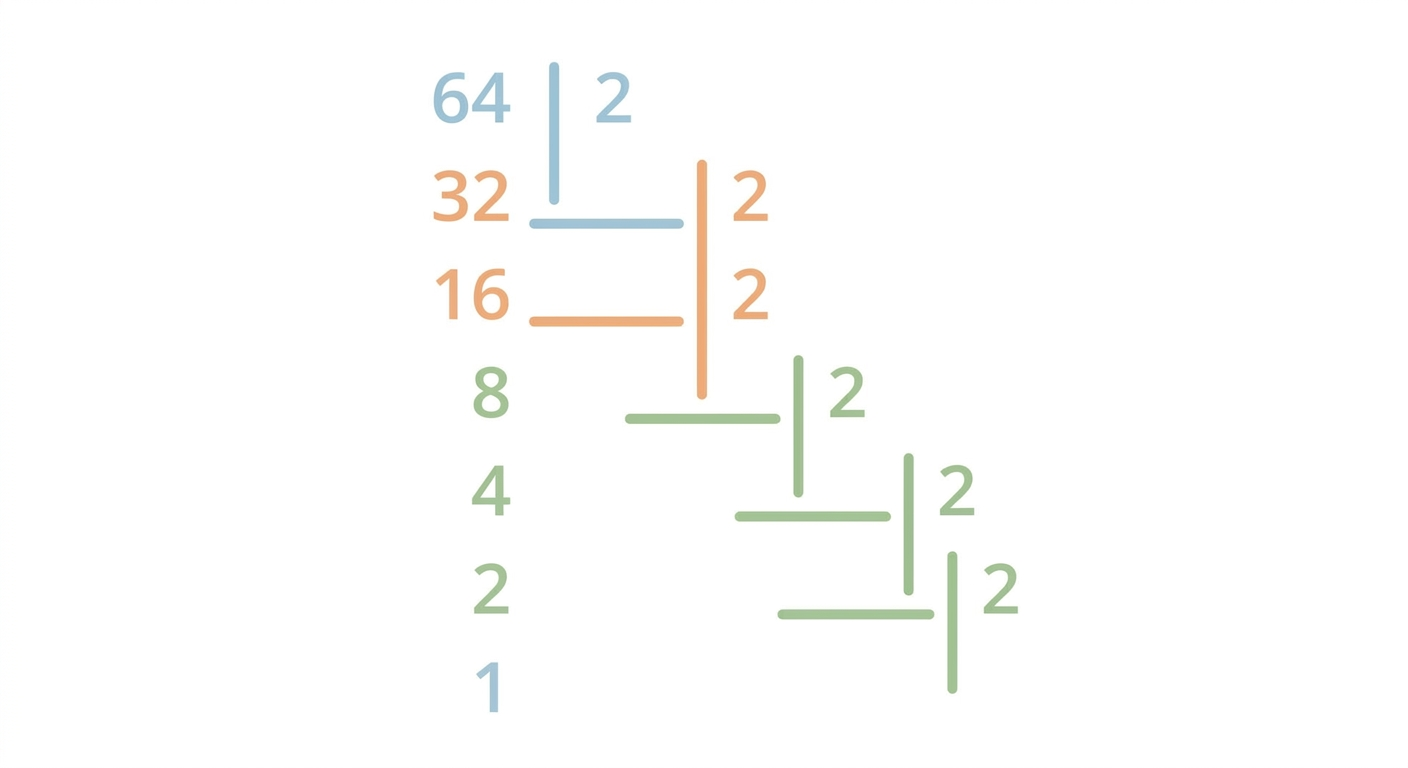
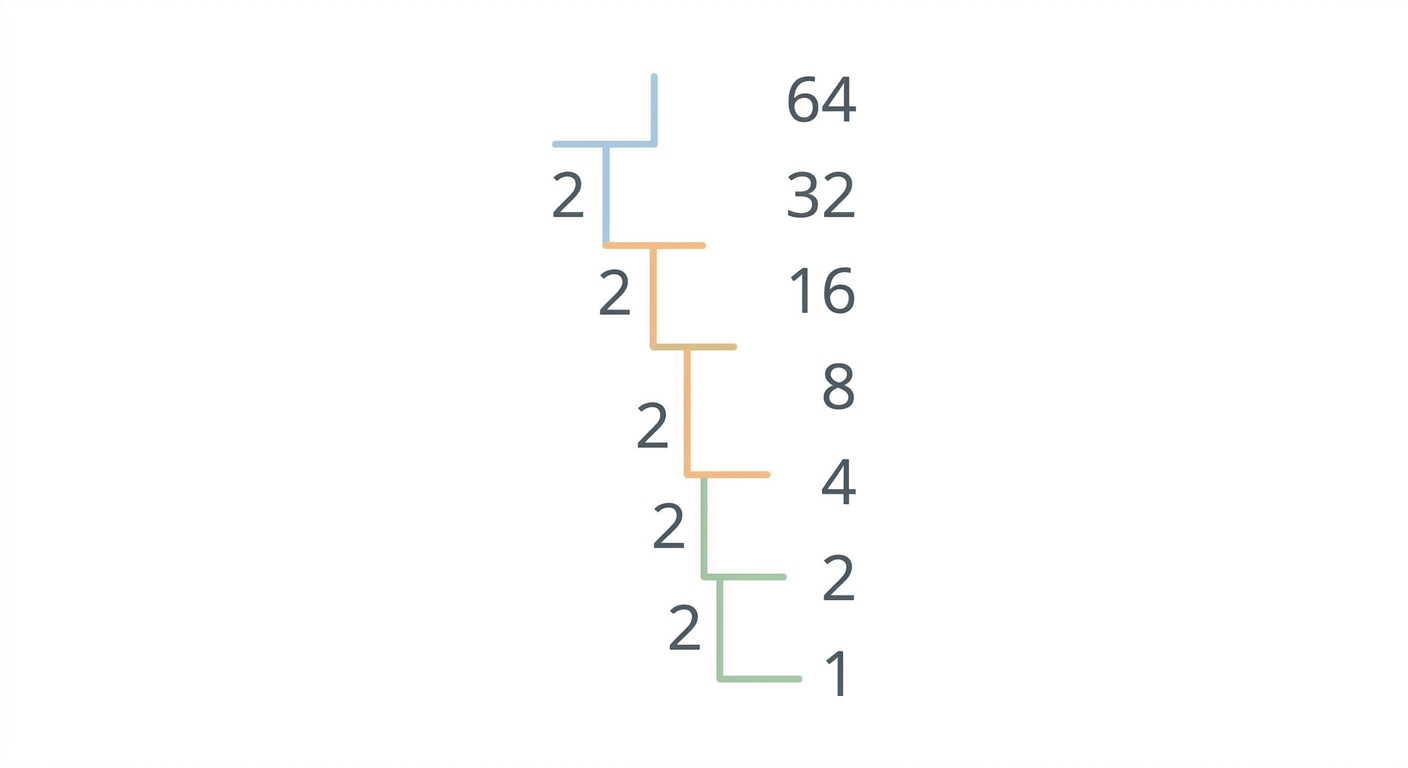
Step 1 · Prime Factorisation of 64
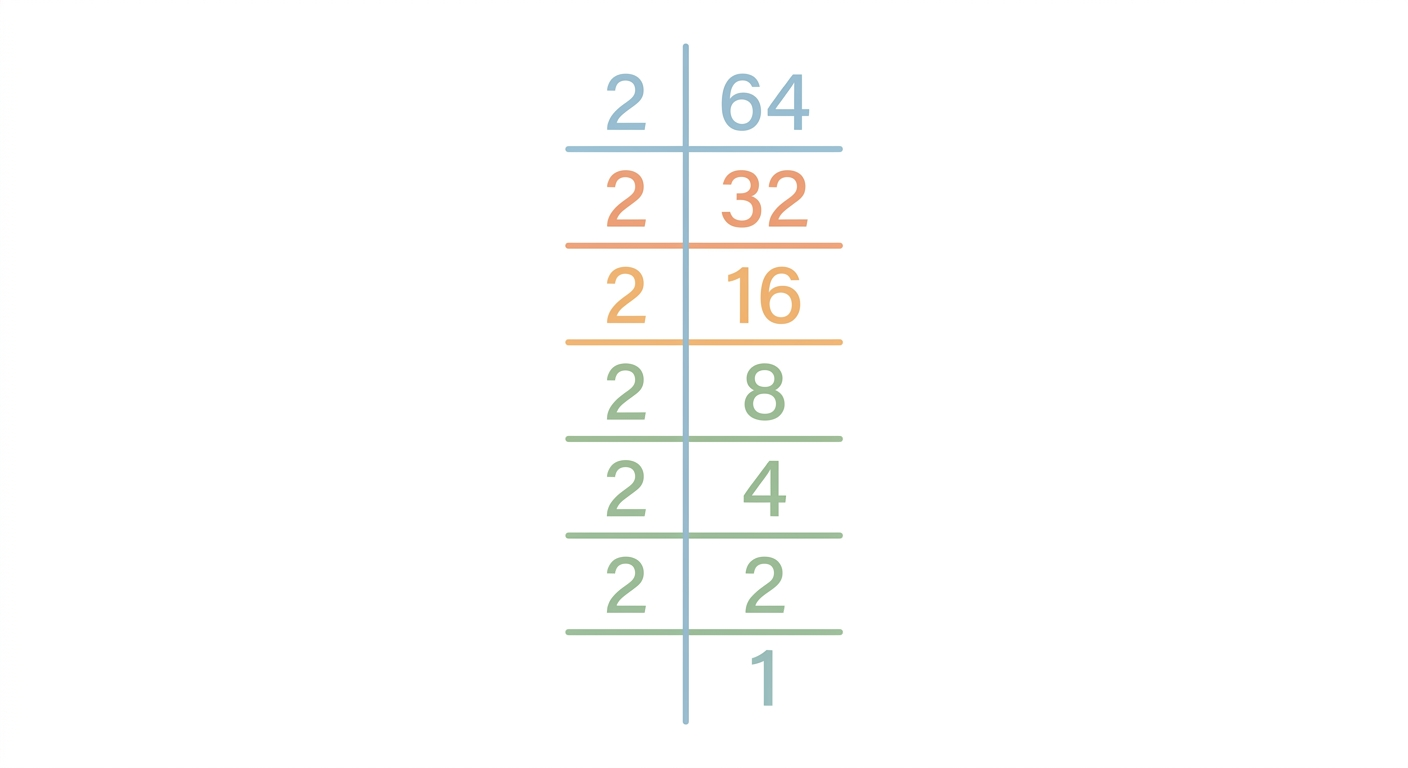
Divide by successively:
Step 2 · Prime Factorisation of 104
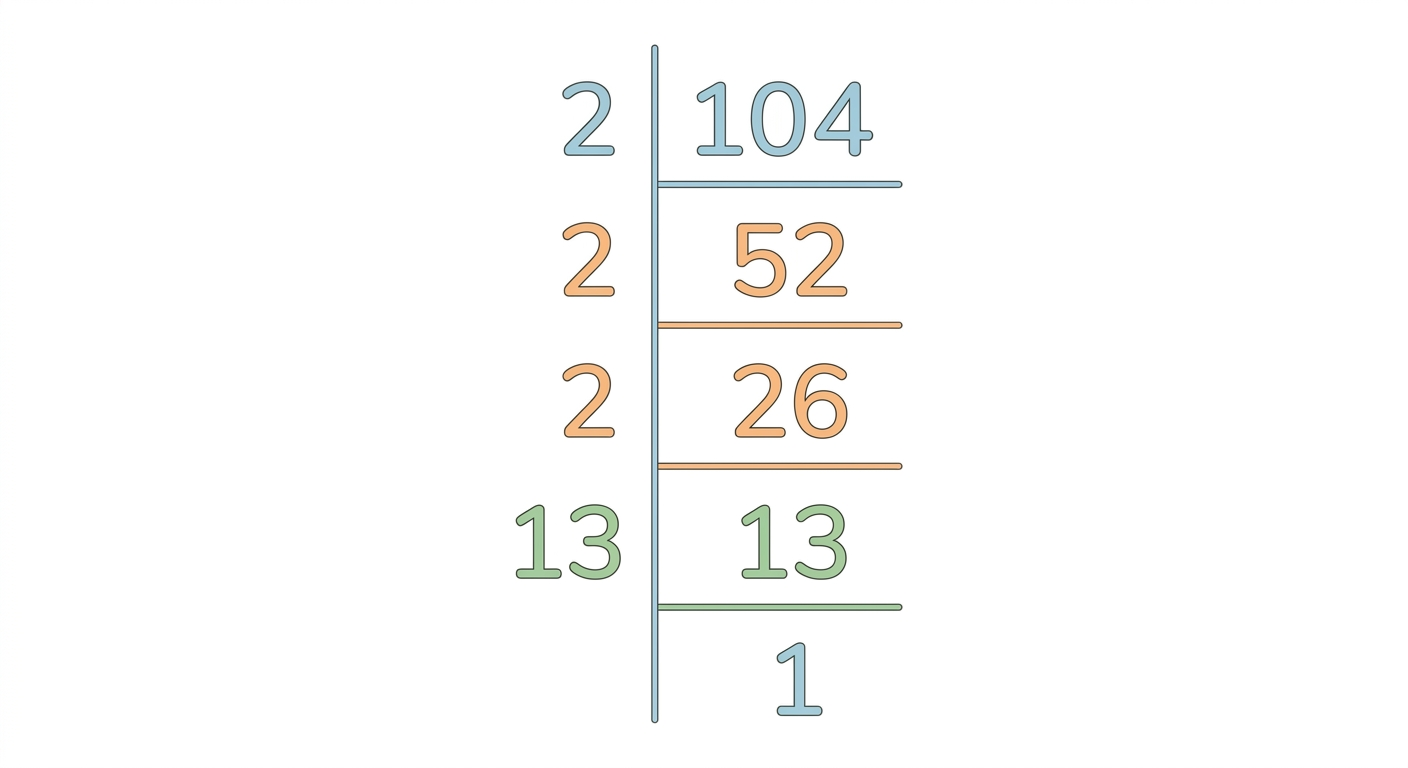
Divide by successively, then by :
Step 3 · Prime Factorisation of 105
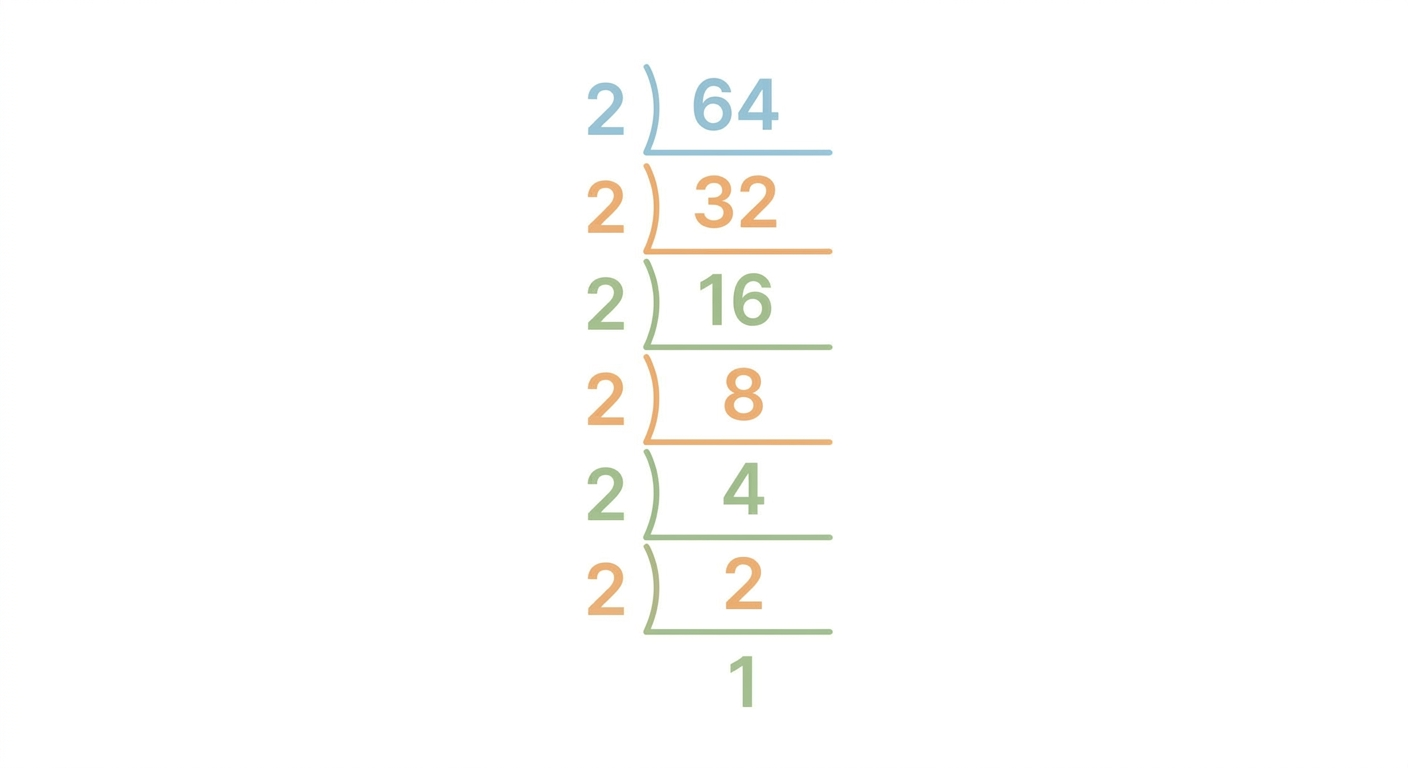
Sum of digits (divisible by ):
Divide by and then :
Step 4 · Prime Factorisation of 243
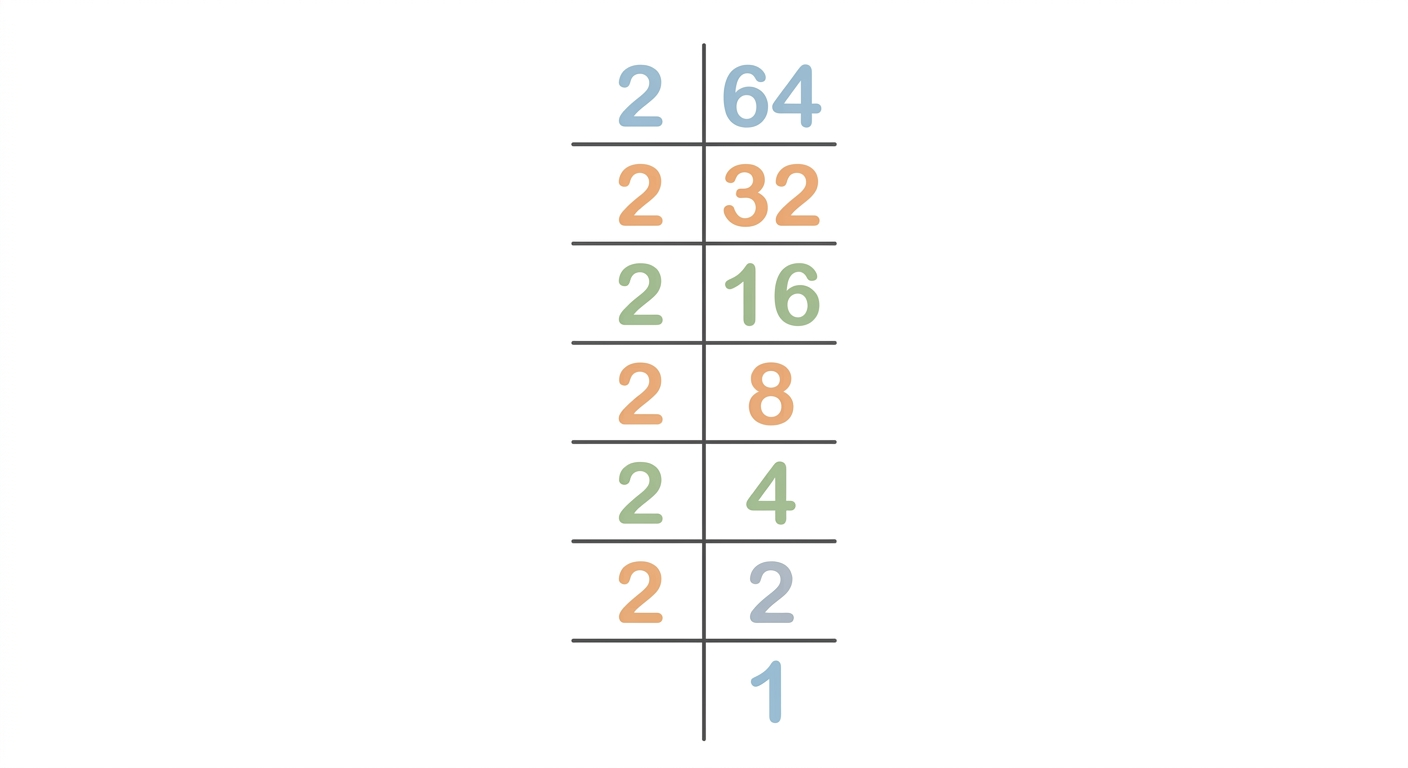
Sum of digits (divisible by ). Divide by successively:
Step 5 · Prime Factorisation of 320
Divide by successively, then by :
Step 6 · Prime Factorisation of 141
Sum of digits (divisible by ):
Since is a prime number:
Step 7 · Prime Factorisation of 1728
Divide by successively:
Sum of digits for is (divisible by ). Divide by successively:
Step 8 · Prime Factorisation of 729
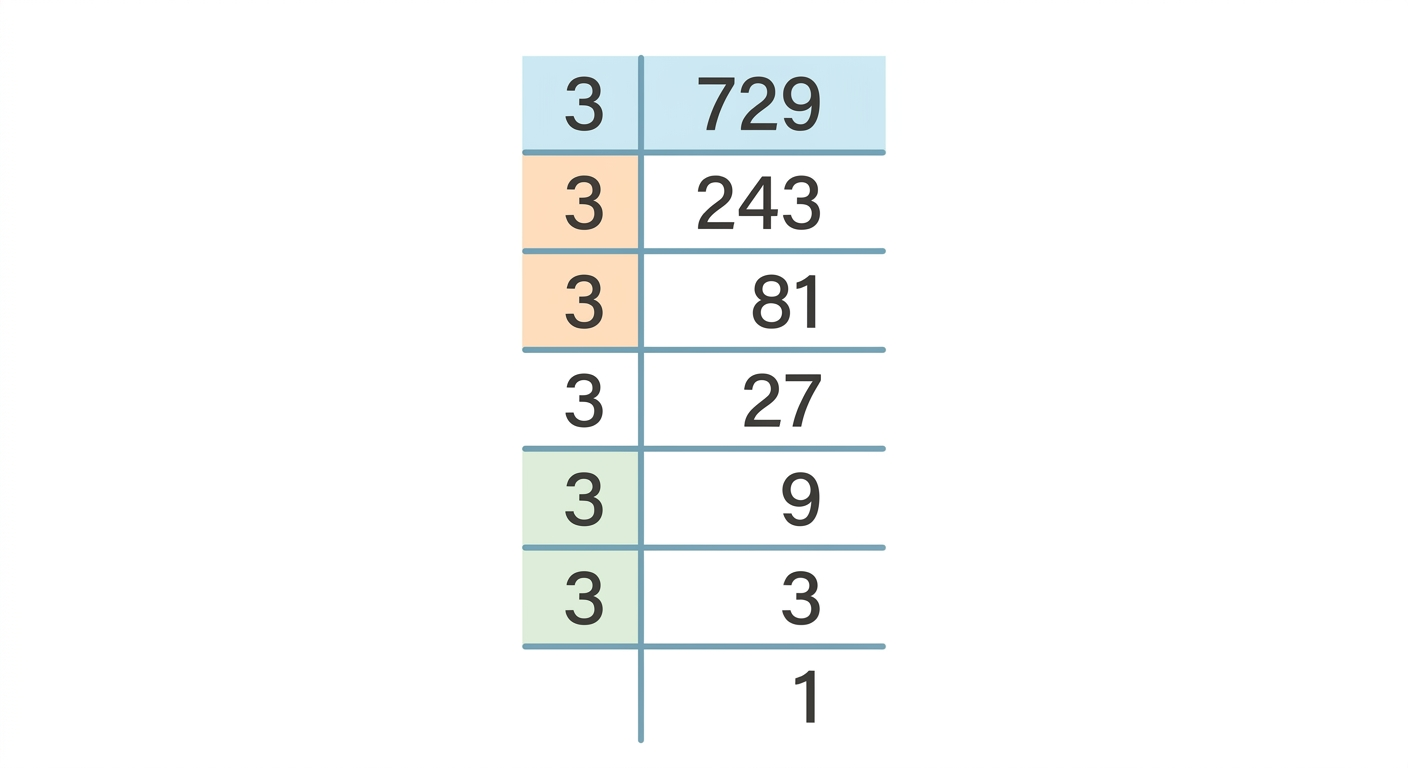
Sum of digits (divisible by ). Divide by successively:
Step 9 · Prime Factorisation of 1024
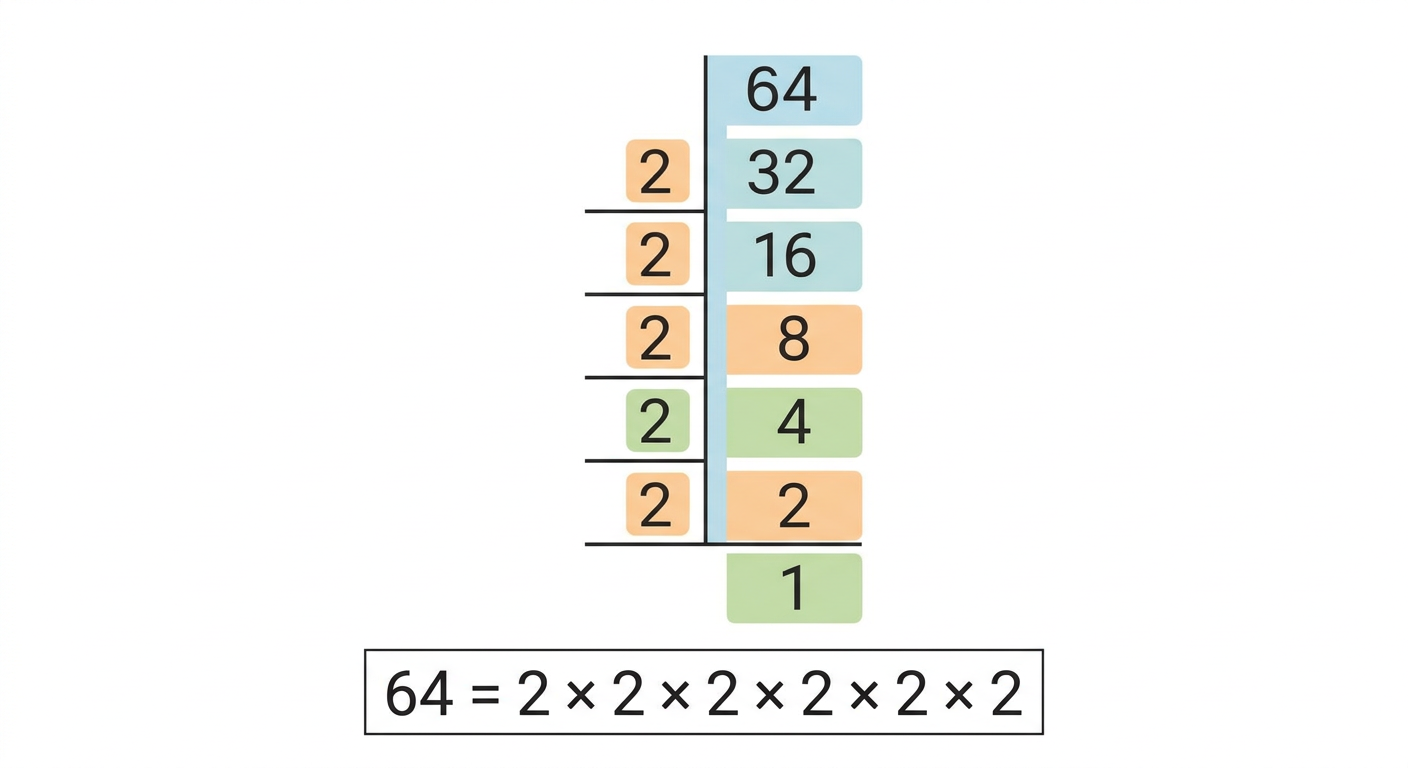
Divide by successively:
Step 10 · Prime Factorisation of 1331
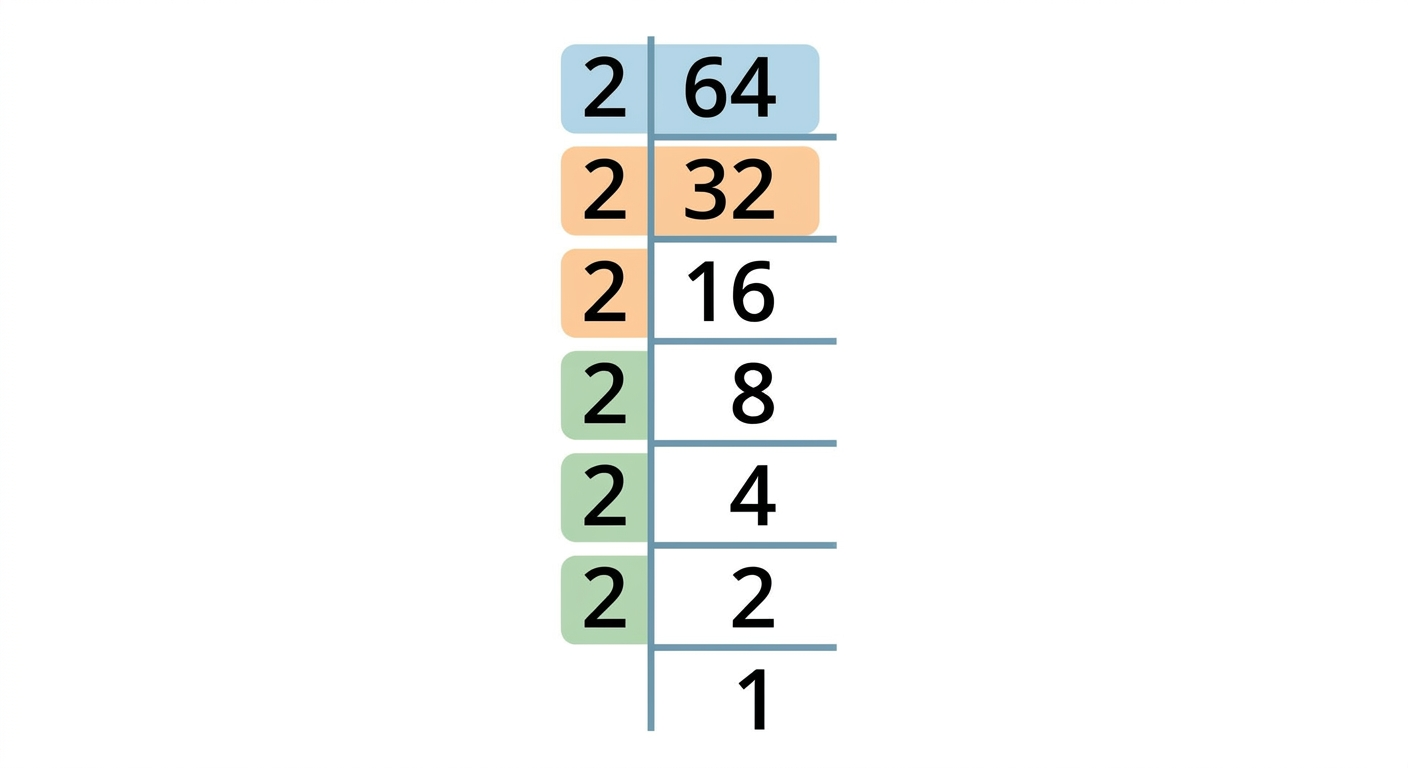
Divide by successively:
Step 11 · Prime Factorisation of 1000
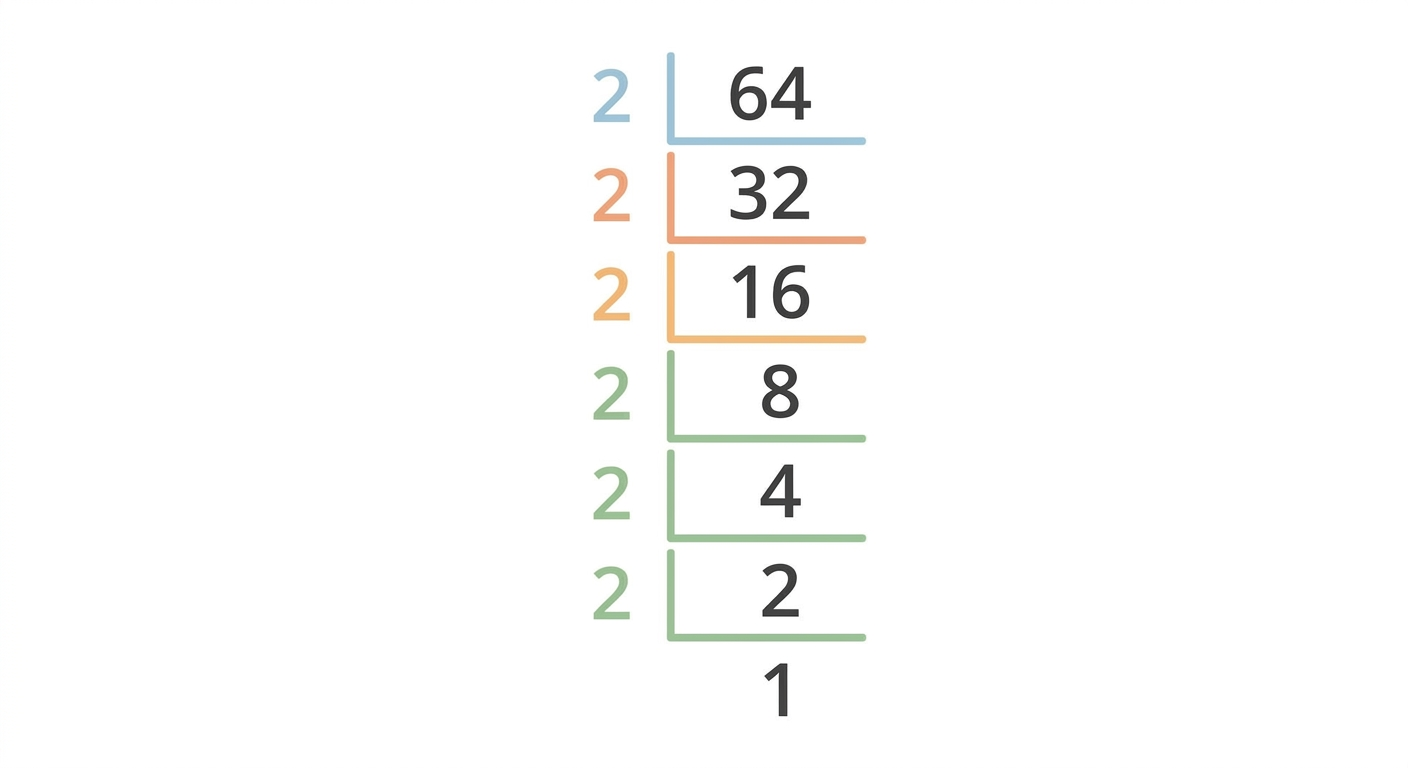
Divide by successively:
Divide by successively:
- Using Composite Numbers: Dividing by non-prime composite numbers like instead of strictly using prime numbers.
- Stopping Early: Forgetting to continue dividing until the quotient reaches .
- Divisibility Tests: Missing easy tests (e.g., checking sum of digits for divisibility by , or alternating sum for in ).
More questions in FIO
At what number is 'idli-vada' said for the 10th time?
If the game is played for the numbers 1 to 90, find out:
a. How many times would the children say 'idli' (including the times they say 'idli-vada')? b. How many times would the children say 'vada' (including the times they say 'idli-vada')? c. How many times would the children say 'idli-vada'?
What if the game was played till 900? How would your answers change?
Is this figure somehow related to the 'idli-vada' game?
Hint: Imagine playing the game till 30. Draw the figure if the game is played till 60.
Find all multiples of 40 that lie between 310 and 410.
Who am I?
a. I am a number less than 40. One of my factors is 7. The sum of my digits is 8.
b. I am a number less than 100. Two of my factors are 3 and 5. One of my digits is 1 more than the other.
A number for which the sum of all its factors is equal to twice the number is called a perfect number. The number 28 is a perfect number. Its factors are 1, 2, 4, 7, 14 and 28. Their sum is 56 which is twice 28. Find a perfect number between 1 and 10.
Find the common factors of:
a. 20 and 28
b. 35 and 50
c. 4, 8 and 12
d. 5, 15 and 25
Find any three numbers that are multiples of 25 but not multiples of 50.
Anshu and his friends play the 'idli-vada' game with two numbers, which are both smaller than 10. The first time anybody says 'idli-vada' is after the number 50. What could the two numbers be which are assigned 'idli' and 'vada'?
In the treasure hunting game, Grumpy has kept treasures on 28 and 70. What jump sizes will land on both the numbers?
In the diagram below, Guna has erased all the numbers except the common multiples. Find out what those numbers could be and fill in the missing numbers in the empty regions.
Find the smallest number that is a multiple of all the numbers from 1 to 10, except for 7.
Find the smallest number that is a multiple of all the numbers from 1 to 10.
We see that is a prime and also an even number. Is there any other even prime?
Look at the list of primes till 100. What is the smallest difference between two successive primes? What is the largest difference?
Are there an equal number of primes occurring in every row in the table on the previous page? Which decades have the least number of primes? Which have the most number of primes?
Which of the following numbers are prime: 23, 51, 37, 26?
Write three pairs of prime numbers less than 20 whose sum is a multiple of 5.
The numbers 13 and 31 are prime numbers. Both these numbers have same digits 1 and 3. Find such pairs of prime numbers up to 100.
Find seven consecutive composite numbers between 1 and 100.
Twin primes are pairs of primes having a difference of . For example, and are twin primes. So are and . Find the other twin primes between and .
Identify whether each statement is true or false. Explain.
a. There is no prime number whose units digit is 4.
b. A product of primes can also be prime.
c. Prime numbers do not have any factors.
d. All even numbers are composite numbers.
e. 2 is a prime and so is the next number, 3. For every other prime, the next number is composite.
Which of the following numbers is the product of exactly three distinct prime numbers: 45, 60, 91, 105, 330?
How many three-digit prime numbers can you make using each of 2, 4 and 5 once?
Observe that 3 is a prime number, and is also a prime. Are there other primes for which doubling and adding 1 gives another prime? Find at least five such examples.
Find the prime factorisations of the following numbers: 64, 104, 105, 243, 320, 141, 1728, 729, 1024, 1331, 1000.
The prime factorisation of a number has one 2, two 3s, and one 11. What is the number?
Find three prime numbers, all less than 30, whose product is 1955.
Find the prime factorisation of these numbers without multiplying first
a.
b.
c.
What is the smallest number whose prime factorisation has:
a. three different prime numbers?
b. four different prime numbers?
Are the following pairs of numbers co-prime? Guess first and then use prime factorisation to verify your answer.
a. 30 and 45
b. 57 and 85
c. 121 and 1331
d. 343 and 216
Is the first number divisible by the second? Use prime factorisation.
a. 225 and 27
b. 96 and 24
c. 343 and 17
d. 999 and 99
The first number has prime factorisation and the second number has prime factorisation . Are they co-prime? Does one of them divide the other?
Guna says, “Any two prime numbers are co-prime?”. Is he right?
2024 is a leap year (as February has 29 days). Leap years occur in the years that are multiples of 4, except for those years that are evenly divisible by 100 but not 400.
a. From the year you were born till now, which years were leap years? b. From the year 2024 till 2099, how many leap years are there?
Find the largest and smallest 4-digit numbers that are divisible by 4 and are also palindromes.
Explore and find out if each statement is always true, sometimes true or never true. You can give examples to support your reasoning.
a. Sum of two even numbers gives a multiple of 4. b. Sum of two odd numbers gives a multiple of 4.
Find the remainders obtained when each of the following numbers are divided by (a) 10, (b) 5, (c) 2.
78, 99, 173, 572, 980, 1111, 2345
The teacher asked if 14560 is divisible by all of 2, 4, 5, 8 and 10. Guna checked for divisibility of 14560 by only two of these numbers and then declared that it was also divisible by all of them. What could those two numbers be?
Which of the following numbers are divisible by all of 2, 4, 5, 8 and 10: 572, 2352, 5600, 6000, 77622160.
Write two numbers whose product is 10000. The two numbers should not have 0 as the units digit.