Question 1
Draw the graphs of the following sets of lines. In each case, reflect on the role of and .
(i)
(ii)
(iii)
(iv)
(v)
For any linear equation written in the slope-intercept form :
- Role of (Slope / Gradient): controls the steepness and direction of the line.
- If , the line rises from left to right (positive slope). A larger value of means a steeper line.
- If , the line falls from left to right (negative slope). A larger means a steeper downward slope.
- Lines with equal slope are parallel.
- Role of (-intercept): gives the point where the line intersects the -axis.
- It represents the vertical shift of the line.
- When , the line passes directly through the origin .
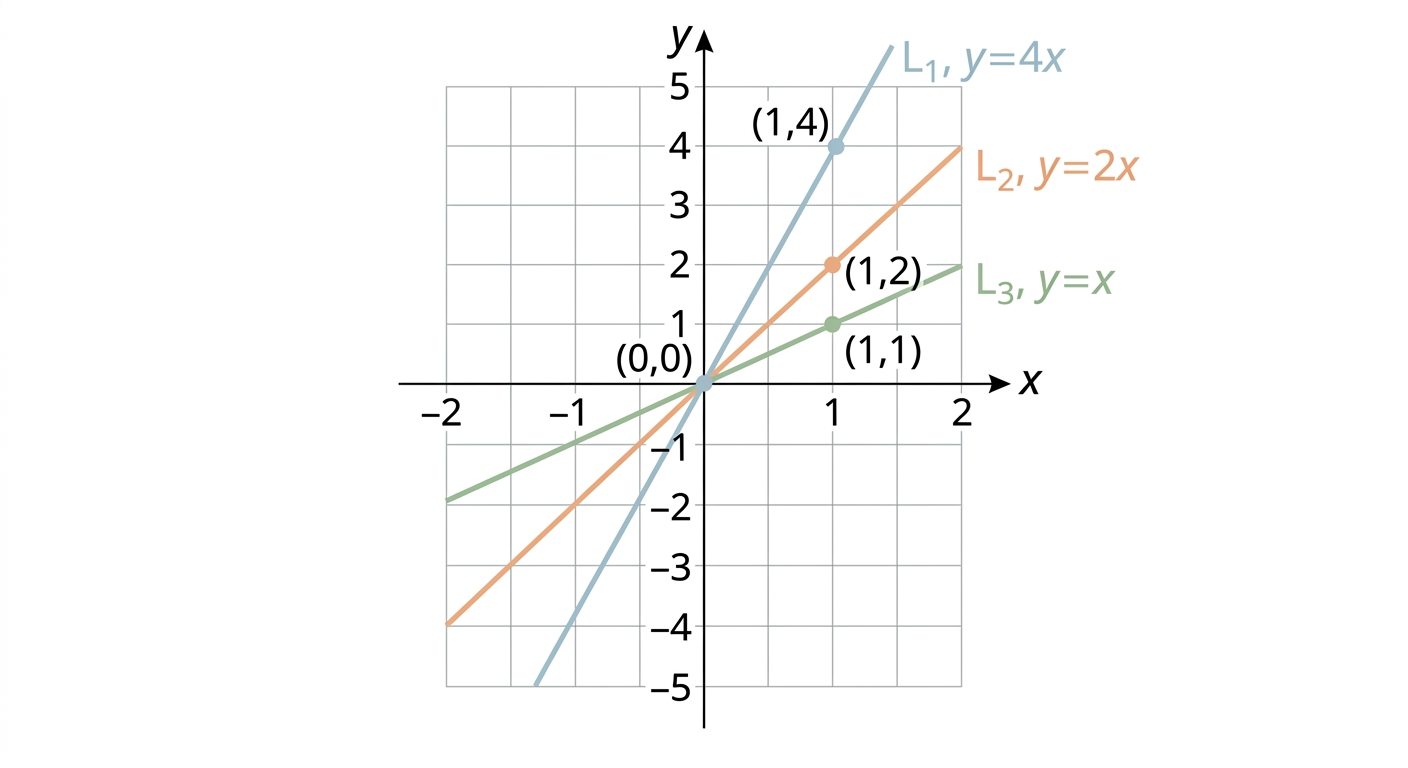
(i) Draw the graphs of . Reflect on the role of and .
Step 1 · Plot points and observe the role of positive
Plot points for each line by finding coordinates :
- For : If , If ,
- For : If , If ,
- For :
If ,
If , $y = 1 \implies (1, 1)
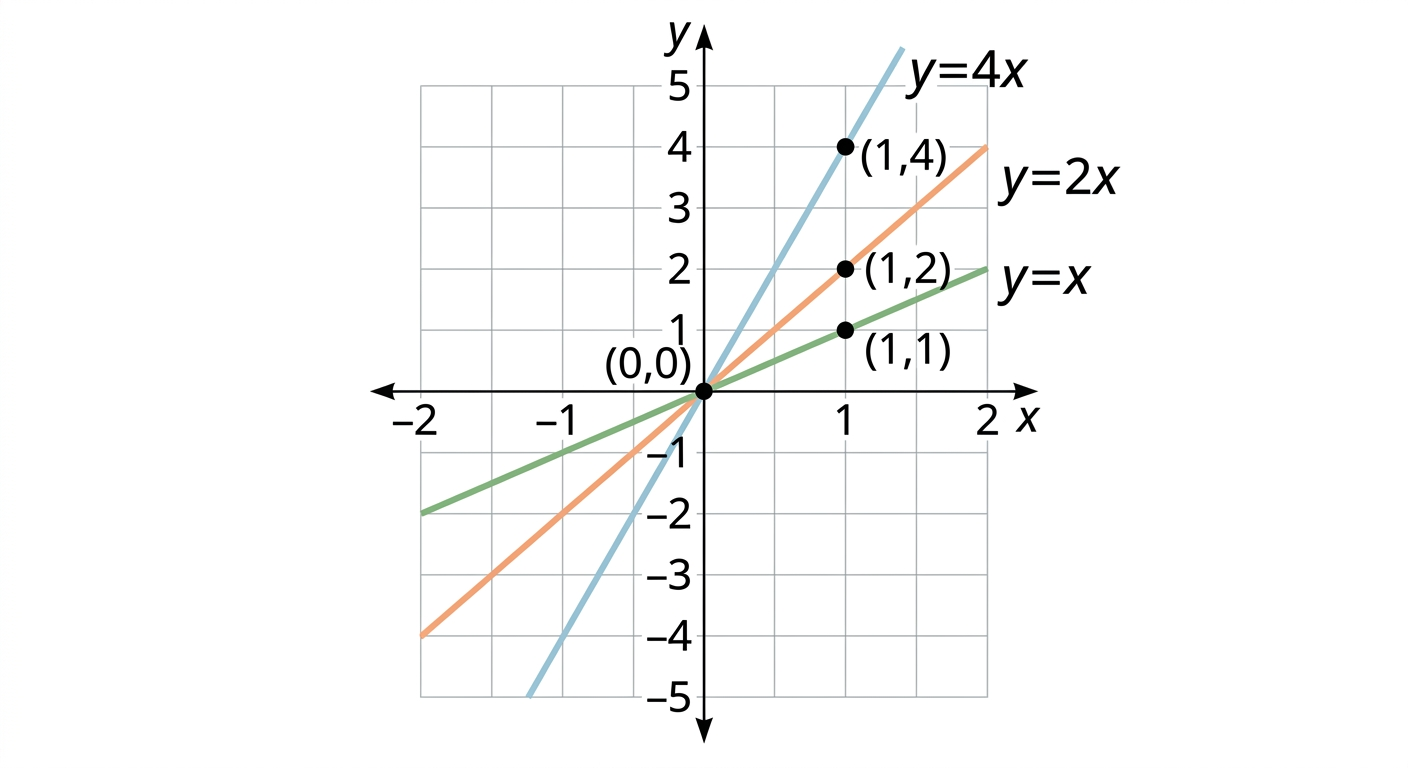
Observations:
- All three lines have , so they all pass through the origin .
- As the positive value of increases (), the line becomes steeper.
(i) All lines pass through the origin because . A larger positive value of results in a steeper line.
(ii) Draw the graphs of . Reflect on the role of and .
Step 1 · Plot points and observe the role of negative
Plot points for each line:
- For : If , If ,
- For : If , If ,
- For :
If ,
If , $y = -1 \implies (1, -1)
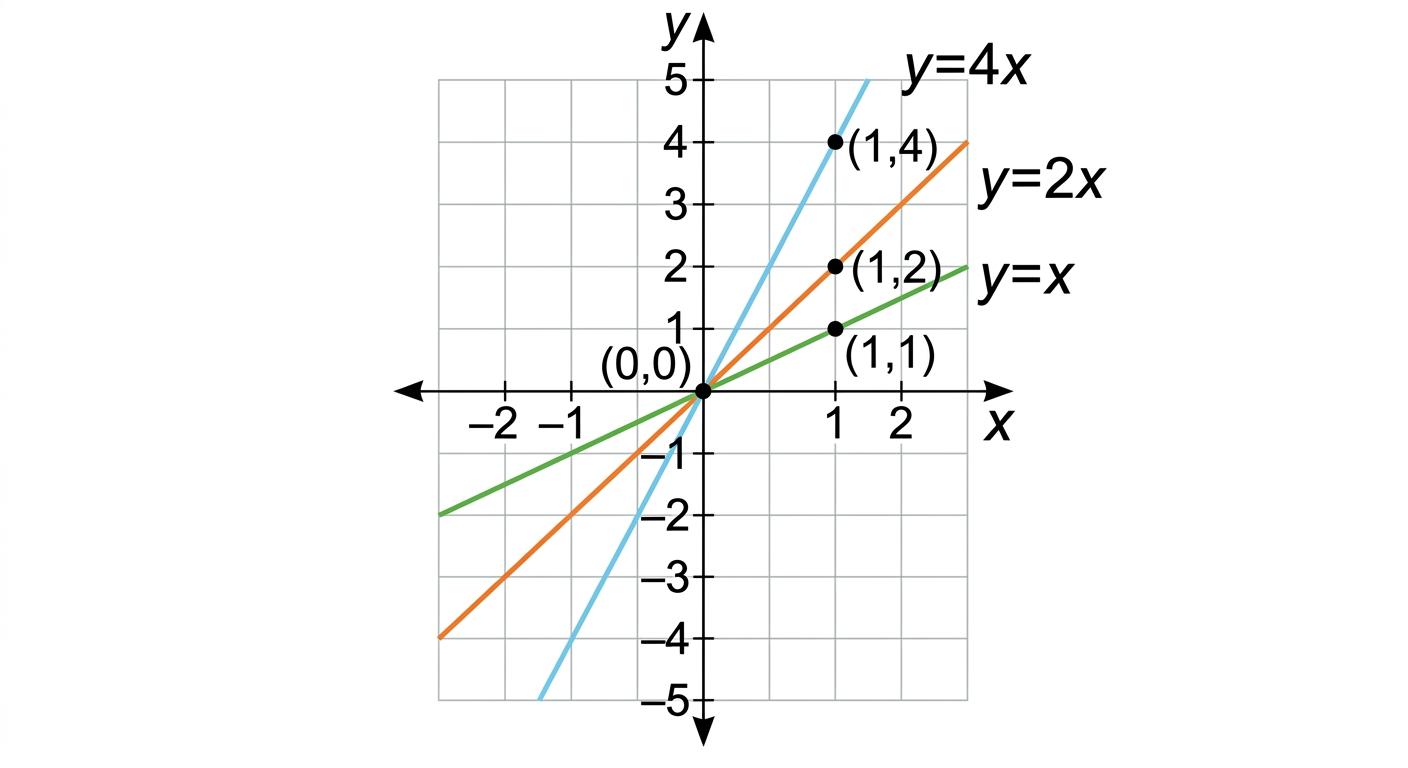
Observations:
- All three lines have , so they all pass through the origin .
- Since is negative, the lines slope downwards from left to right. A larger absolute value gives a steeper downward slope.
(ii) All lines pass through the origin because . Negative causes a downward slope, and a larger magnitude produces a steeper downward line.
(iii) Draw the graphs of . Reflect on the role of and .
Step 1 · Plot points and compare positive and negative
Plot points for both lines:
- For : If , If ,
- For :
If ,
If , $y = -5 \implies (1, -5)
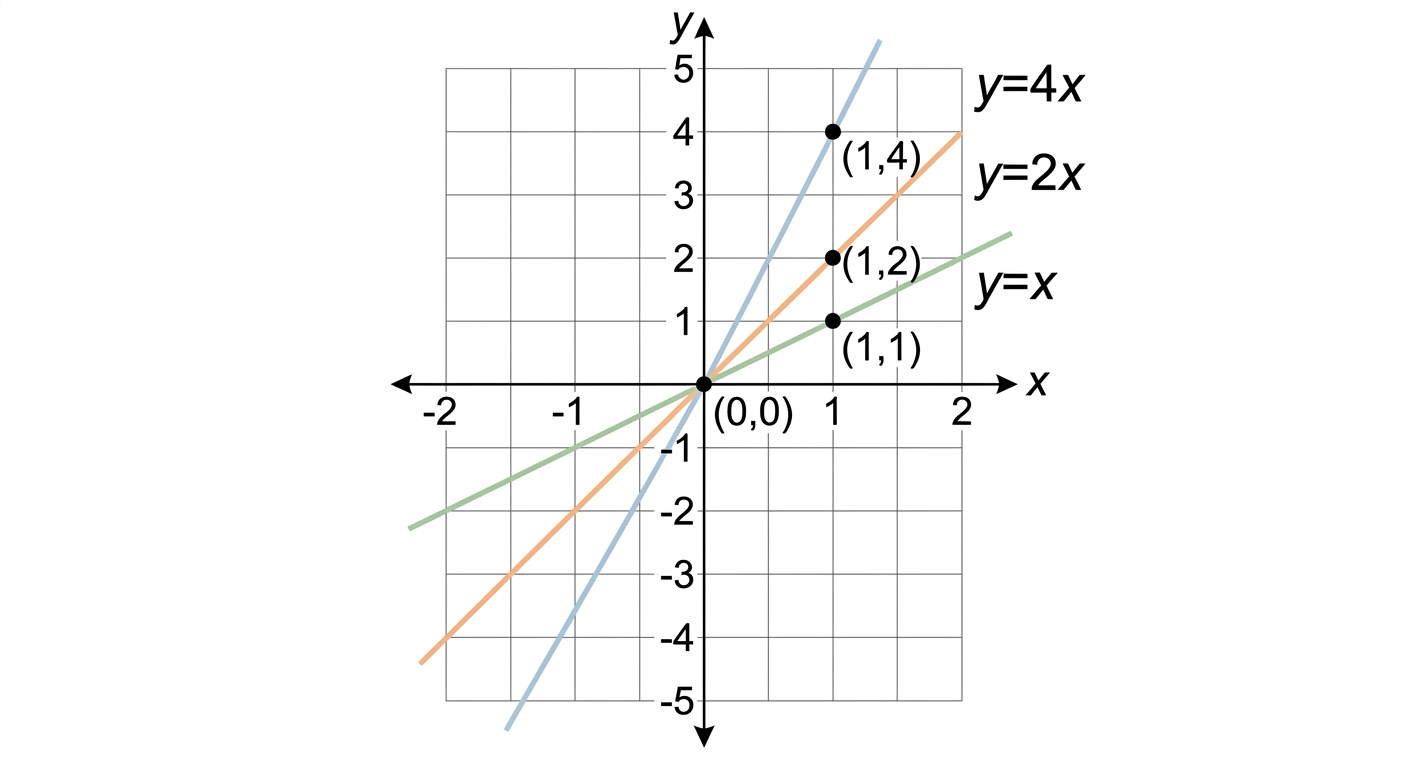
Observations:
- Both lines have and pass through the origin .
- Both lines have the same magnitude , giving them equal steepness, but they slope in opposite directions due to opposite signs.
(iii) Both lines pass through the origin and have the same steepness since , but they slope in opposite directions.
(iv) Draw the graphs of . Reflect on the role of and .
Step 1 · Plot points and observe parallel lines with varying
Plot points for each line:
- For : If , If ,
- For : If , If ,
- For :
If ,
If , $y = 3(1) + 1 = 4 \implies (1, 4)
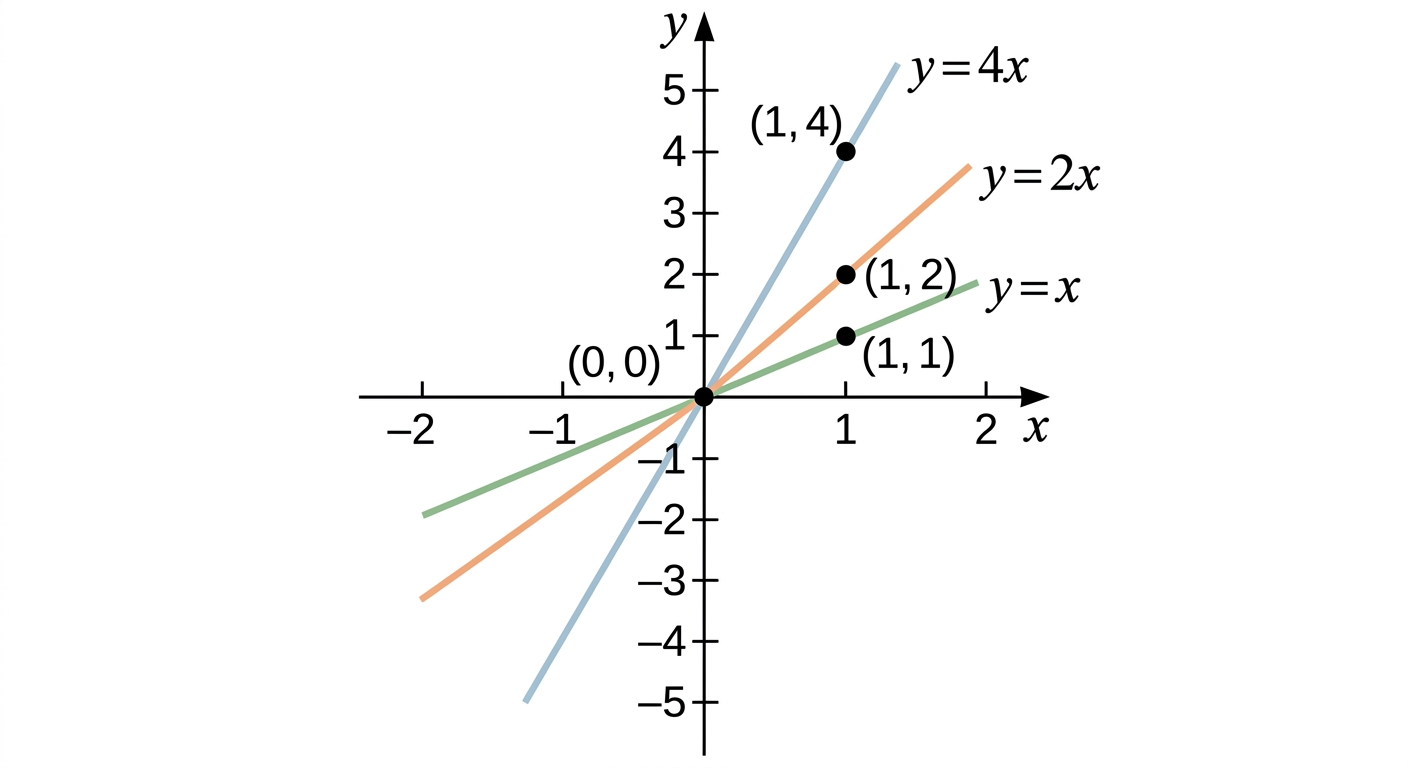
Observations:
- All three lines have identical slope , meaning they are parallel to each other.
- The constant shifts each line vertically, setting the -intercept at , , and respectively.
(iv) All three lines are parallel because they have the same slope . The constant vertically shifts the line and sets the -intercept.
(v) Draw the graphs of . Reflect on the role of and .
Step 1 · Plot points and compare lines with different slopes and intercepts
Plot points for each line:
- For : If , If ,
- For : If , If ,
- For :
If ,
If , $y = 2(1) + 3 = 5 \implies (1, 5)
Observations:
- Lines and share the same slope , so they are parallel.
- Line has slope , so it slopes in the opposite direction.
- The values of () determine where each line crosses the -axis.
(v) Lines and are parallel with slope . Line slopes in the opposite direction with slope . The constant determines the -intercept.
- Confusing Intercepts: Confusing the -intercept with the -intercept . Setting gives the -intercept .
- Sign of Slope: Misinterpreting a negative slope. A line with slopes downwards from left to right, whereas slopes upwards.
- Parallel Condition: Assuming lines with equal magnitude slopes like and are parallel. Lines are only parallel if their slopes are strictly equal ().