Question 1
Chess Puzzles — Non-attacking Queens
Chess is a popular 2-player strategy game. This game has its origins in India. It is played on an chequered grid. There are 2 sets of pieces — black and white — one set for each player. Find out how each piece should move and the rules of the game.
Here is a famous chess-based puzzle. From its current position, a Queen piece can move along the horizontal, vertical or diagonal. Place 4 Queens such that no 2 queens attack each other. For example, the arrangement below is not valid as the queens are in the line of attack of each other.
Now, place 8 queens on this grid so that no 2 queens attack each other!
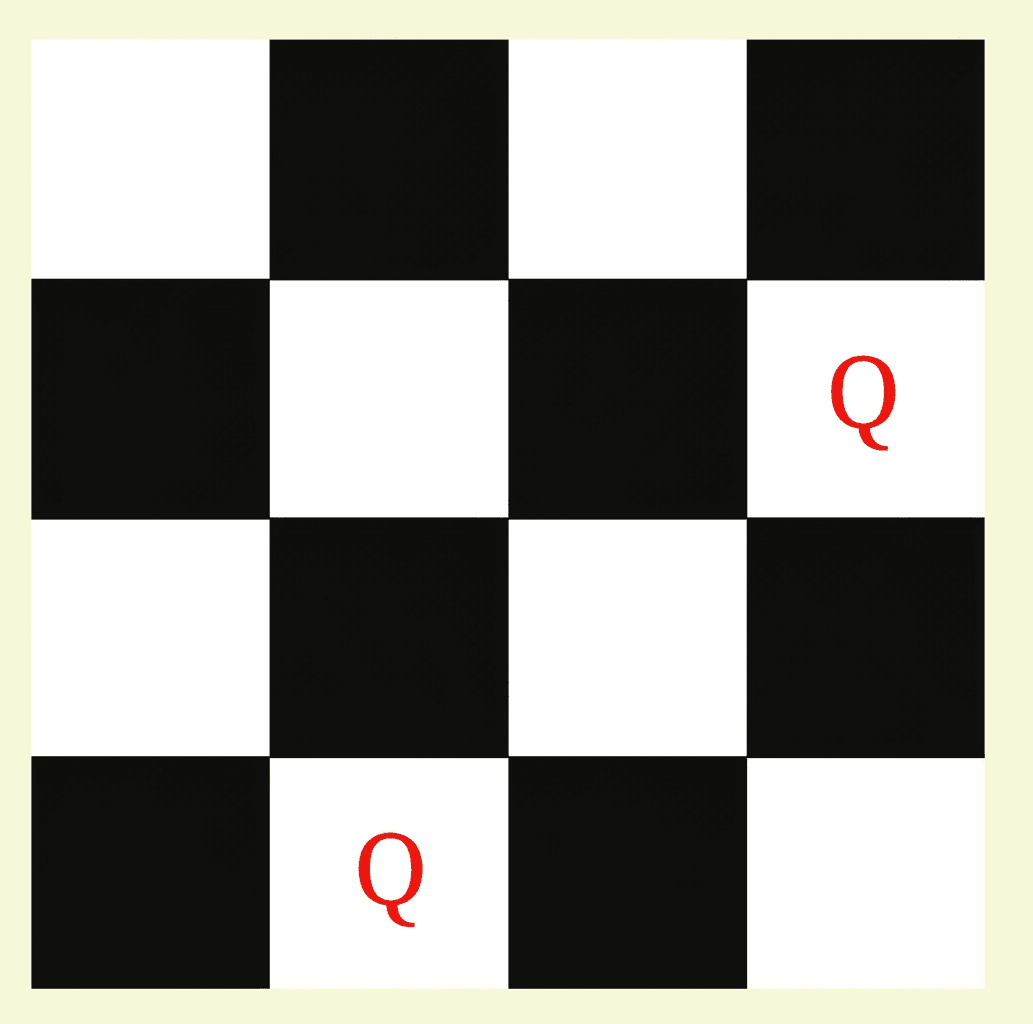

- A queen in chess can move any number of squares horizontally, vertically, or diagonally.
- In the -Queens puzzle, queens must be placed on an chessboard such that no two queens attack each other.
- This requires every queen to have a unique row, a unique column, and a unique diagonal (i.e. no two queens share the same sum or difference).
(i) Place 4 Queens on a grid such that no 2 queens attack each other.
Step 1 · Understand Queen Movement and Attack Lines
A queen attacks along horizontal, vertical, and diagonal lines. Two queens cannot share the same row, column, or diagonal.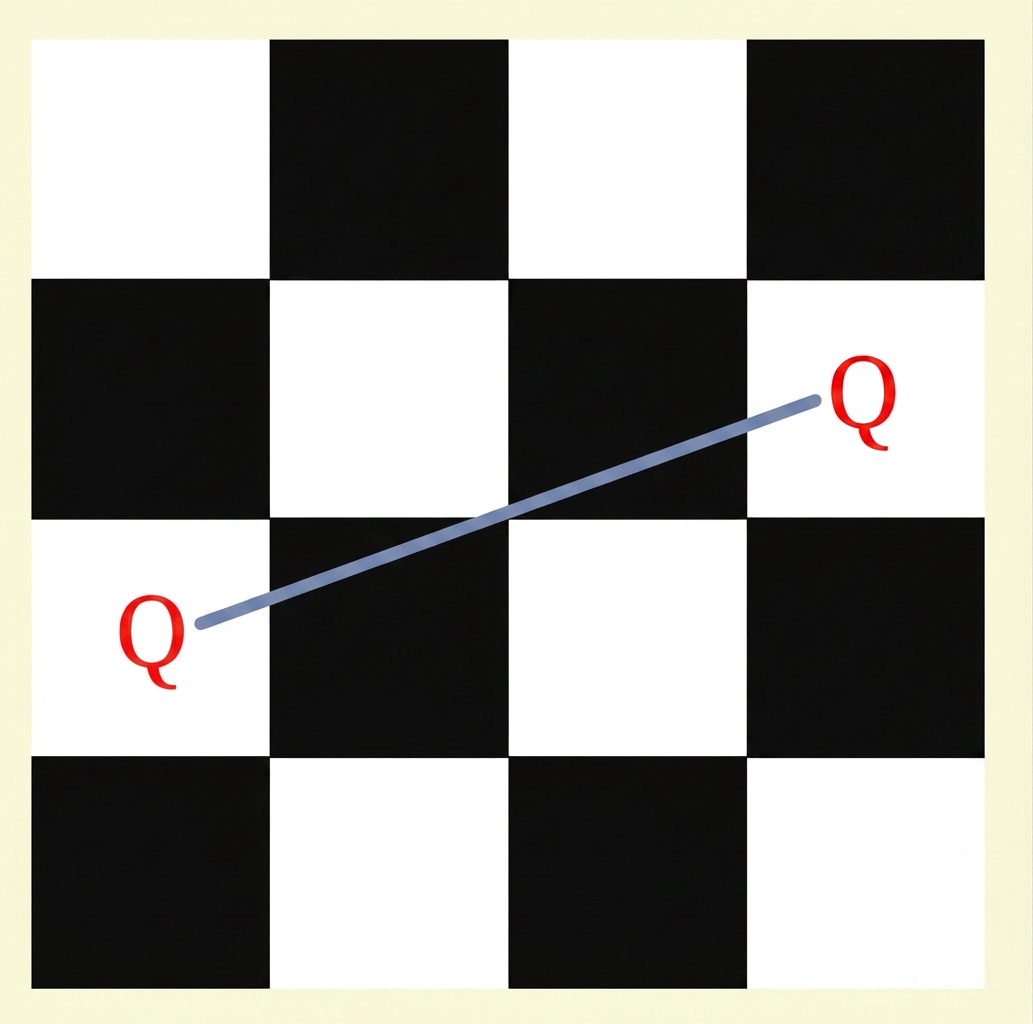
Step 2 · Place 4 Queens on a Grid
Place one queen in each row and column while avoiding common diagonals.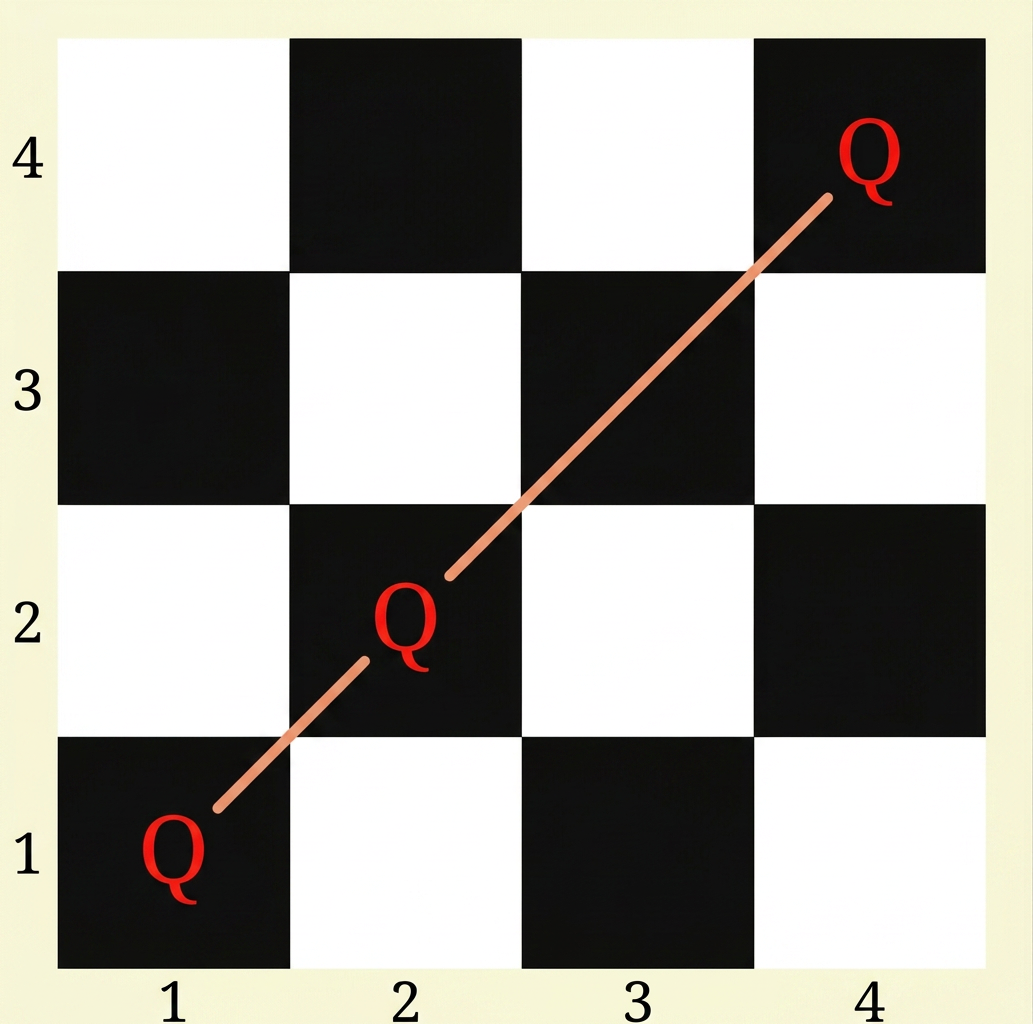
Queen positions :
Check diagonals using :
Check diagonals using :
All sums and differences are distinct, confirming no two queens share a diagonal.
(i)
(ii) Place 8 queens on this grid so that no 2 queens attack each other.
Step 1 · Place 8 Queens on an Grid
Place one queen in each row such that no two queens share the same column or diagonal.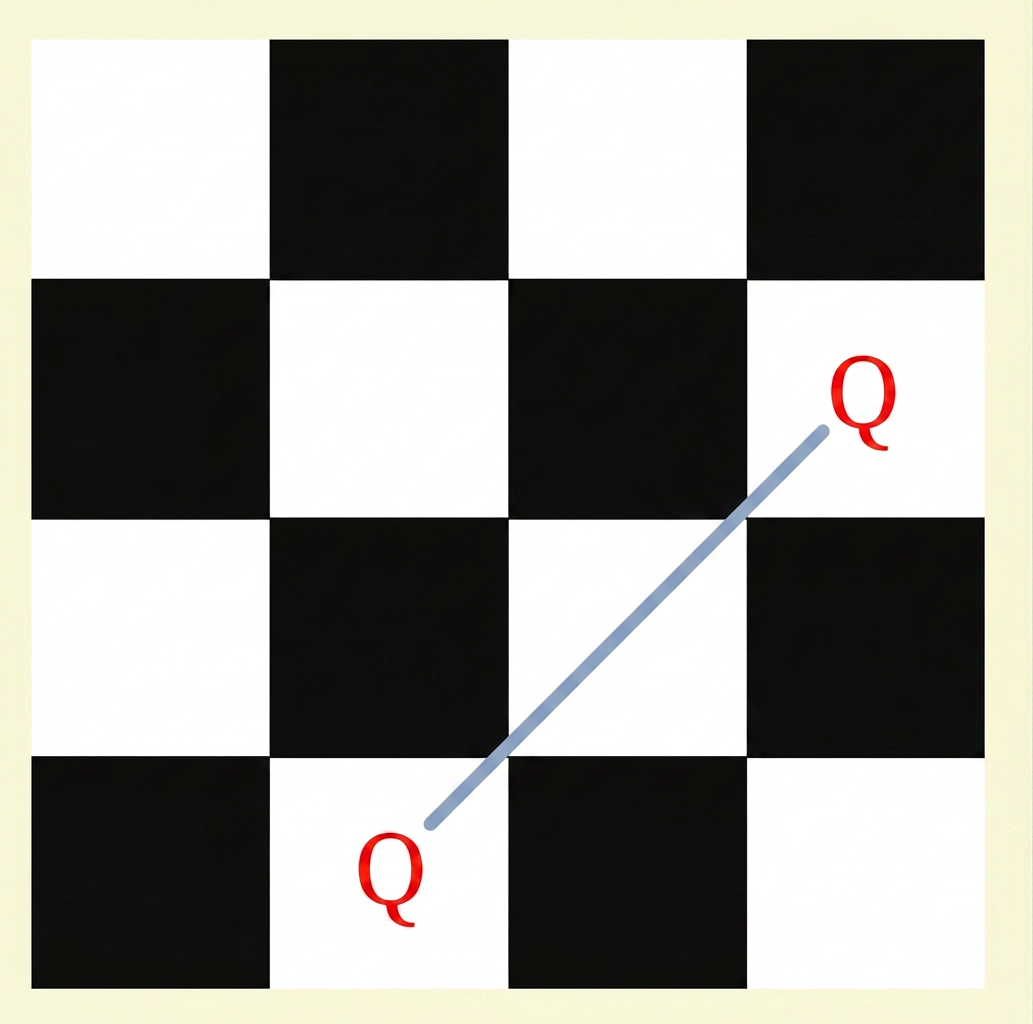
Queen positions :
No two queens share the same row, column, or diagonal.
(ii)
- Overlooking Diagonal Conflicts: Placing queens in distinct rows and columns while forgetting to verify diagonals (where or values match).
- Row/Column Inversion: Swapping the row and column indices , leading to misplaced pieces.