Question 1
Mystery Colours!
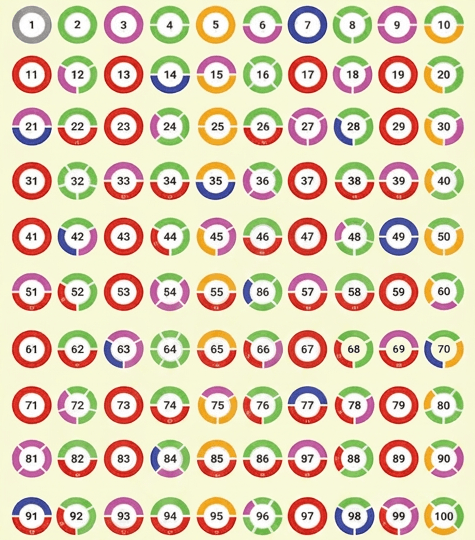
You might have noticed and wondered about these different circle designs around the page numbers on each page! The picture below shows all the designs for the numbers from 1 to 100.
Try to decode the colour scheme for each number. There are several interesting patterns here. Share your observations with your classmates. Extending this scheme, colour the page numbers from 101 – 110.
- HCF (महत्तम समापवर्तक): दी गई दो या दो से अधिक संख्याओं का वह सबसे बड़ा उभयनिष्ठ गुणनखंड (factor) है जो उन सभी संख्याओं को पूरा-पूरा विभाजित करता है।
- LCM (लघुत्तम समापवर्त्य): वह सबसे छोटी संख्या है जो दी गई सभी संख्याओं का उभयनिष्ठ गुणज (multiple) होती है।
- दो संख्याओं के लिए संबंध:
Step 1 · HCF ज्ञात करना (अभाज्य गुणनखंड विधि)
प्रत्येक संख्या के अभाज्य गुणनखंड ज्ञात करके उभयनिष्ठ अभाज्य गुणनखंडों की सबसे छोटी घात का गुणनफल लेते हैं।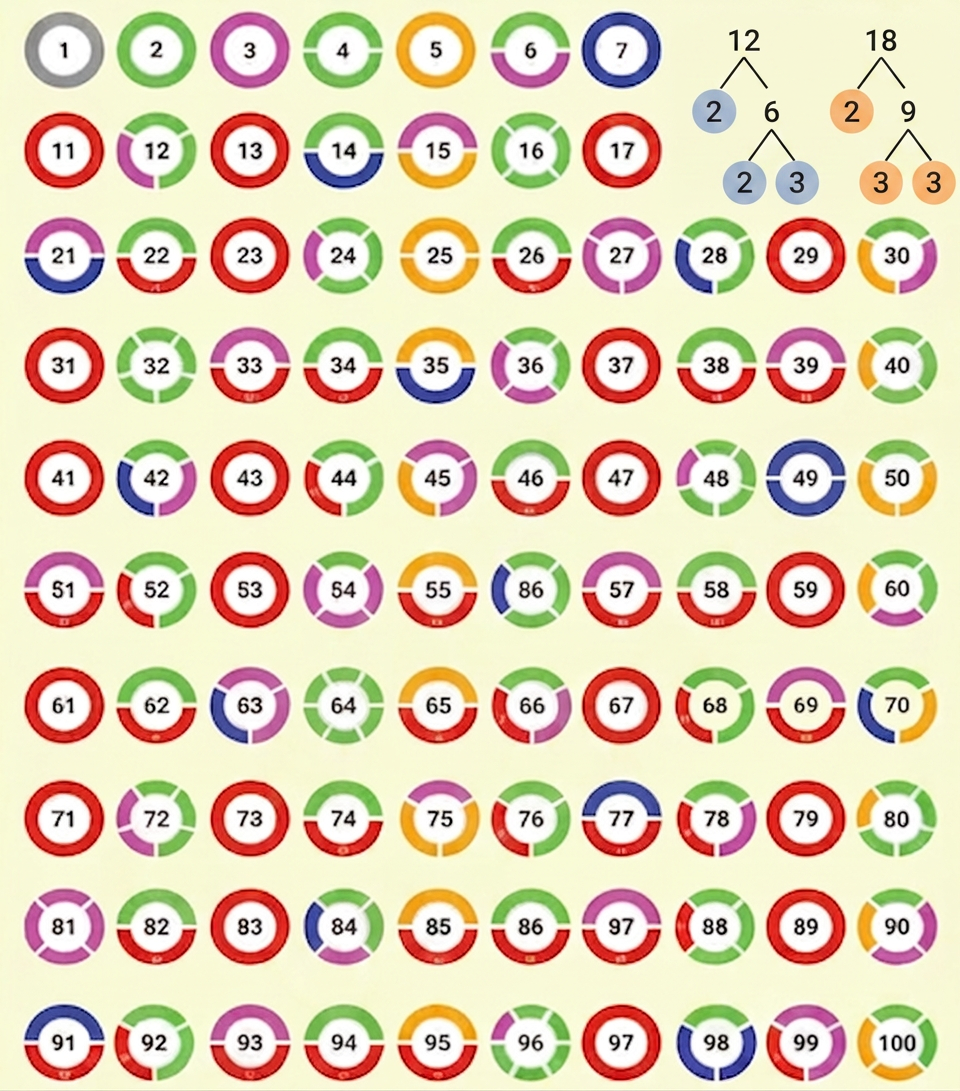
उदाहरण: 12 और 18 का
उभयनिष्ठ अभाज्य गुणनखंड और हैं।
- की सबसे छोटी घात
- की सबसे छोटी घात
Step 2 · LCM ज्ञात करना (अभाज्य गुणनखंड विधि)
सभी अभाज्य गुणनखंडों की सबसे बड़ी घात का गुणनफल लेते हैं।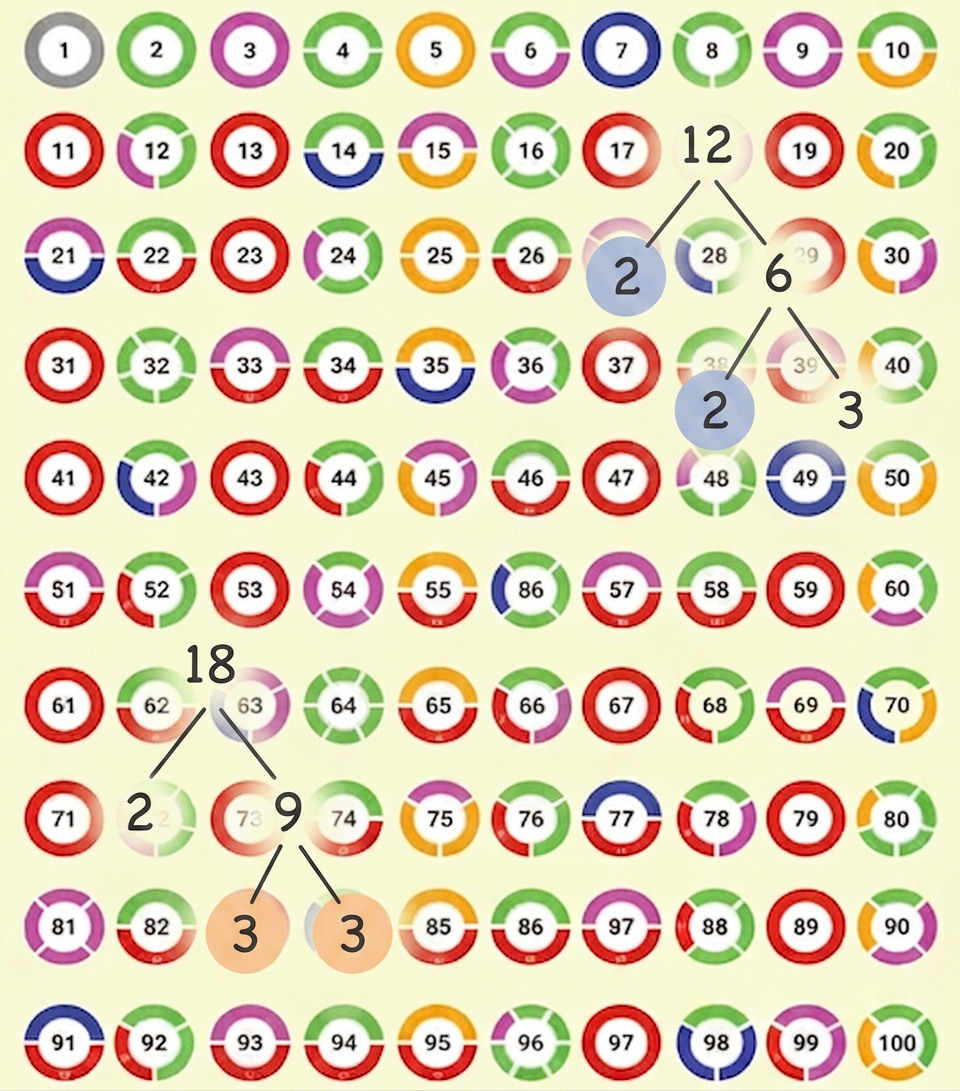
उदाहरण: 12 और 18 का
- की सबसे बड़ी घात
- की सबसे बड़ी घात
Step 3 · HCF और LCM के बीच संबंध की जाँच
दो संख्याओं और के लिए:
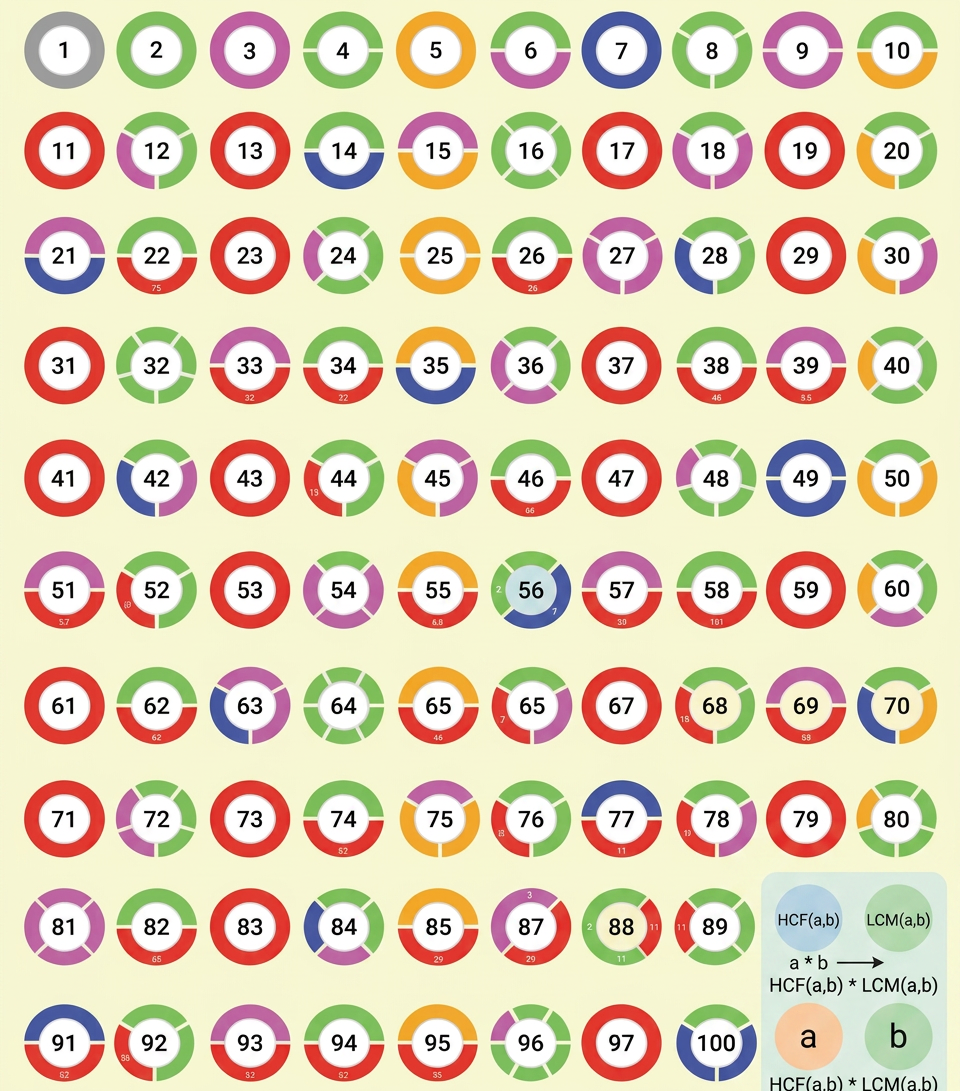
संख्याओं 12 और 18 के लिए जाँच:
- संख्याओं का गुणनफल:
- और का गुणनफल:
अतः, संख्याओं का गुणनफल .
दो संख्याओं और के लिए,
- घातों का चयन: में अभाज्य गुणनखंडों की न्यूनतम घात ली जाती है, जबकि में अधिकतम घात ली जाती है।
- संबंध की सीमा: सूत्र केवल दो संख्याओं के लिए मान्य है, तीन या अधिक संख्याओं के लिए यह सीधा लागू नहीं होता।