A Peek Beyond the Point | A
Question 1
Discuss with adults at home/school the prices of different products and services during their childhood. Try to find old coins and stamps.
Solution
Understand the Question
- This activity explores how the purchasing power of money changes over time (inflation) and how currency systems evolve.
- By asking adults about past prices and examining historical coins and stamps (such as annas), we can observe how smaller currency units were used in daily life.
Step 1 · Compare Past and Present Prices
Discuss prices of everyday items (e.g., a chocolate bar, milk, or a bus ticket) with adults from their childhood.
Comparing these past prices with current prices shows how the purchasing power of money changes over time.
Step 2 · Examine Old Coins and Stamps
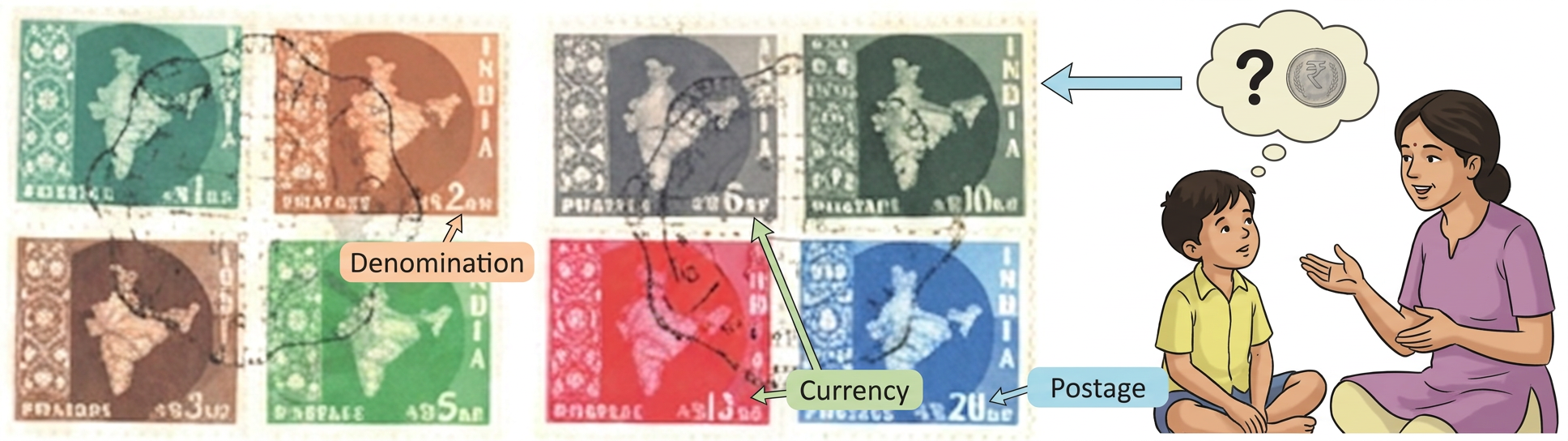
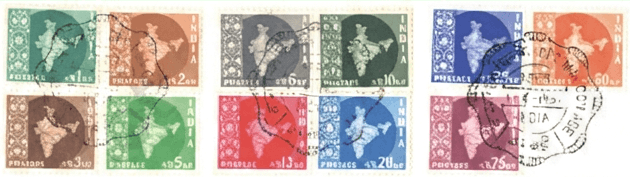
Look for old coins and stamps. Historical Indian stamps and coins feature older currency denominations such as "1 anna" and "2 annas", which were subunits used before the decimal currency system.
Answer
- Discussing past prices shows how the value of money and purchasing power change over time.
- Finding old coins and stamps helps us understand historical currency systems, such as the use of 'annas'.
Common Mistakes
- Assuming Constant Value: Assuming money had the same purchasing power in the past as it does today, rather than recognizing that goods cost significantly less numerically in the past.
- Decimal System Confusion: Assuming that historical Indian currency was always divided into , whereas older systems used units like .